Worldclass, a fashion brand that makes perfectly oversized sweats and great hats, doesn’t exist to hit a trend; Brooks Bell and Sarah Beran launched it as a challenge to the entire way we talk about cancer. After facing colon cancer in their 30s, they turned personal experience into a decidedly public mission. They wanted to rebrand colonoscopies from a taboo procedure into a proud milestone—and they wanted to raise money to pay for colonoscopies in underinsured communities.
Wordclass sells clothes and merch that have a winking humor and spark conversations many would just as soon avoid. Worldclass’ mission is to dismantle fear around colonoscopies and reframe them as empowering, preventive care rather than an ordeal.
In her Jadey interview, Brooks blends candor and conviction. She’ll tell you that colorectal cancer, soon poised to be the leading killer of adults under fifty, deserves more than euphemisms and polite silence—it demands attention, urgency, and some fun disruption. If Brooks has her way, we'll talk about colons openly, because normalizing this conversation will save lives.
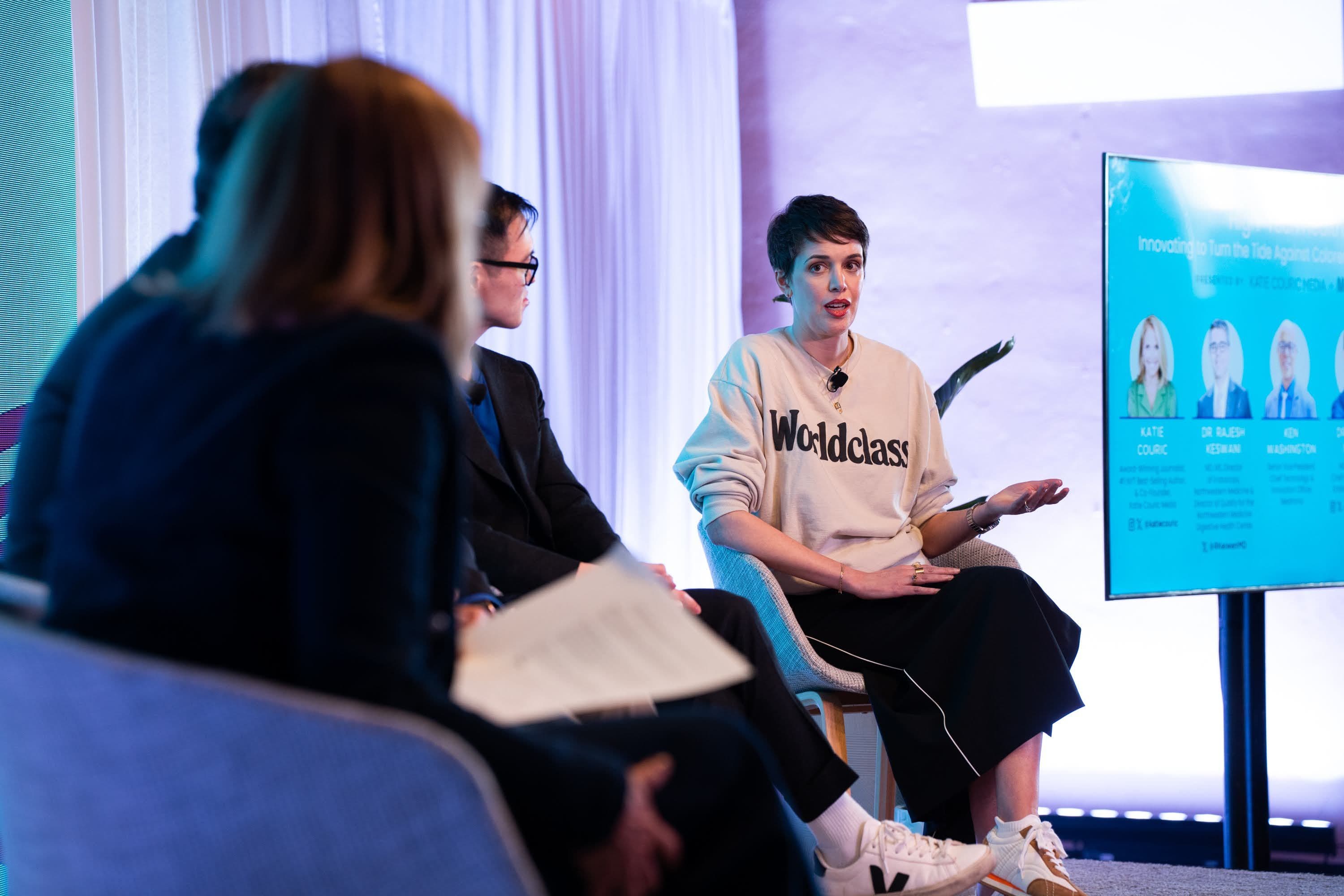
Photo courtesy of Brooks Bell and Worldclass.
Q:
Tell us about your life before your diagnosis.
A:
I was the CEO of a company that I founded when I was 23. Running that company was basically my entire career. I grew it to about fifty people—and seven or eight million dollars in revenue. It was a digital marketing company; we worked with clients like The Wall Street Journal, helping optimize subscriptions.
I was in my thirties, I was starting to burn out. The company was called Brooks Bell, which is also my name, so I was deeply embedded in it. You can’t just step away from something you fully own. I’d been running it for 16 years, and I felt trapped. I knew I was ready to do something else, but I had no idea how I was going to get out.
Then I was at a conference, went to the bathroom, and saw blood in my stool. I called a doctor from my hotel room. She was like, ‘Girl, it's a hemorrhoid. You're fine.’ And I was so relieved, but I decided to monitor things a little bit . The bleeding kept happening every couple of days, and I thought a hemorrhoid would go away. It didn’t. So I cold-called a gastroenterologist. By the time I saw her, it had been two months of bleeding. She told me it didn’t sound like a hemorrhoid, it sounded like cancer, and that I wasn’t too young for it. She scheduled a colonoscopy four days later. They found a stage three tumor in my colon.
That was Friday. On Monday, I spoke with my company’s president and my executive assistant and told them I was leaving to take care of myself. I said, ‘I can’t run this company. I can’t travel all over. I need to put myself first.’ It felt like the thing I’d been waiting for, the signal. I realized I couldn’t be CEO while dealing with this. My company might be killing me.
I finished treatment six months later. I found a permanent CEO, and the company ran for another six years. We sold it this year. I never went back. Instead, I started focusing on colon cancer [as an advocate].
I became obsessed with four words: colonoscopies prevent colon cancer.
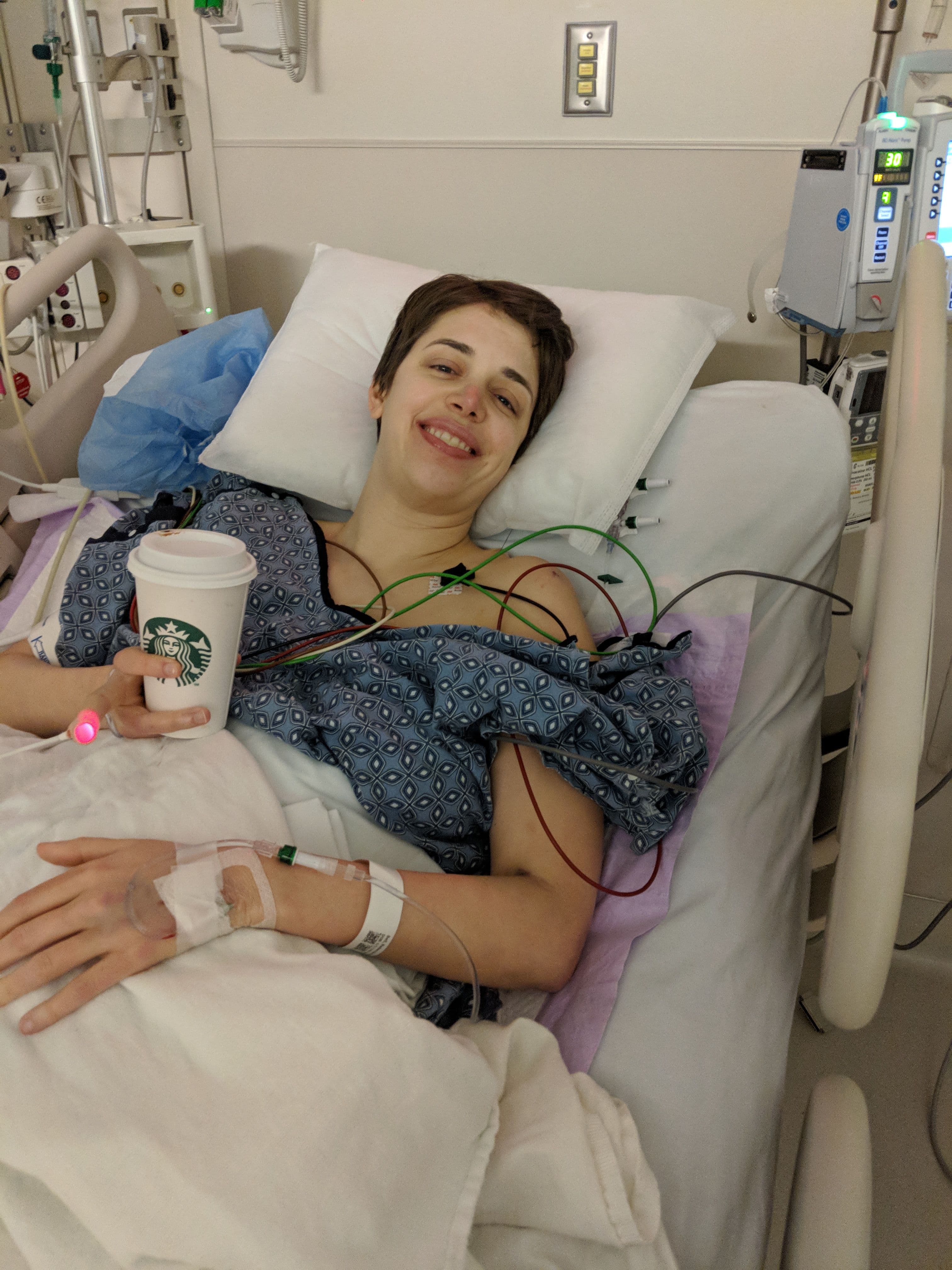
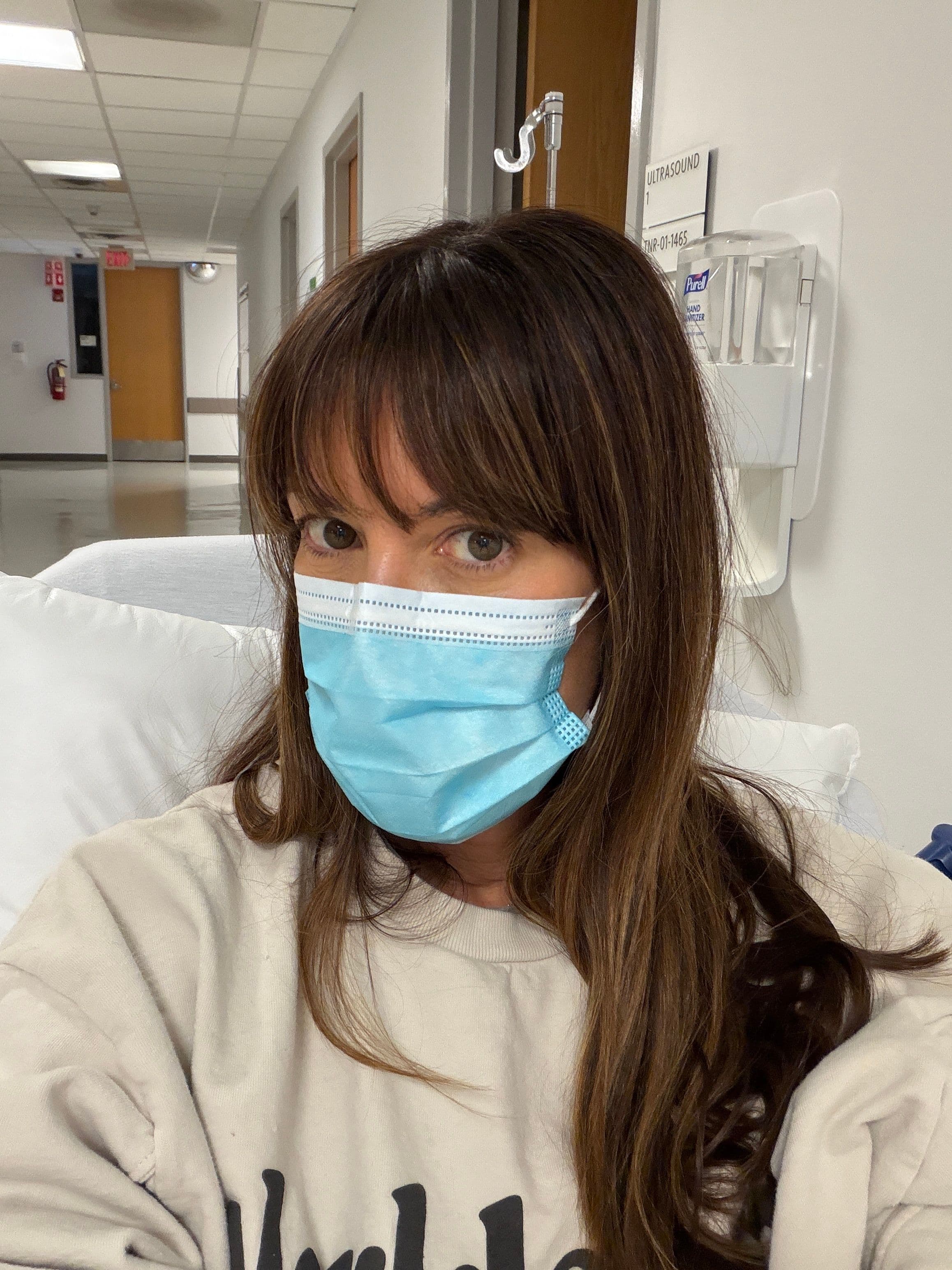
Brooks Bell after colorectal cancer surgery. Photo courtesy of Brooks Bell and Worldclass.
Q:
What changed in the way you understand yourself and your priorities after that experience?
A:
Honestly, one of the best things about the cancer experience is how deeply it connects you to other people. It’s such a powerful thing to go through. I know myself better now. I feel more connected to others. I feel like I’m working on something truly meaningful. It’s a real gift to have a life-changing experience that helps you understand your purpose afterward.
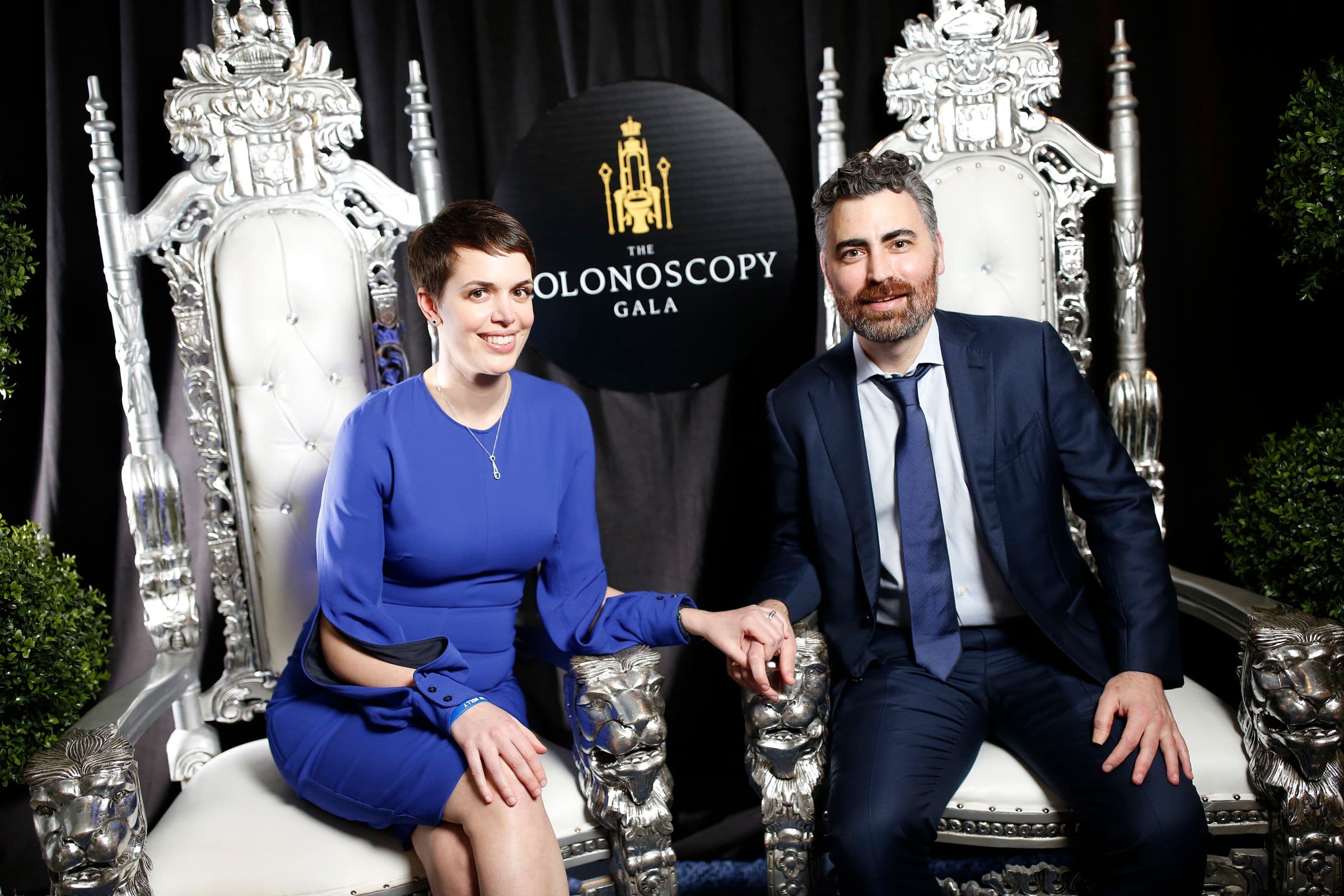
Brooks and her husband at The Colonoscopy Gala. Photo courtesy of Brooks Bell and Worldclass.
Q:
What do you wish more people understood about colon cancer and prevention?
A:
Colon cancer is huge, and it’s skyrocketing among younger people. More people die from colon cancer than from breast cancer or prostate cancer, and it’s one of the only cancers that’s preventable.
All colon cancer starts as a polyp. [Editor’s note: almost always.] If you find the polyps and remove them, you prevent the cancer. A colonoscopy goes in with a camera, finds a polyp, sends up scissors, and removes it. Removing a polyp prevents you from getting cancer in the future. That felt like an incredibly powerful marketing message. It’s incredible. There’s no other cancer screening like that. A mammogram is just pictures. A colonoscopy is pictures and removal. Did I know that in my thirties? No. Does anyone know that?
I didn’t realize that most cancers aren’t preventable. Colon cancer is. I became obsessed with four words: colonoscopies prevent colon cancer.
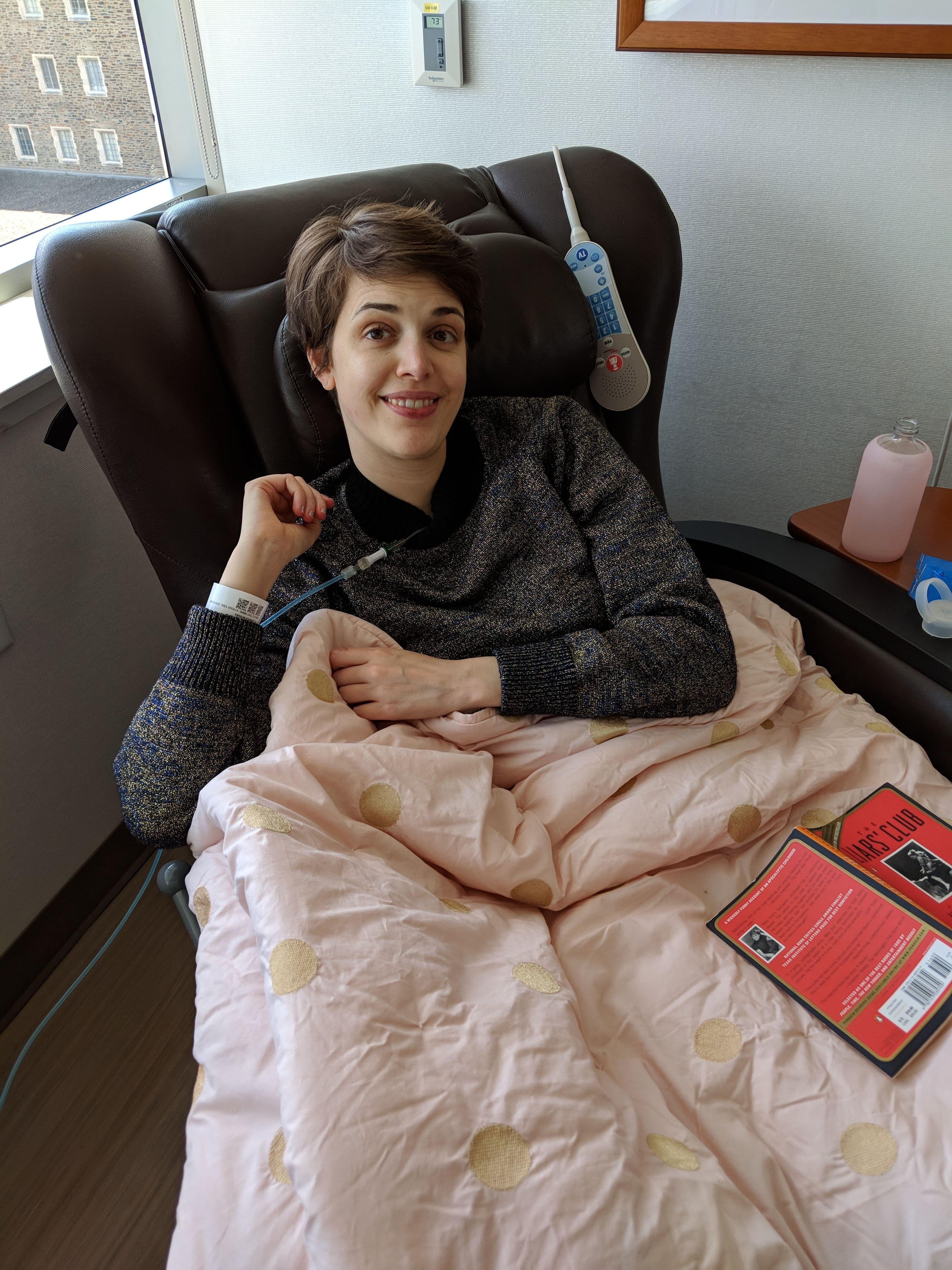
Brooks Bell getting a chemo infusion. Photo courtesy of Brooks Bell and Worldclass.
Q:
What are the most common misconceptions you’re trying to clear up?
A:
Polyps are incredibly common, but we’re not curious about them. We’re not talking about finding polyps and getting them out. We’re not having a polyp conversation, so people don’t think they need a colonoscopy.
Then there’s the idea of something going into your butt. For straight men especially, that’s a huge deal. [For some people,] the idea of something going all the way up feels extremely invasive. They don’t realize it’s painless.
Then there’s the prep. It’s notorious. People are afraid of fasting, of being hungry, of drinking the nasty prep drink. They’re worried about all the pooping. They imagine public humiliation—do I need to wear a diaper, am I going to have an accident in public? There’s so much fear wrapped up in the prep.
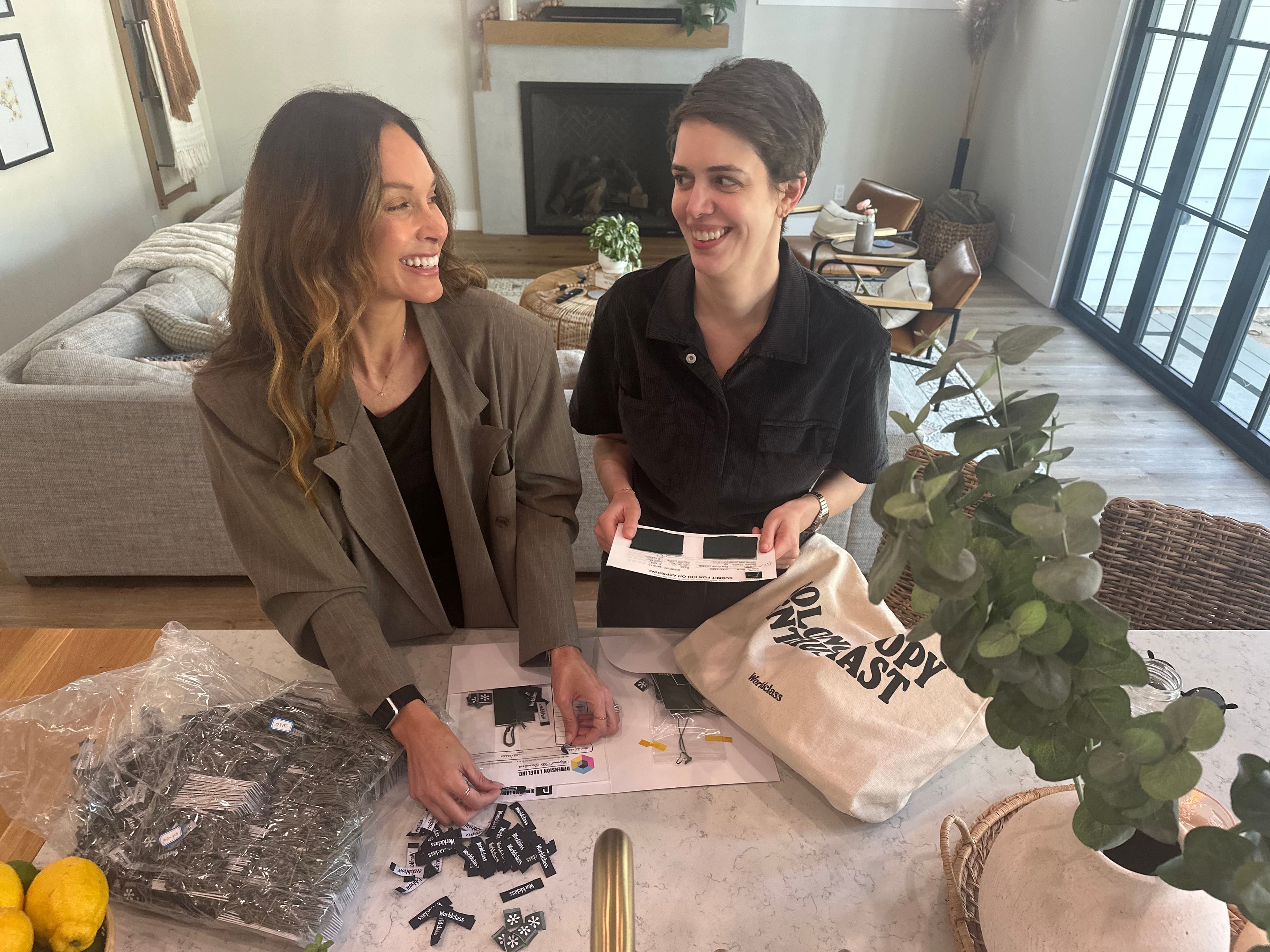
Brooks and Sarah and their Worldclass 'colonoscopy enthusiast' tote. Photo courtesy of Worldclass.
Q:
Tell me about your mission, through Worldclass, to ‘rebrand cancer’.
A:
The brand of cancer is generally bad. Cancer is scary. It’s sad and demoralizing. It’s about death and aging. But with colon cancer, we can actually do something about it. But it’s not just that colonoscopies have a terrible reputation—it’s also that they’re hard to access. Insurance doesn’t always cover them [and they’re stingy about it].
A colonoscopy prevents a top-three cancer. That should be a major milestone to get a colonoscopy, and yet it isn’t. The question became: How do we break through? How do we make this brand better? How do we talk about cancer to people who don’t want to talk about cancer?
I think about my pre-cancer self. I wanted nothing to do with health care. I was just trying to be a hot thirty-something businesswoman. I didn’t want to think about hospitals or being sick or getting old.
Before Worldclass, I worked with another nonprofit, Lead from Behind. I had heard about the Couric effect; in 2000, Katie Couric got a live colonoscopy on the Today Show; it led to a 20 percent increase in colonoscopy appointments nationwide. She probably saved thousands of lives.
It had been 25 years since a celebrity did that. I thought it was time. It had to be someone without colon cancer—someone getting a colonoscopy to prevent it, because they’re smart and they don’t want cancer. That’s how we got Ryan Reynolds. He did it with Rob McElhenney in 2022, [with Lead from Behind] and it led to a 36 percent increase in colonoscopy appointments.
Q:
What ultimately brought about Worldclass?
A:
At my age, I want fun. I want joy. I don’t want to spend the next fifteen years fighting systems and being depressed. I want to be creative, to build community, to hang out with women, to make new female friends.
Sarah Beran, my co-founder, reached out to me after I wrote something for Today.com. She’s a celebrity stylist in L.A, and was diagnosed with colon cancer at 34. She’s super creative, and we instantly clicked.
I said, ‘Let’s make a fashion brand. You do the fashion, I’ll handle the business side. Let's just mess around with it and see if we can make colonoscopies cool.’ It felt impossible, which made it exciting. She came up with the name World Class Ass, which we shortened to Worldclass. Then we made the logo and the first collection.
Our goal is to reach people who don't have cancer, don't want to get it, and make it a true fashion brand, so that we can reach people who need to know this message. People who have cancer, it is the most important thing that has ever happened to them and ever will, but on the other hand, they are also not different people and they don't want to suddenly have cancer take over their entire identity. They still want to look cute and wear nice things. Cancer-branded stuff really bums me out, and this does not bum me out at all. It’s the opposite: it makes me very happy.
We’ve already given $75,000 to UNC to pay for colonoscopies in underinsured communities. It only takes sixteen screening colonoscopies to prevent one case of colon cancer. Sixteen! The more colonoscopies that happen, the fewer people get cancer.
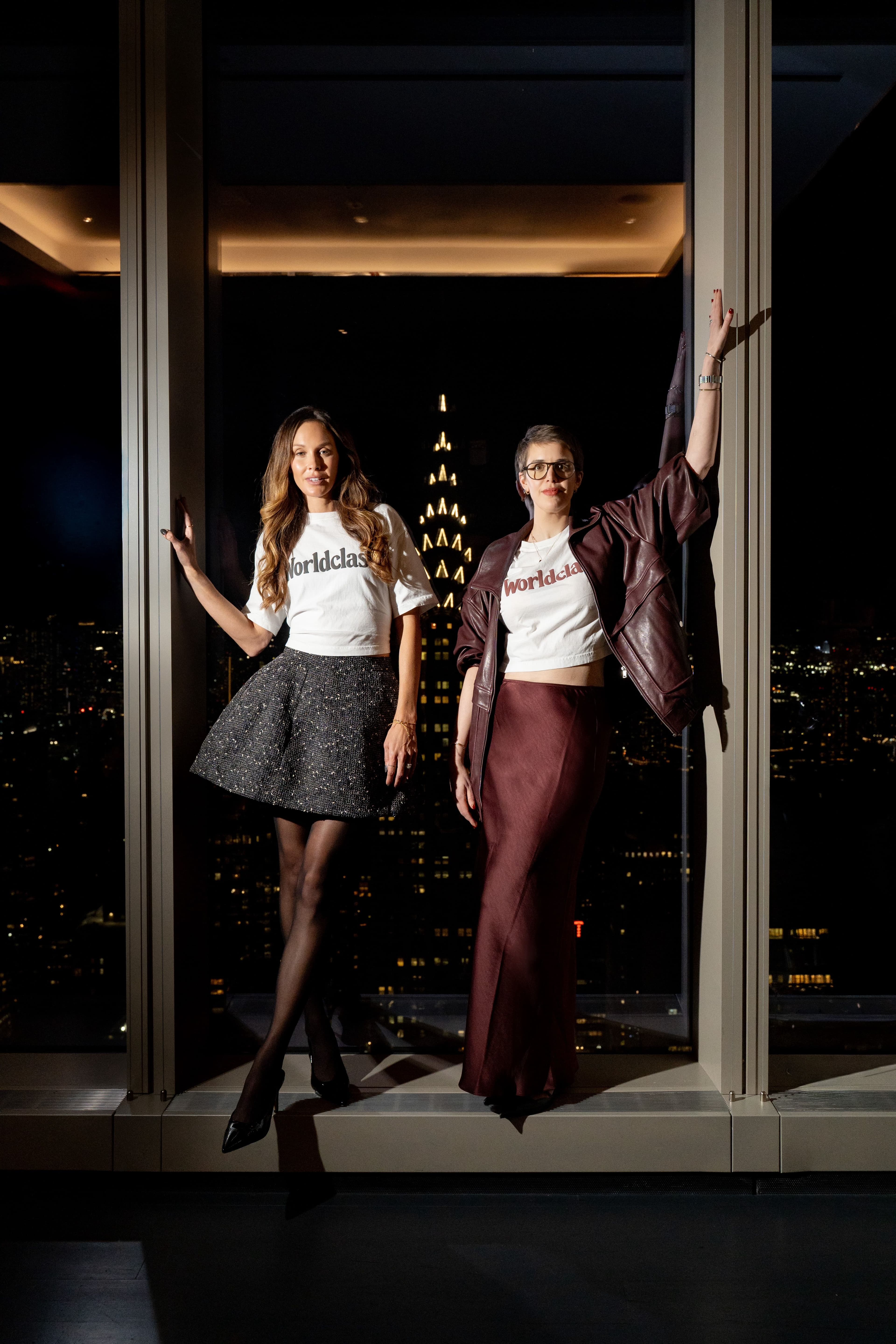
Sarah Beran and Brooks Bell. Photo courtesy of Worldclass. Photographer: Eric Vitale.
Q:
Humor plays a big role in the brand. Why does that matter?
A:
So many comedians make colonoscopy jokes. Butt humor is funny—it always has been. You start laughing at butt jokes as a kid. We’re trying to tap into that humor to take something sad and scary and make it empowering, joyful, and cool.
Worldclass is as fashion-forward and fun as anything else, but it’s also about something heavy and important. We’re trying to hold both at the same time.
That’s why we have an asterisk with two s’s—it’s a butthole. That’s why we have an “ASS” hat. I love that hat because it just says “ass.”
Photo credit for lead image: David Needleman