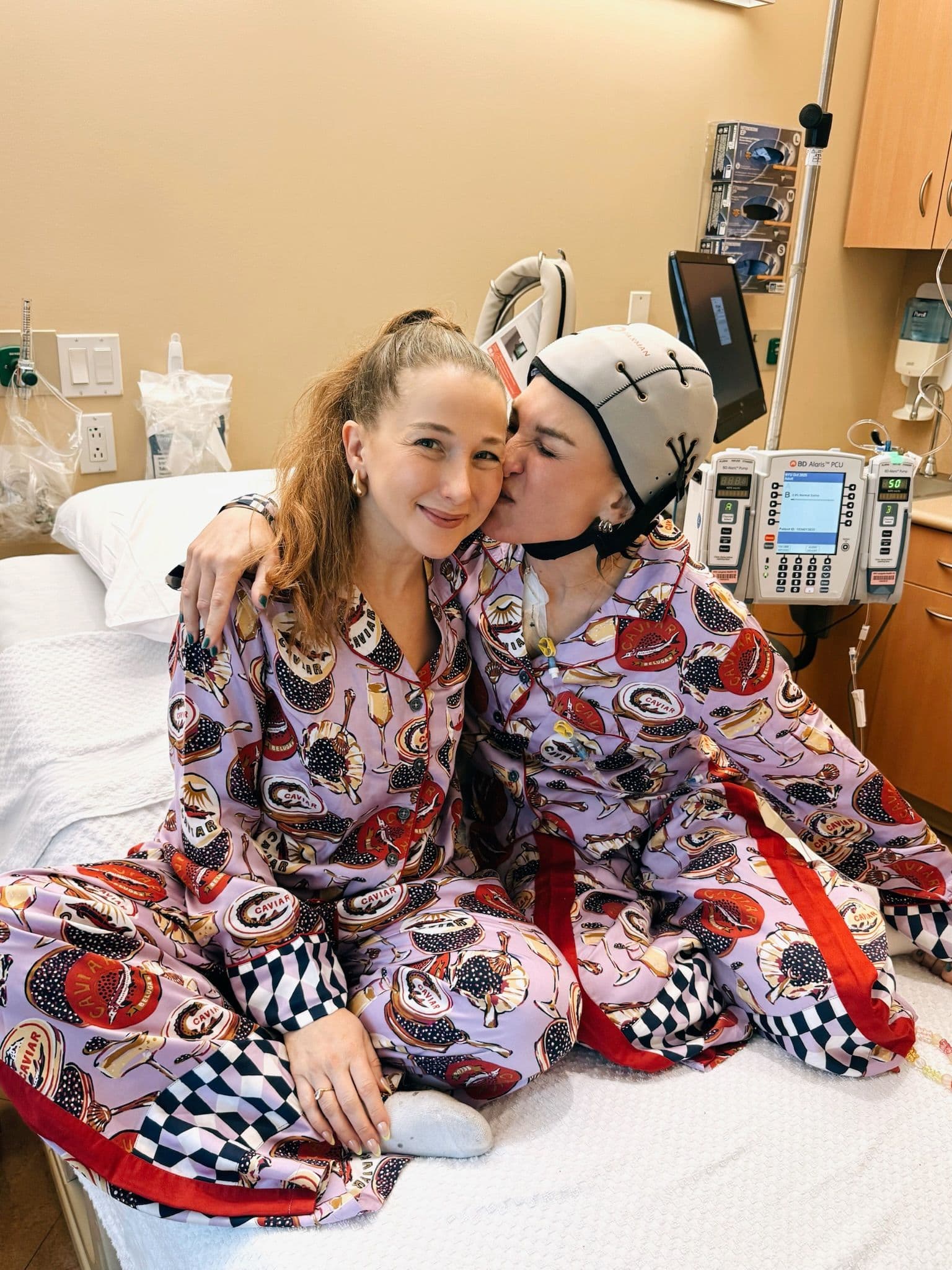
“Alej!” my mom called out. “Ven aquí!”
I was being summoned from the bathroom, where I was in the throes of yet another horrible bout of chemo-induced diarrhea, by my mother, who was ostensibly here to care for me. It had been a few days of my mom staying with my partner and me. She intended to stay for a month, maybe more.
This was a choice she made without asking me. A month after I was diagnosed with Stage 3A invasive ductal carcinoma, she showed up from Tijuana, where she lives, to our house in L.A. She showed up with a full suitcase, her preferred pillows and blankets, and a brand new Nespresso machine because she prefers her pod coffee. Her intention was to care for me while I underwent chemotherapy, a sacrifice she made a big to-do about. And I was appreciative. At first. Despite the fact that she didn’t actually ask if it was okay to move herself and her bulky coffeemaker into our home. It didn’t take long before her “helpfulness” became a burden.
When I emerged from the bathroom, weak and empty, and went to check on her, she was lying in the bed in our small guest room. “I’m cold,” she told me in Spanish. “Can you bring me a blanket?” I was stunned. Shouldn’t I be the one resting and asking for blankets? Somehow, during her stay with us, my partner and I found ourselves waiting on her, cooking her meals and, in my case, taking her to Nordstrom Rack because she was “bored” of hanging around my house when I was resting. Her boredom superseded my condition. She smoked cigarettes around me constantly (I asked her not to smoke, but she sneaked them anyway) and repeatedly told me that my uncle who also has cancer decided to stop treatment because it was extremely hard on his body and he’d rather die. After a few days of this, I asked my sisters to come pick her up and take her home. I had enough, though I’d come to find that the decidedly unhelpful behavior wouldn’t end there.
Receiving care from loved ones is often part of cancer treatment for many people. Many will tell you how fortunate they are to have friends, family, or a partner looking out for them as they navigate the horrible side effects and psychological drain that is cancer.
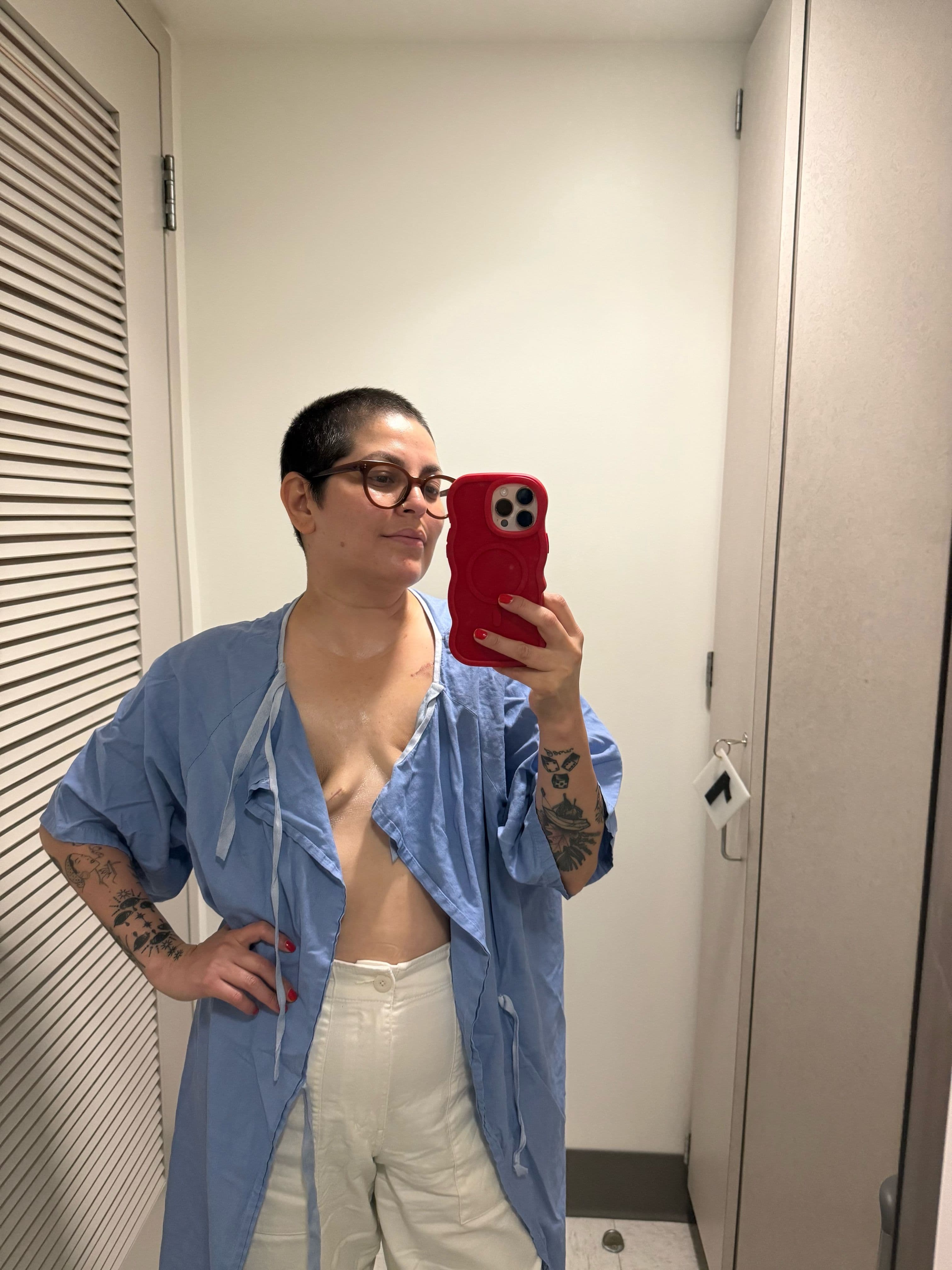
Photo courtesy of Alex Zaragoza.
About 4.6 million individuals serve as at-home caregivers for family members or partners undergoing cancer treatment. Studies have found that informal caregivers–meaning unpaid family members or friends who are usually not medically trained–frequently disregard their own needs, health, and emotions. They put everything aside to focus on caring for the people in their lives who are dealing with the disease. This can have a hugely negative impact on caregivers. It’s important for them to take time to care for themselves and their own needs, and sometimes it’s up to us to tell them to do so.
My partner, Andrew, was my caregiver during my year-long treatment, doing everything from cooking meals and changing my dressings after my double mastectomy, to taking notes at doctor’s appointments or planning comfy date nights at home. Through chemo, a radical double mastectomy, radiation, and immunotherapy, he showed up for me. Considering that studies show how often men leave their wives after they’ve been diagnosed with cancer, I felt grateful and lucky.
I checked in with him regularly, and insisted he take time for himself. Though when asked by me or anyone if he was okay, he’d say it was really not a big deal. “It’s not that different from our regular life, to be honest,” he’d say. “I like cooking, I don’t mind cleaning, and I like taking care of her.” Yes, he’s an angel, but I also made a mental note to load the dishwasher every once in a while if I was feeling okay.
In any case, my sense of gratitude toward him grew exponentially as my family squabbled incessantly, stressed me out over petty issues, or said something rude or hurtful throughout my cancer treatment. Even though they showed up for me throughout in many ways, and I am thankful for it, it doesn’t change that sometimes I wish they’d just left me alone.
Even with the best intentions, family can make cancer feel worse, and it’s hard to understand why. What I was expecting, or in some cases specifically asking for, in terms of support was bare minimum. Like, maybe don’t remark on how much weight I gained, or grimace at the sight of my post-mastectomy chest, or say I remind them of the movie “Beaches.” It’s still an issue today as I begin to confront post-treatment life.
“Cancer doesn't necessarily bring out the best in people,” explained Mary Mathew, a licensed marriage and family therapist specializing in the cancer community at her Los Angeles-based practice BeyondCancerLA.
Mathew, who herself was diagnosed with cancer twelve years ago at 30, has worked with a number of clients who have struggled with difficult families during treatment. While she finds that this behavior is often “systemic” to the family, forming part of their regular dynamic, it is nonetheless upsetting for someone who expected cancer to create a shift in how family members treat each other.
“We have hope that something like a cancer diagnosis is big enough to shake the family unit a little bit and put things into a clearer perspective,” said Mathew. “And when it doesn't, it's so painful. Like, what else needs to happen?”
Sometimes this behavior stems from anticipatory grief, Mathew explained, where people mourn the potential loss of a loved one and react emotionally as a result. Understandable, though it’s still often the person with cancer who pays for it, as I came to learn.
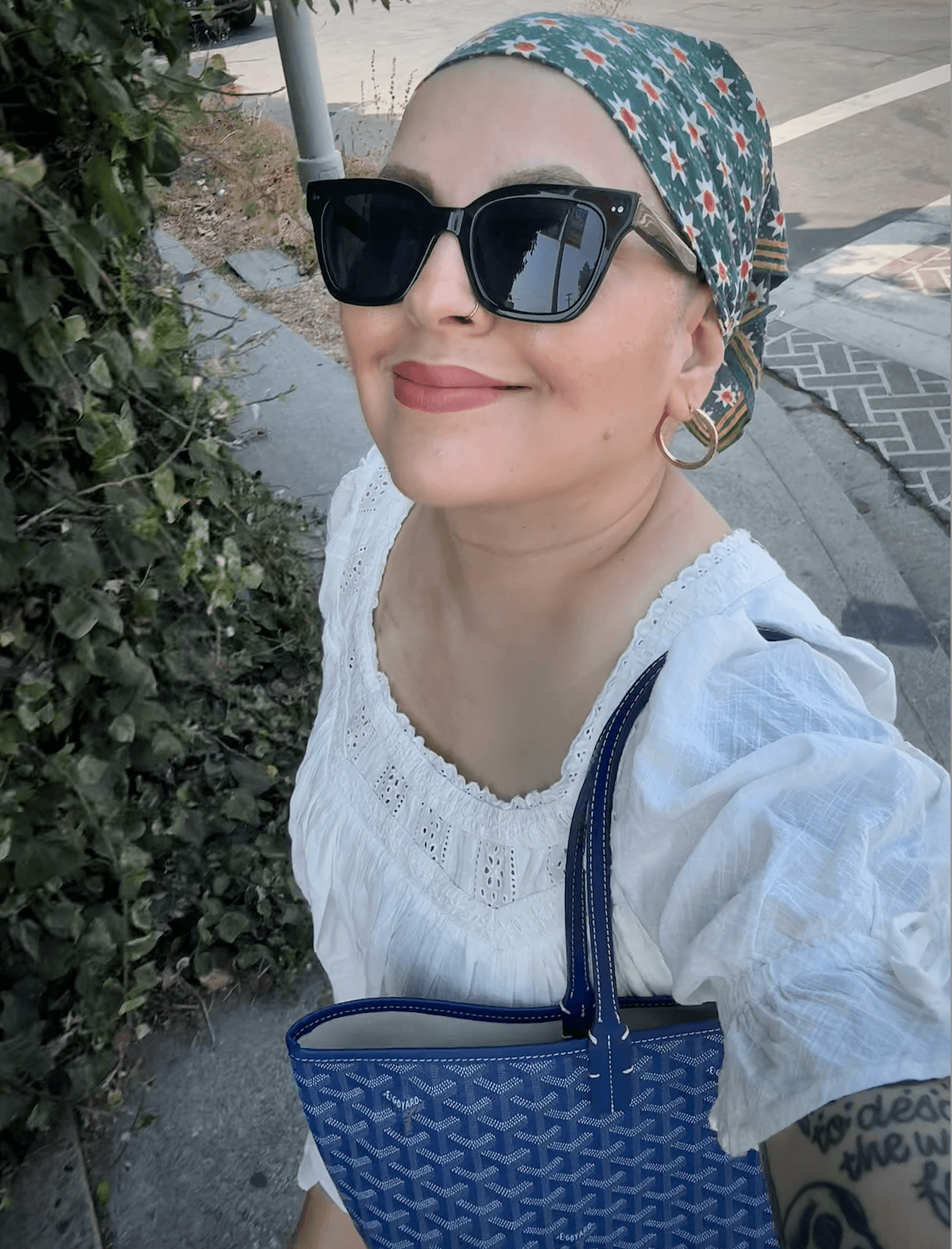
Photo courtesy of Alex Zaragoza.
Dayna Marie Christison learned this as well. The 35-year-old New Yorker is in treatment for Hodgkin lymphoma and has been living with the disease for twelve years. Like many people who have had cancer, Dayne has dealt with a lot of “mental and physical anguish," and struggled throughout with managing stress. One of the major stressors in her experience with cancer has been her parents.
Three years into her treatment, she was hospitalized for a month after undergoing two auto cell transplants, a process she described as “very rough.” She spent an entire month in her hospital room with her parents. Being stuck in a room with your parents for a month is on many people’s list of nightmare situations, but during a life-threatening medical condition is next level unimaginable.
“I had my parents arguing back and forth about either financial stuff or bickering about what the doctors were saying,” she recalled. “I was just trying to manage their emotions the whole time. I couldn't even feel my own emotions. I felt so numb to the whole situation.”
During their arguments, Dayna often felt like her parents weren’t “really concerned” for her, allowing their own confusion, frustration or discomfort suck all the energy out of the room. The tension and stress culminated with her mother getting shingles, forcing Dayna to help care for her mother while also healing herself.
And what can you do in a situation like that?
“It's not even like you have the energy to stand up for yourself,” Dayna told me. “You're so wiped of all energy, and cognitively out of it. Then you have to step in and try to console people. It’s such a responsibility that's so unnecessary at the time.”
When my own conflict-driven family argued, which happened all the time during my cancer treatment, I went blank, unable and unwilling to fire back at them. Sometimes I tried to offer advice during one of their crises, spending hours on the phone helping them sort it out. And then I got angry at them and myself. Why was this falling on me when I had enough to deal with? Why wasn’t I speaking up for myself? My people-pleasing had come to a head. Cancer forced me to confront the ways this personality trait was hurting me.
Mathew explains this is a form of disassociation, a trauma response. “That response is something that we start to adapt in early childhood, when we're around a lot of chaos. It's a form of survival. Is it healthy? Well, no. It's our central nervous system saying, I'm in overload and I need to check out right now to survive.”
This is why Mathew recommends finding a therapist with first-hand experience with cancer who understands the anxiety and fear around diagnosis and can help you build necessary boundaries around family. Triggers will always exist, especially around family. Navigating them while you’re in a health crisis is an unfair burden when you’re already carrying so much–and figuring out boundaries or even just expressing anger or frustration in a safe environment can make a difference.
Cancer has its own language, and it matters tremendously when someone helping you also speaks it.
Here’s the thing about being surrounded by difficult family members during cancer. You’re scared of dying, just feel like you’re dying, or you’re actually dying. And in this time that is so precious, you have to deal with those who are supposed to be helping, actually making everything harder.
This is what Kailey*, a 35-year-old living with diffuse hemispheric glioma, a rare and aggressive form of brain cancer typically found in kids and teens, is up against.
Kailey’s cancer is terminal. She was given a life expectancy of twelve months, but has now passed the two-year mark. At diagnosis, Kailey decided she didn’t want to know a lot of details about her cancer. If she could have avoided knowing her prognosis, she would have chosen that route. Knowing gave her “too much fear in my heart to acknowledge that time was passing.”
Kailey had another request for her well-meaning friends and family.
“I was like, ‘Hey, I don't want to know what you're looking at. I don't want to know what you think. I don't want you to send me articles. I don't want you to send me books on diets for anti-cancer. I don't want any of that shit,’” she recalled. “The boundaries that I wanted were very hard for people to follow.”
Still, her family members sent her videos, articles, recommendations for “woo-woo” doctors and information on juicing and meditating, many of it inspired by the Belle Gibson fraud case, most commonly known as the apple cider vinegar scam. It was all stuff they assured her would “cure everything.”
“My grandma called an astrologer to figure out why this happened to me,” she said. “I told her I never want to hear what she heard [from the astrologer] because it doesn't make a difference for me. I don't think I did something in this or last or other lifetimes that would equate to me having such a shitty sentence in this one.”
Kailey found it hard to talk to anybody. She realized that all the unsolicited advice on her health wasn’t really for her. “What everyone was doing was just trying to find answers or something to hold on to that was positive for themselves.” she said.
She’s now living and being taken care of by her brother in Portland, who she says has been a lifeline throughout all the stress of her diagnosis, treatment, and family.
How does someone with cancer deal with family who have made their experience harder? For Dayna, she has accepted who they are and chosen to stick to her husband for all her care. In a way, she resigned out of self-preservation.
“I just realized how selfish it was for [my family] to be doing that, but it made me understand that that's just who they are,” she explained. “I've had a lot of ups and downs with them. They're not going to change, you know?”
While it’s a hard pill to swallow, Mathew says coming to terms with a family that won’t change during cancer is important. What you can do is divorce the ideal of what your mom or sister or dad or whoever should be in an idealized way and identify what they’re actually capable of. My mom, for instance, is fantastic for an afternoon of much-needed low-impact exercise (shopping). If asked, she will whip up my favorite meal. But asking her to admit she has hurt me is only setting myself up for disappointment.
While this makes sense, it’s been hard for me to put it into practice. Family can be especially adept at getting under your skin, and when a family is struggling with a loved one having cancer, they may not know how to respond. But there’s so much that seems so painfully obvious. A recent dust-up with my family felt like an inflection point. After a year in survival mode, I was finally able to sit with all the ways they’d frankly let me down and address some of it with them. It did not go well. I’m trying to decide what needs to change and how to make that happen without losing my family completely. In the meantime, I’m keeping any visits from my mom to a two-day maximum.
Read more from Alex Zaragoza on her newsletter, Sick Daze.
*Names and some identifying details have been changed at the subject’s request.