“This is the good type of cancer, right?” I asked my doctor when she called to deliver my diagnosis. It’s not like I felt sick. The subtle lump in my throat — so small I hadn’t noticed it myself — was identified at an annual visit. An ultrasound and biopsy later, it had a name: papillary thyroid cancer.
“Sophie, cancer is never good,” Dr. H told me. “But you’re not going to die from this.” Initially, I clung to her reassurance. I’m not going to die from this. But once that idea sank in, it turned against me. If I felt normal and there was virtually no risk of death, did I really count as someone who has cancer?
I assumed cancer would be all-consuming, but my illness was simply a series of scheduled interruptions to my otherwise ordinary life. My thyroidectomy came while most others were on spring break. I spent my week of recovery working on puzzles and catching up on Severance. My radioiodine therapy, at the end of the summer, was less enjoyable but just as contained: a single week in isolation, feeling more fluish than cancer-stricken.
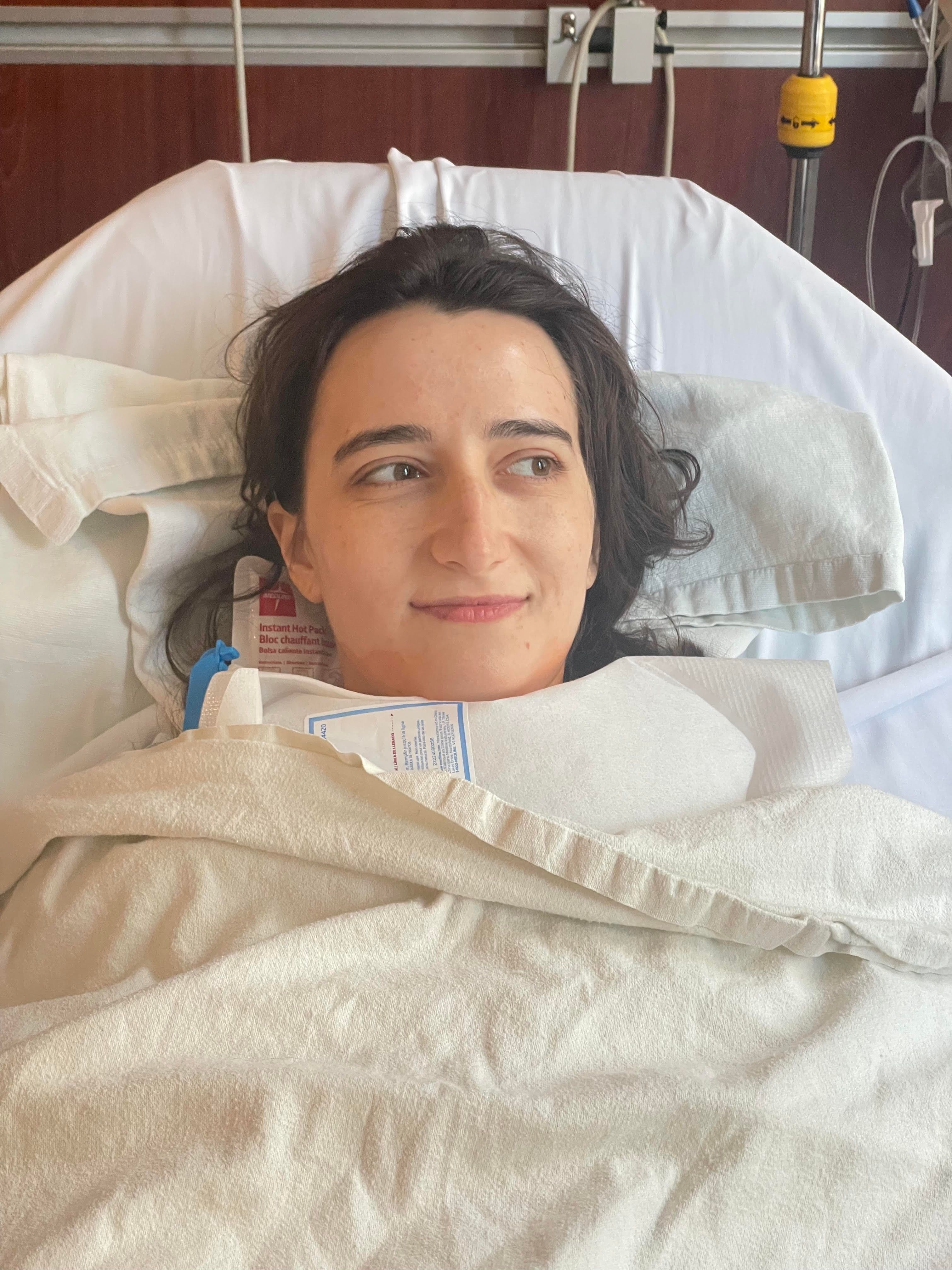
Waking up from thyroidectomy. Courtesy of Sophie Kihm.
Between treatments, life continued at a brisk pace. I kept up with work, moved into the condo I’d been renovating, and served as a bridesmaid in multiple weddings. I wanted the normalcy to comfort me. Instead, it led me to question what, exactly, I was supposed to be recovering from.
My internal doubts gave way to self-consciousness about how I presented my illness. “I have thyroid cancer,” I’d tell people, and in the same breath, “Don’t worry, it’s super treatable, in fact, it’s the least invasive cancer you can have. It’s barely even cancer!” Why should others worry if my cancer was not that bad? Why does the fact of my cancer feel like something I have to qualify and protect others from?
“People equate cancer with a death sentence,” says La’Tonya, 55, who was diagnosed with Stage I breast cancer last year. She, too, sought to mitigate others’ concerns. “I was like, ‘Don’t feel sorry for me, because I only have a little bit of cancer.’”
These little bits of cancer can lead to immensely fraudulent feelings. I took to calling these feelings of inadequacy ‘cancer imposter syndrome’. The thoughts and emotions were familiar to me from college and my early work life. Do I deserve to be here? What if everyone finds out I don’t belong? In cancer terms: Can I honestly call myself a cancer patient? What will others say when they realize it is not as bad as it sounds?
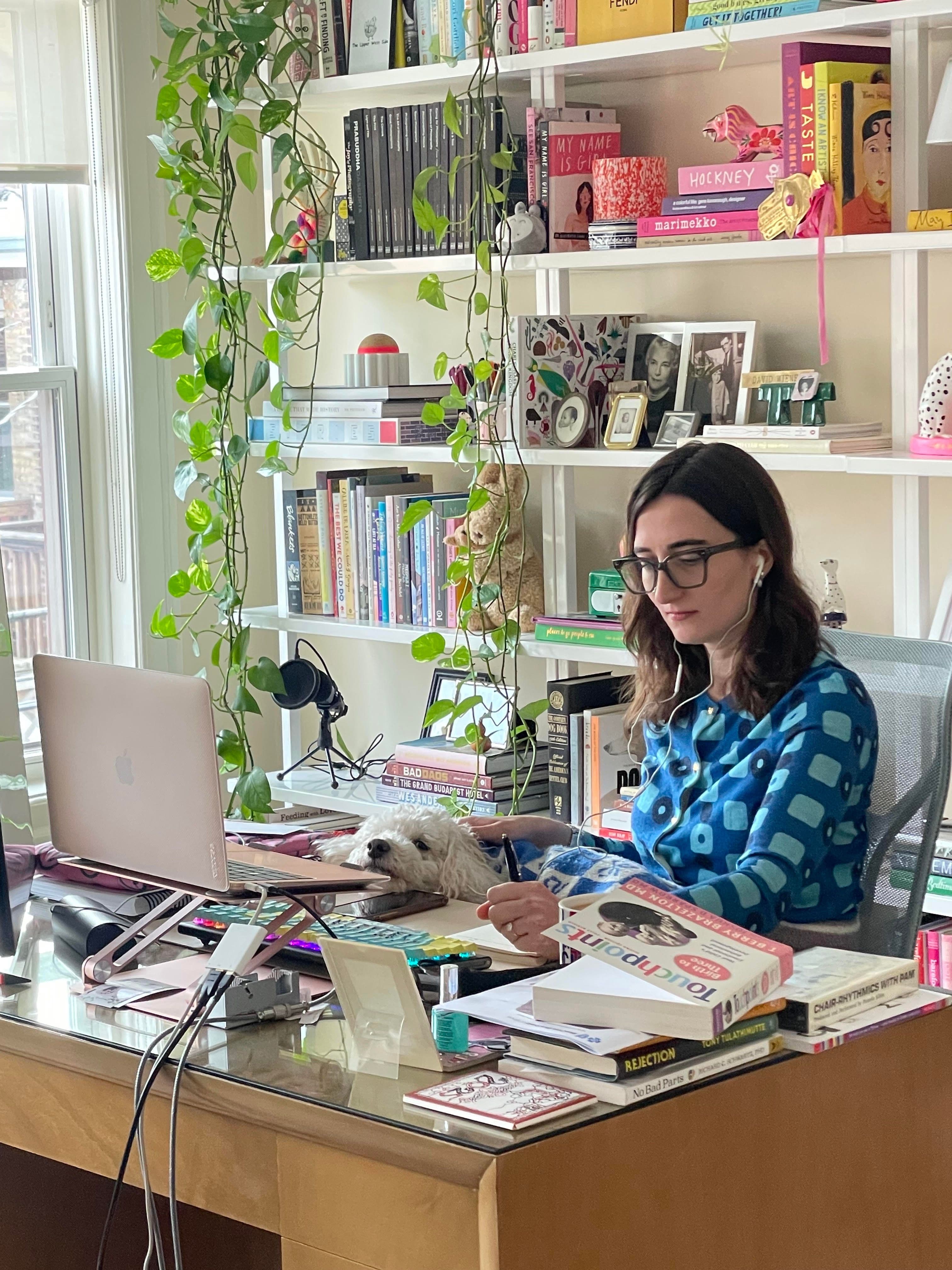
Working/normal life. Courtesy of Sophie Kihm.
“Imposter syndrome is an umbrella,” says Nicole Theodore, a therapist specializing in cancer. “It covers anxiety, guilt, self-doubt, and shame.” Theodore tells me that her clients don’t often label cancer imposter syndrome as such, but that she frequently encounters these feelings in her office.
For some, it manifests as “anxiety about how they’re presented, and downplaying or minimizing their experience,” explains Theodore. Other cancer patients might seek support but later second-guess themselves, wondering if they really belong in cancer-dedicated spaces or worrying about how cancer patients might perceive their illness.
In search of community, Kelly, who underwent treatment for breast cancer last year, attended a breast cancer walk soon after she was diagnosed. “I was sitting there, with my hair, looking rosy and chipper, and everyone else looked like they had breast cancer,” she says. “I felt like a total asshole being there. I just didn’t feel like I was sick enough.”
Once Kelly’s treatment began, she felt nauseous and fatigued, even as her outward appearance remained the same. La’Tonya also described painful side effects from radiation, though her burns were easily concealed. The more women I spoke to about this feeling, it became clear that cancer patients are judging their illnesses based on how sick they look rather than how sick they feel.
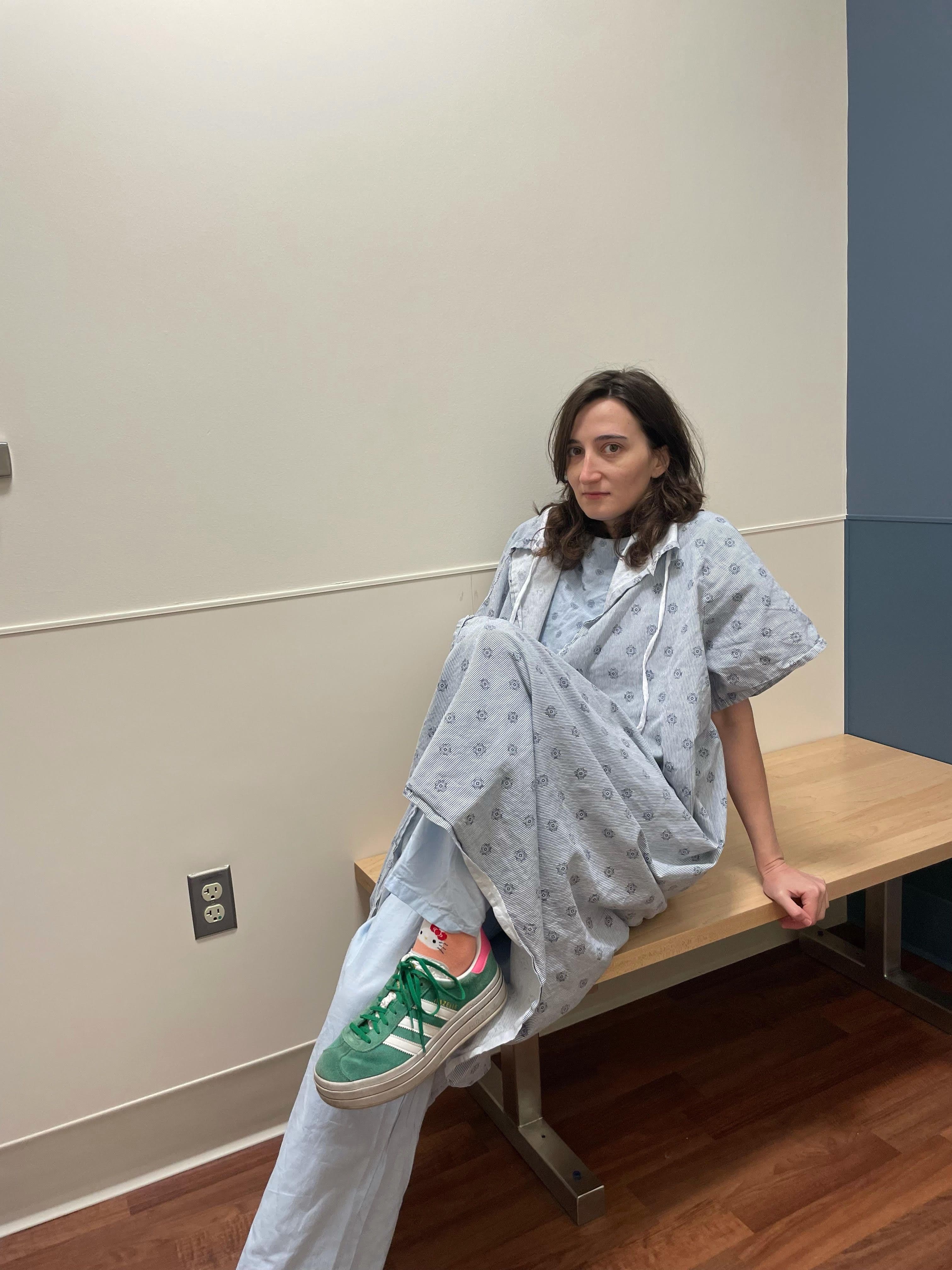
Waiting for my pre-radio iodine scans. Courtesy of Sophie Kihm.
Every woman I interviewed had internalized the same culturally ingrained portrait of a cancer patient. She is a woman going through chemotherapy — hairless and thin, pale-skinned with sunken eyes. Above all, she is described as “frail.” It’s a narrow depiction of cancer that excludes many women’s realities.
Appearing “healthier” than this cancer archetype can “impact the internal dialogue about what cancer is supposed to look and feel like,” shares Theodore. It’s something that’s showing up more often in her therapy practice, especially as cancer treatments evolve. Treatments that are largely invisible to others but are personally grueling, like oral chemo, immunotherapy, hormone therapy, and radiation, can widen the gap between outward appearance and internal experience, sparking imposter syndrome.
When Kelly first shared her breast cancer diagnosis with friends and acquaintances, their responses were sympathetic. But as treatment progressed and she looked more or less the same, some of the reactions shifted. “It transitioned from pity eyes to, ‘Look at you. You’re fine.’ And then they didn’t check on me at all.”
As Kelly continued treatment without visible cancer identifiers, she was subjected to frequent comparison. The people in Kelly’s life measured her condition against their own ideas of what a person with cancer should look like, as well as real-life models of patients who were “sicker” than her. Kelly felt forgotten by some of her friends, which added to the sense that her “cancer wasn’t cancer-y enough,” as she describes it.
If my cancer had been life-threatening or unbearably painful, I could rationalize asking for care. But my imposter syndrome told me that my cancer was too mild to warrant others’ concern.
Comparison heightened my own symptoms of cancer imposter syndrome. When my partner, Jacob, was 18, his mother Joani died of metastatic breast cancer. For better or worse, her cancer story was a constant foil to my unfolding experience. When I felt grounded, Joani’s story helped me tap into strength and gratitude. In my more insecure moments, her experience triggered doubt about my own cancer.
After all, Joani endured years of treatments and eventually died from her disease, whereas I would put my cancer story behind me within a matter of months. How could I deserve the same sympathy when someone else had it so much worse? This is a question that Sasha, 53, grappled with in real time. Sasha learned she had Stage III colon cancer six weeks after her sister-in-law, Nina, received the same diagnosis. We spoke about how comparison to other patients inevitably follows a cancer diagnosis, particularly when you’re close to someone on a similar “cancer timeline.”
Sasha’s imposter syndrome ratcheted up when her and Nina’s cancer timelines diverged. Nina’s treatment protocol proved more intensive, which led Sasha to question how much empathy she was entitled to, relative to Nina. As she perceived it, there was a finite amount of caretaking energy within their shared family, to be equitably distributed between her and Nina. Despite Sasha’s emotional distress, “I felt like I needed to sit back, be quiet, and let Nina have all the care.” Her silence was borne more of shame than altruism. It would have been selfish, even arrogant, to ask for support from her in-laws because, as Sasha remembers, “In my mind, Nina needed it more than I did”.
I performed a similar care calculus in my relationship with Jacob. Which one of us deserved more empathy: Jacob, whose trauma was reignited by my illness? Or me, the person who had the cancer, albeit a treatable form? Jacob’s history made me protective of him, but it also sparked a feeling of shame whenever I needed him to protect me. I worried that it was inappropriate to express my pain and anxiety in the shadow of his loss.
Almost instinctively, I offered and re-offered unsolicited reassurance that my cancer was different from Joani’s. It was a way to convince Jacob that he didn’t need to worry about me, and to justify to myself why I shouldn’t need his support in the first place. If my cancer had been life-threatening or unbearably painful, I could rationalize asking for care. But my imposter syndrome told me that my cancer was too mild to warrant others’ concern.
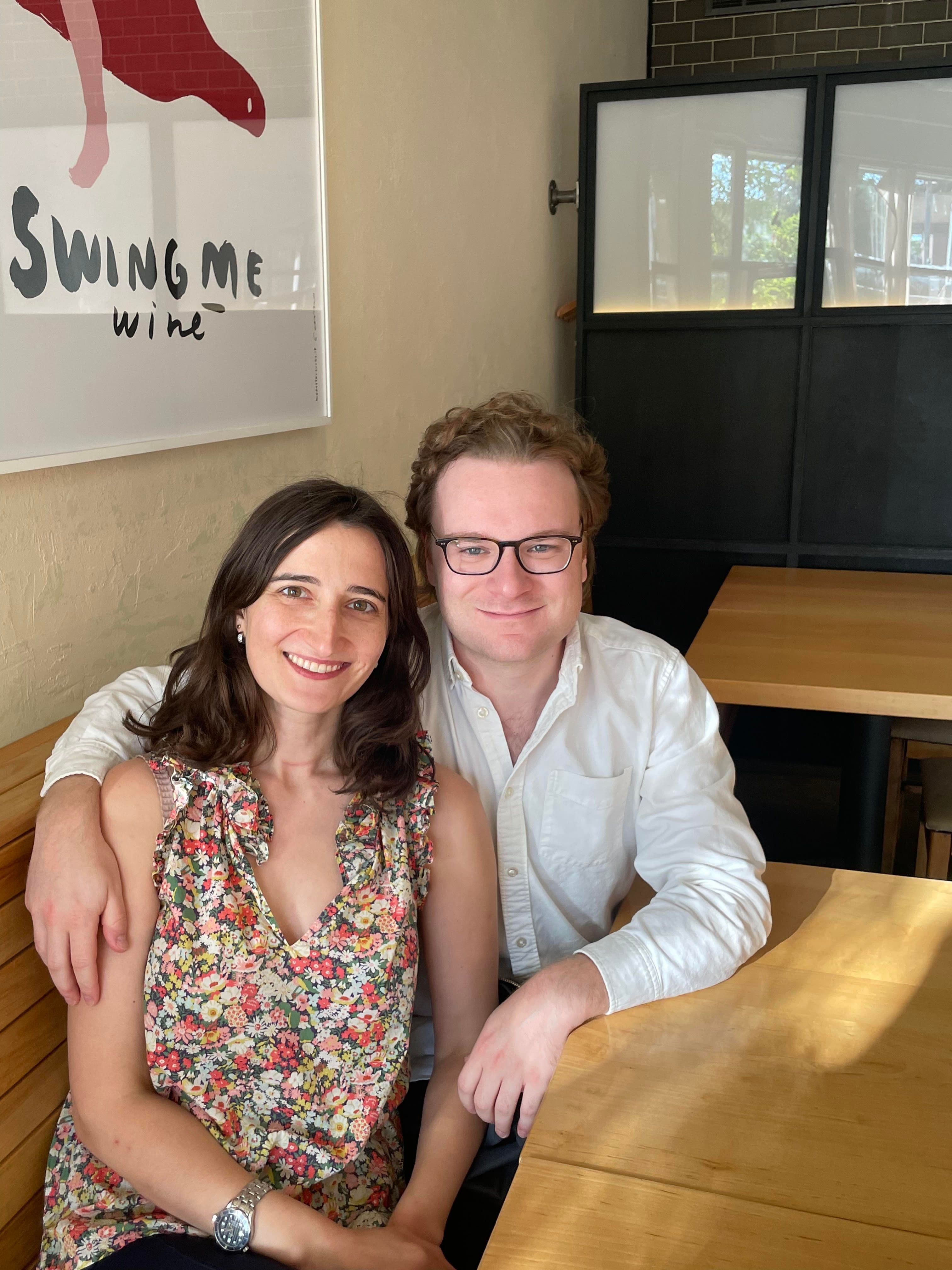
Jacob and me. Courtesy of Sophie Kihm.
These dynamics are common in women with cancer imposter syndrome, who often minimize their concerns to family and friends, ostensibly to protect their feelings and assuage worries. La’Tonya initially felt responsible for managing her mother’s anxiety. “My mom is a single parent, and I’m her only child — that’s a very special kind of bond”. The inimitability of their relationship intensified La’Tonya’s mother’s fear of losing her daughter, and La’Tonya’s obligation to mitigate that fear.
When her mother wanted to take a cross-country flight to attend her surgery, La’Tonya tells me, “I begged her not to come like I was six years old.” There were the practical concerns of hosting her mother and coordinating logistics. But there was a deeper emotional cost. For La’Tonya, having her mother at her surgery would have meant managing anxiety that made her feel like an imposter — emotions that felt disproportionate to what she perceived as just “a little bit of cancer”.
Kelly, too, pulled back from her family, in part to shield herself. Her mother died of metastatic skin cancer over a decade before Kelly’s breast cancer diagnosis, and her relatives worried that history would repeat itself. That fear conflicted with Kelly’s belief that her cancer was trivial compared to her mother’s. After sharing the news, “I didn’t complain to my family at all because I did not want to bring up any more [of the trauma],” Kelly shares. “I told them, ‘I’m going to be just fine. I’m not like mom; this is not the same.’”
Each of the women I spoke to reshaped, diminished, or even withheld her cancer story at one point or another, under the guise of protecting their loved ones. Theodore believes this is one of the central tenets of cancer imposter syndrome: people are “questioning, ‘how can I take care of others through my own story?’” and they are adjusting the narrative accordingly.
In reality, modifying the narrative may serve mostly to spare those of us with cancer from our own shame. Support from others can hold up a mirror to the cancer experience. But cancer imposter syndrome makes the reflection unrecognizable. It often feels more comfortable to manage how the story appears to others, rather than face a distorted self-image.
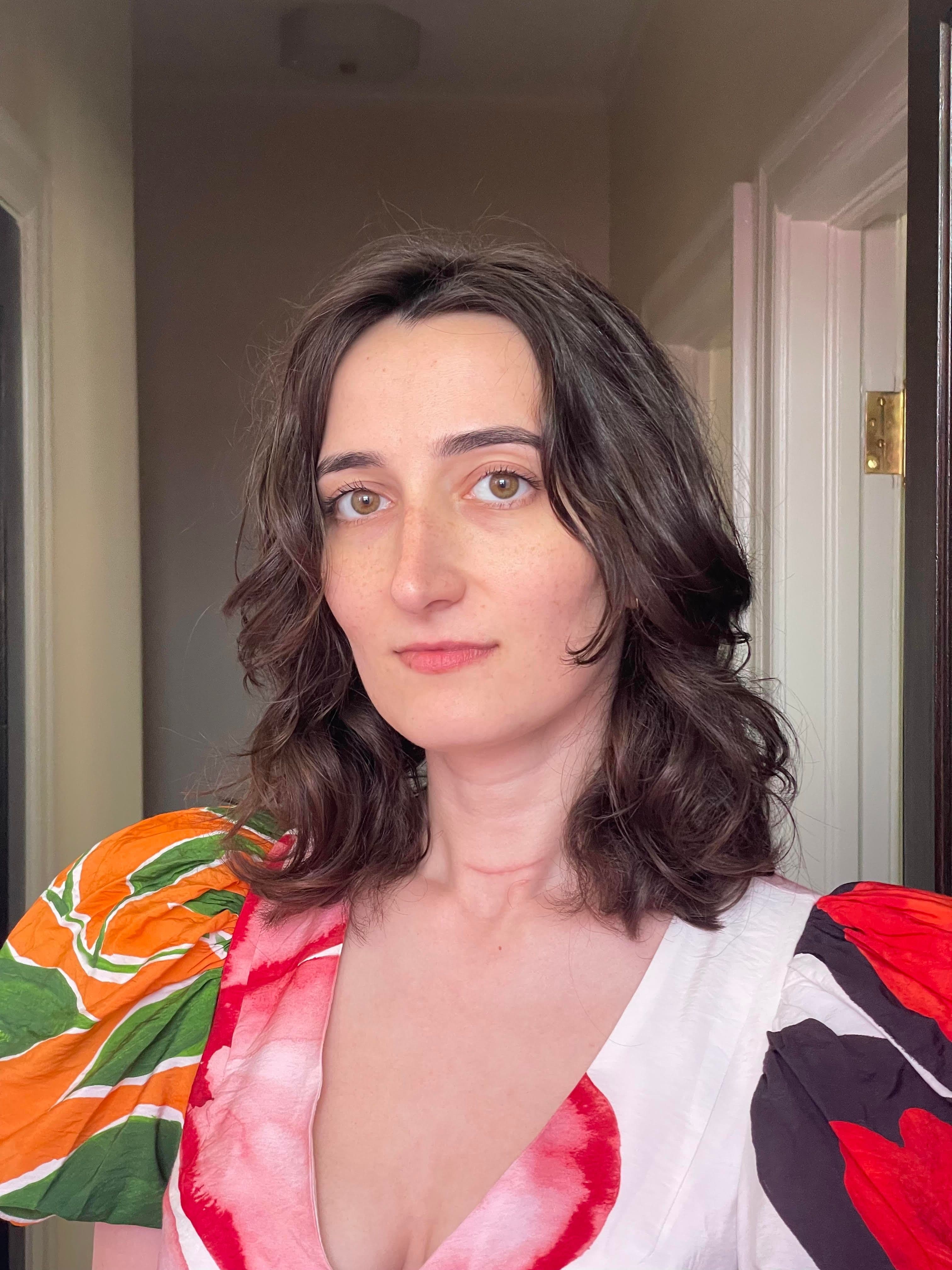
About three months post-thyroidectomy. Courtesy of Sophie Kihm.
Four months after my final cancer treatment, I am still determining how best to take care of myself and others through my own story. My cancer imposter syndrome remains, though it has changed form. I’ve gone from: Do I actually consider myself a cancer patient? to: Do I call myself a survivor?
I have never referred to myself as a cancer survivor. It still feels as if it is meant for someone sicker, stronger, or otherwise more deserving. Cancer imposter syndrome precludes me, and many others, from fully incorporating labels like these into our sense of self, making it harder to feel connected to a wider community. My cancer imposter syndrome convinced me I would have little in common with other people’s cancer stories.
Ironically, it took conducting these interviews, connecting with other women over a shared emotional experience, for me to start to see myself in other cancer patients. For the first time, I feel like I truly identify with a cancer cohort: the cancer imposters.