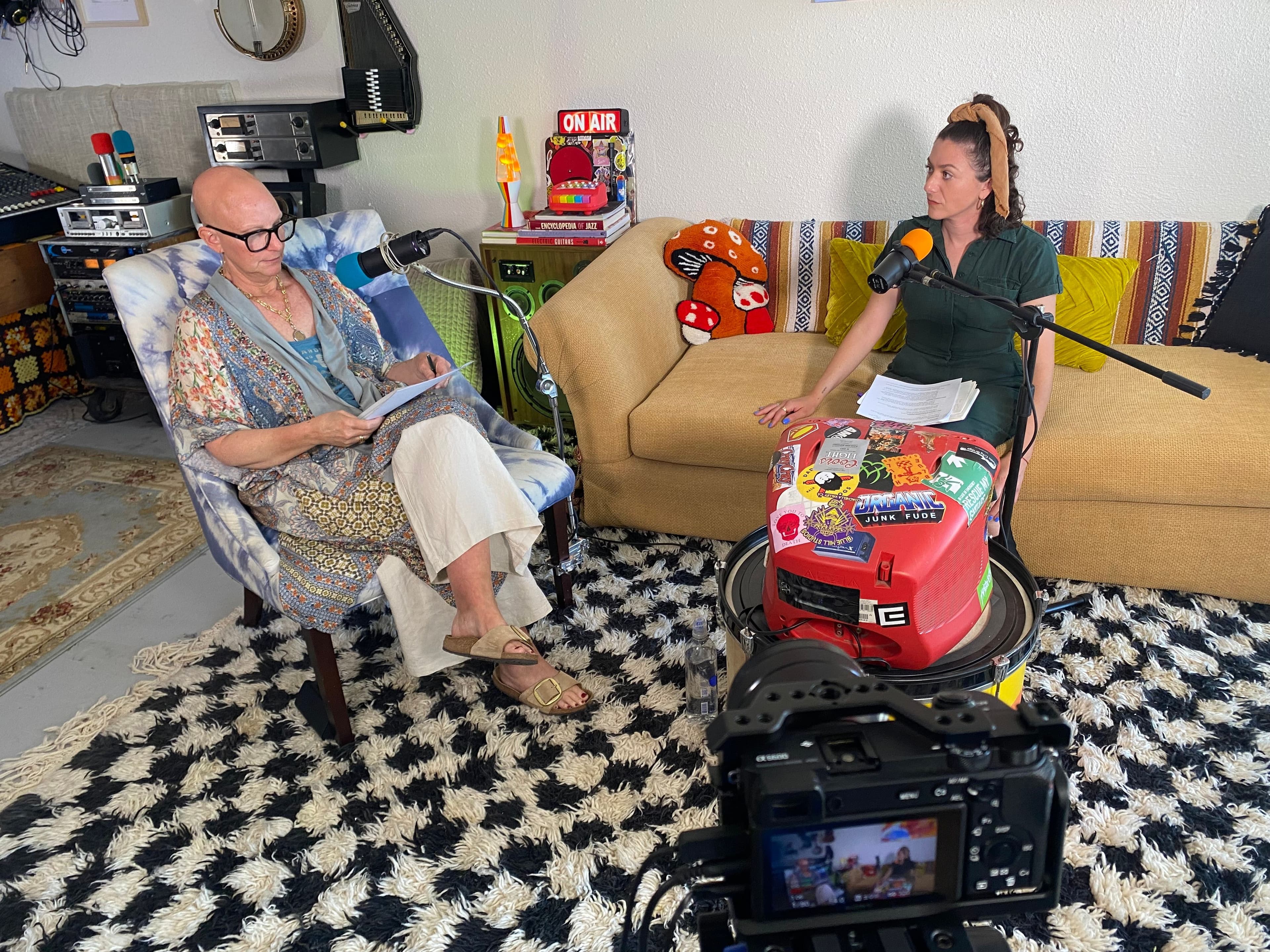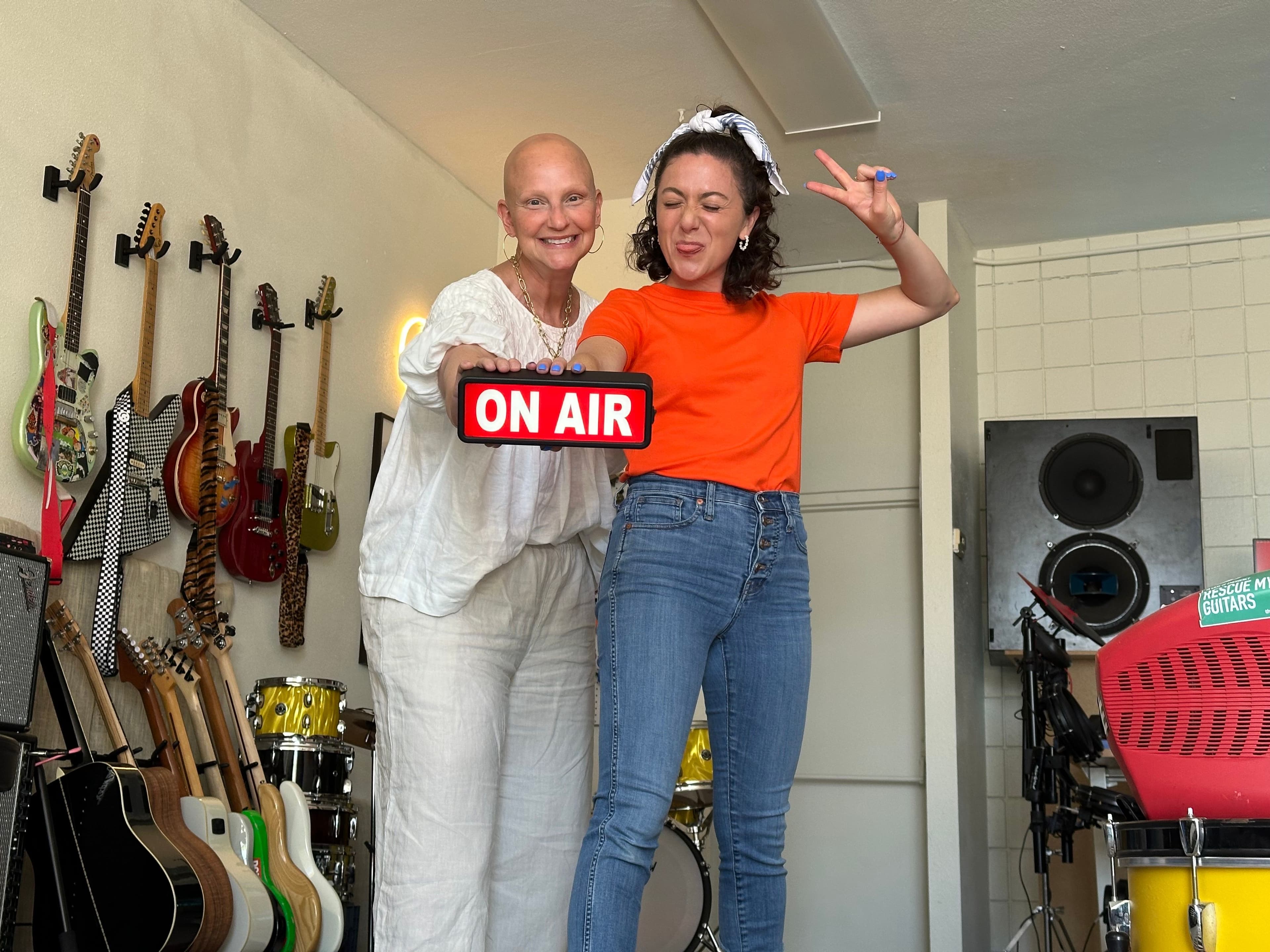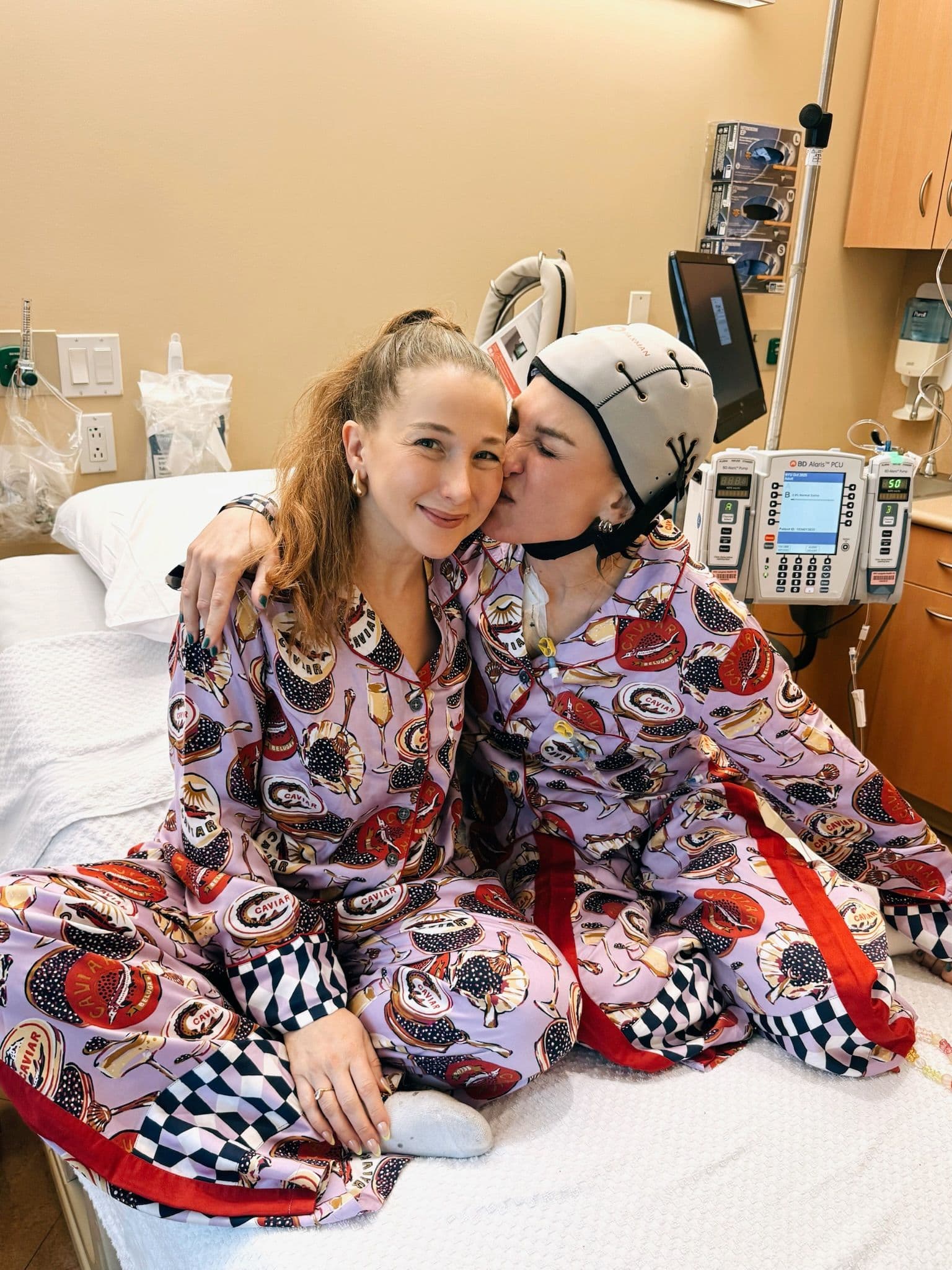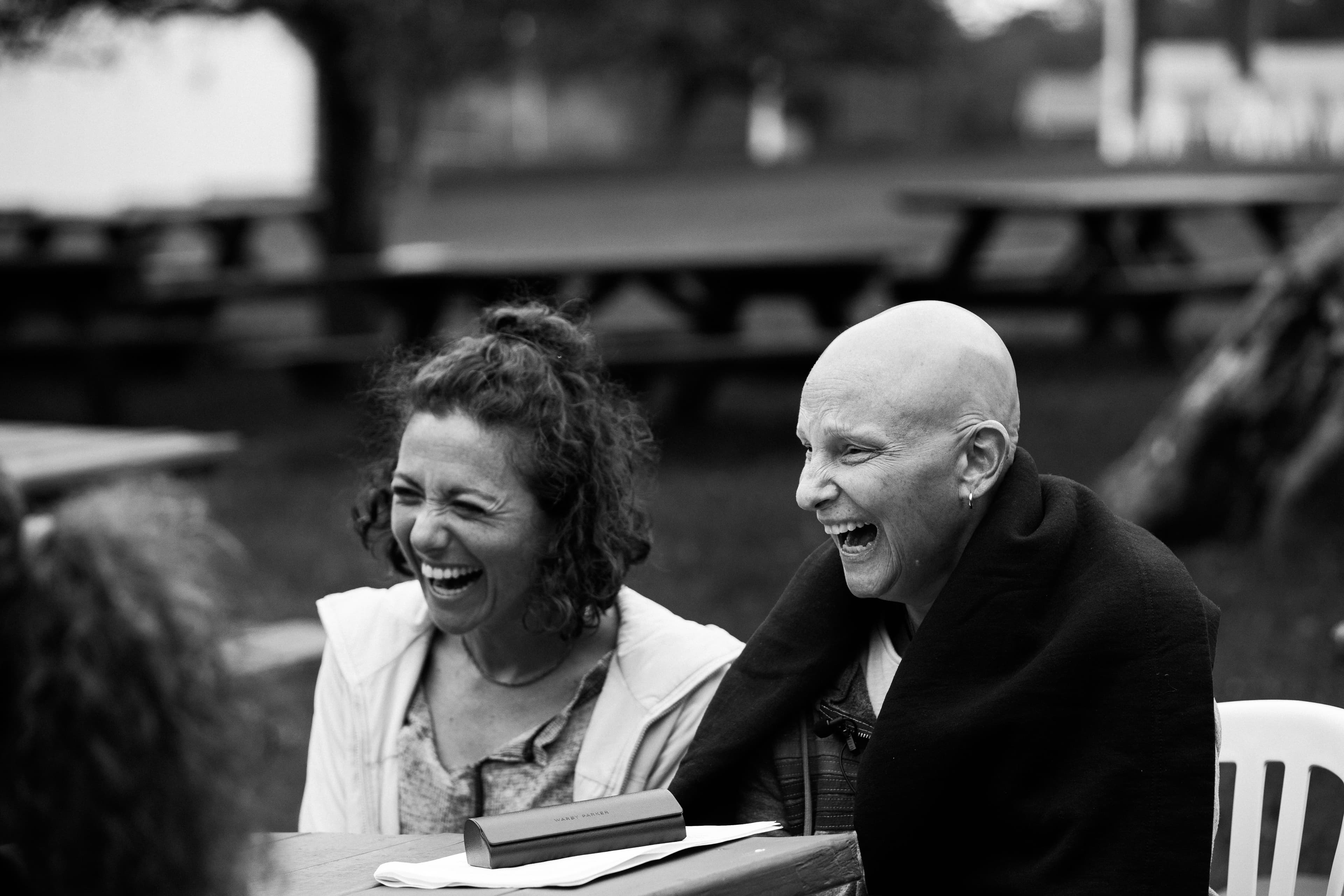

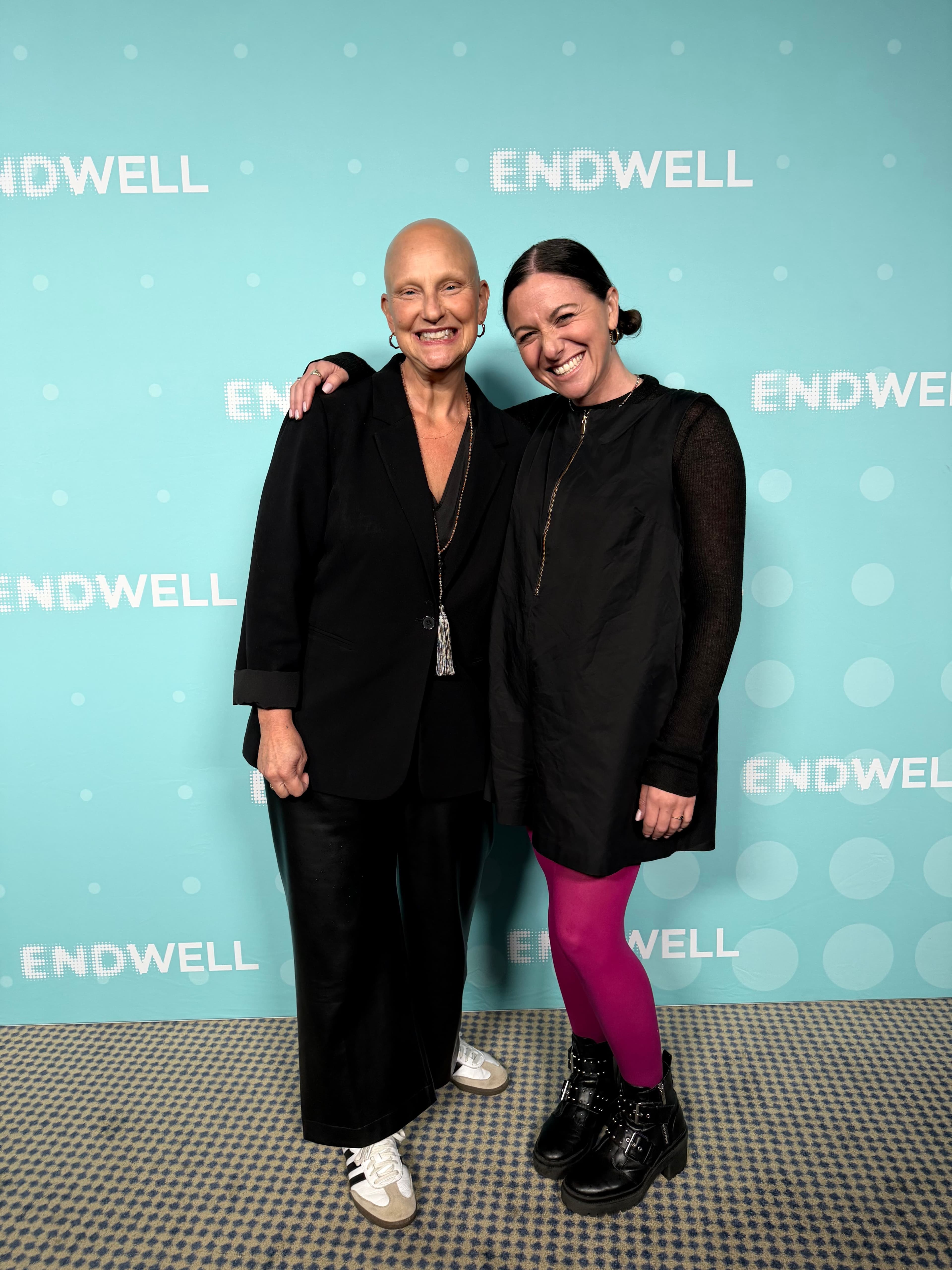
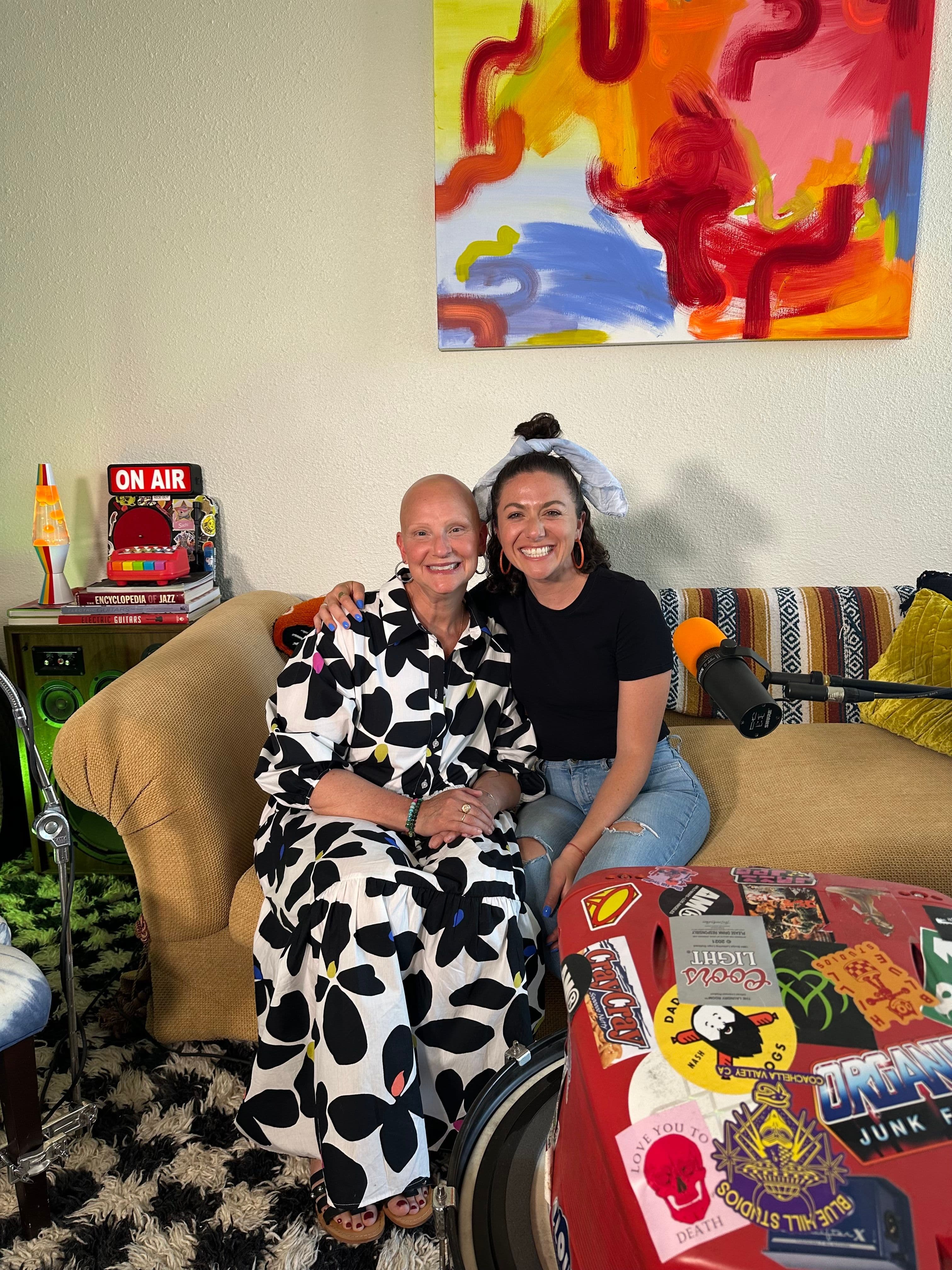
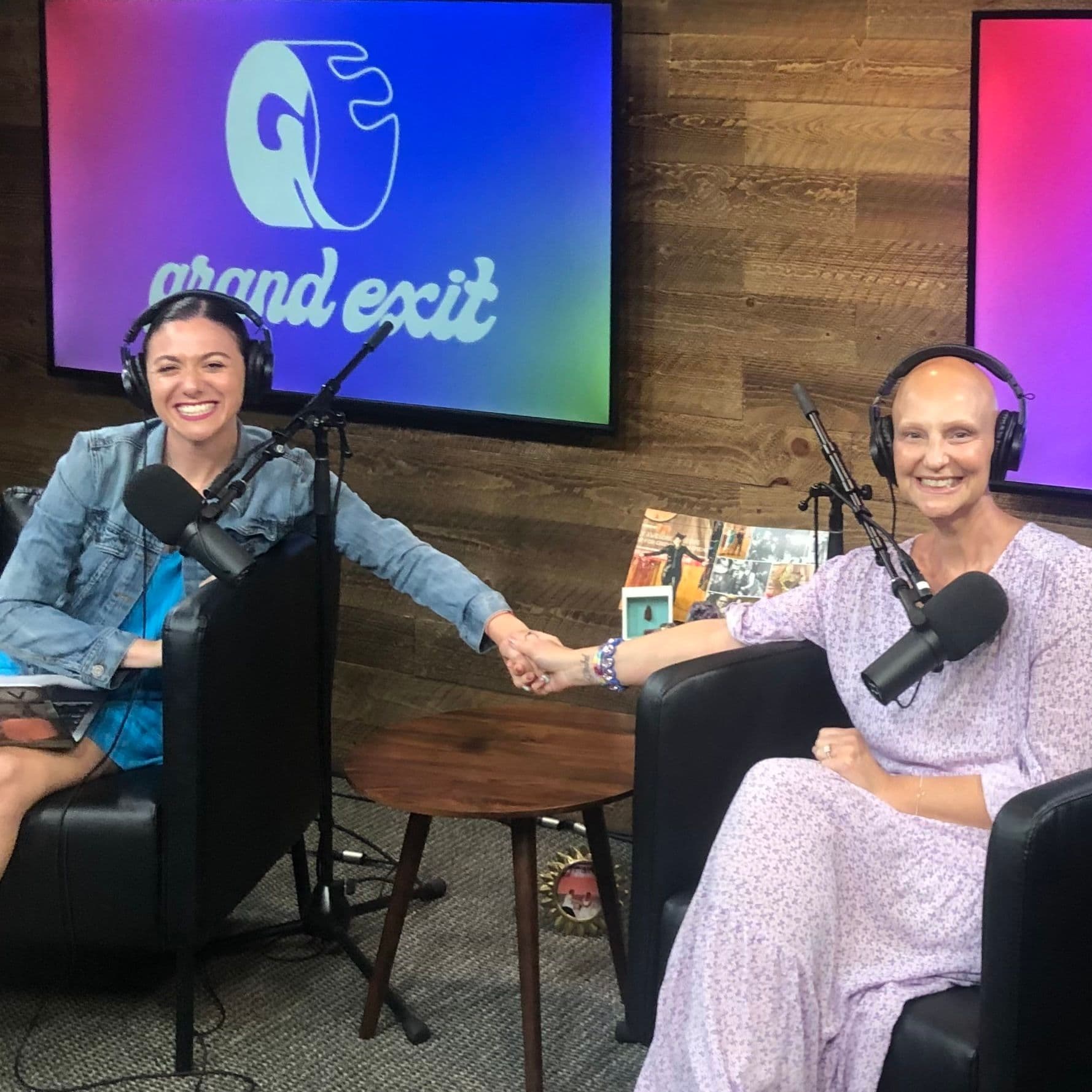
Grand Exit is a podcast started by Tamatha Thomas-Haase and Chelsea Leader Gold, that practices having the conversation so, so, so many people hope to never have. They talk about death, mortality, and how we live knowing that we’ll die, some of us much sooner than others.
At the center of the conversation is Tamatha’s experience living with metastatic cancer and Chelsea’s experience with personal loss. They want to model conversations about death that are more open, welcoming, less clichéd, not oriented to silver linings, but also more joyful than you’d expect.
In this interview, Tamatha and Chelsea talk about how confronting mortality can sharpen our sense of being alive.
Q:
Tell us more about the title Grand Exit. It’s very appealing—provocative, even a little glamorous. What does it mean? How did you arrive at it?
A:
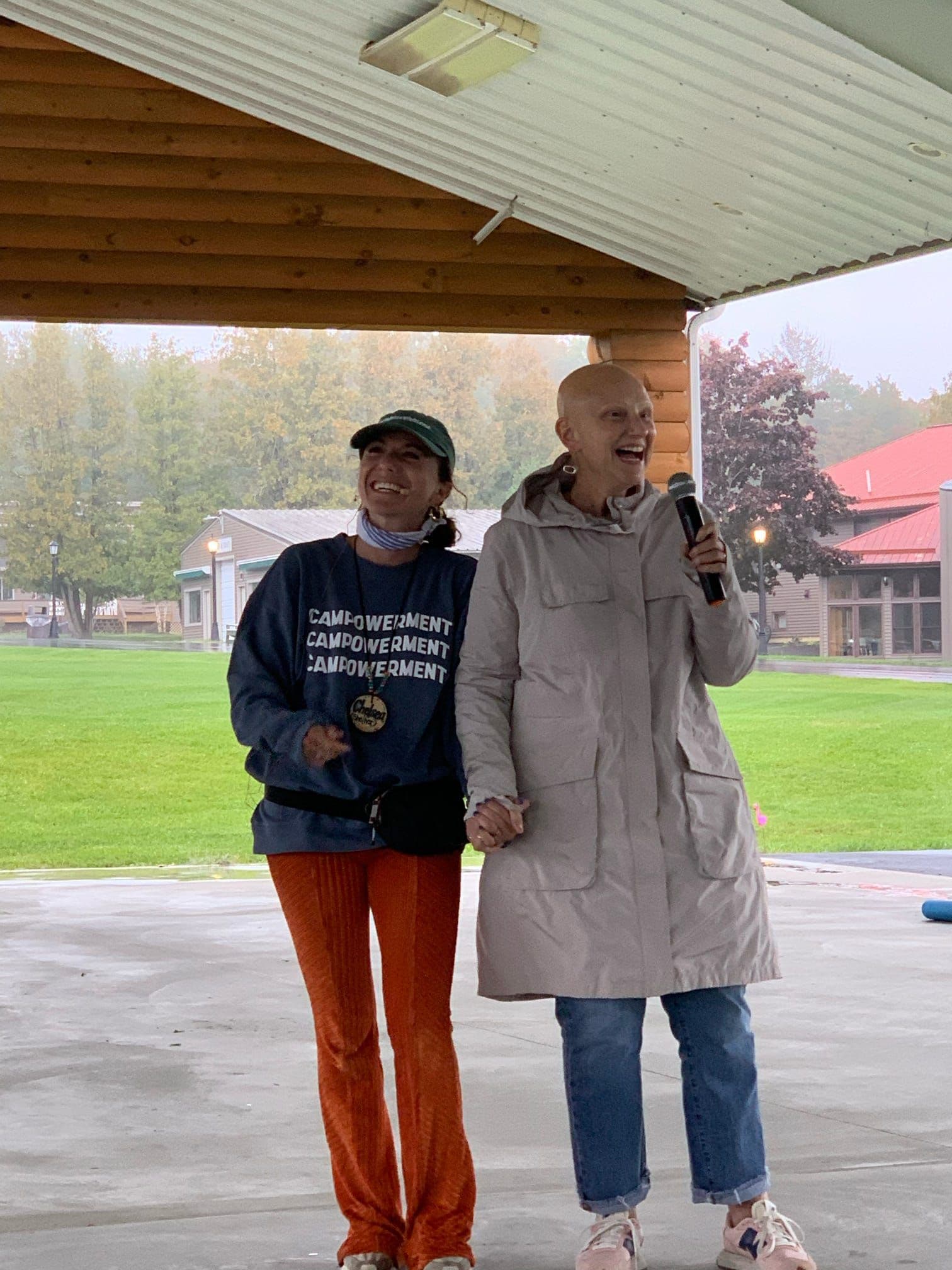
Tamatha: That’s a great question. I feel like Chelsea owns the name, but I’ll tell the story. Everything we do has Chelsea’s grandmother—Grandy—at the center. When we first met at Campowerment [an annual four-day retreat for women] in 2019, Grandy was dying. I still don’t know how Chelsea pulled camp off while her family was in California and Grandy was in Florida. When Grandy passed away, Chelsea spoke eloquently about the mess left behind. Even though Grandy had prepared—journaling what she wanted—there was still a logistical nightmare, as there often is when someone dies. Not long after, Chelsea said, “I want to do something to help solve for the mess,” and she knew she wanted to call it Grand Exit. She bought the URL immediately. She knew this was it, a way to honor Grandy. So the name honors her grandmother and our belief that death serves as a doorway to legacy. That’s at the center of everything we do.
Q:
Grand Exist’s premise—that talking about death deepens how we live—can feel radical. How do you approach people who resist talking about death?
A:
Tamatha: We put out a welcoming mat. We start with topics that don’t seem related to death and gently lead people there. We see it as a front porch—we invite people in, but we don’t force it.
Chelsea: We were very intentional about making it inviting, not “funeral home” energy. But we’re not trying to convince everyone. The welcome mat is there—people come when life brings them. We model conversations rather than giving instructions. It’s less about “how-to” and more about showing what’s possible.
Q:
Tamatha, you talk about “living like you’re dying.” What does that actually look like in your day-to-day life?
A:
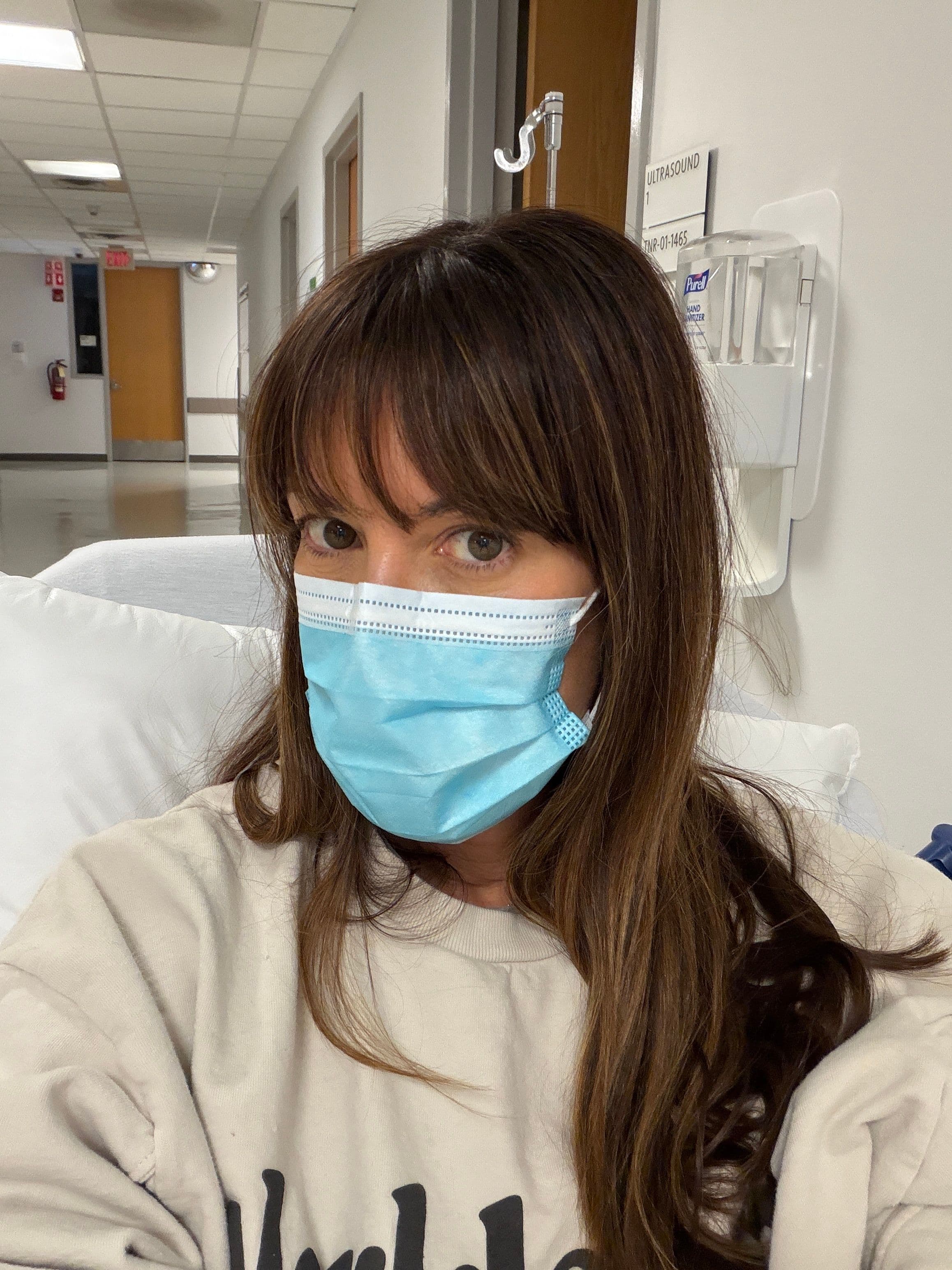
Tamatha: This is a critical question. People say it all the time—on T-shirts and bumper stickers—but what does it actually mean? For me, it looks different every day because I feel physically different every day. Yesterday, I could barely get out of bed—treatment wore off and I was really sick. The day before, I was hopped up on steroids, calling every friend I needed to call because I knew I had a window where I’d feel good. So I make deliberate choices. I didn’t clean the toilets—even though they need it. I called people who matter because I don’t know when I’ll feel well enough again. Other days, I clean the house because I need control. It’s about how I choose to spend my time and energy.
Q:
How did you learn to make those choices? Was it intuitive, or did it take reflection?
A:
Tamatha: Before cancer, my gut was tuned to other people’s needs. Cancer has made me more selfish in that way. I used to volunteer everywhere—school, church, community. When I was diagnosed, I stepped back from everything. Now I’m careful about what I take on. Recently, I skipped a volunteer shift at the cancer center because I wanted to do something else—I never would have done that before.
Chelsea: From the outside, her life looks similar—she’s still volunteering, seeing friends—but the inputs are different. It’s more intentional, more aligned with her values.
Tamatha: The soul-searching wasn’t frantic—it was quiet and deliberate.
Q:
Do you think this kind of reflection feels more urgent for people who haven’t been living in alignment with their values?
A:
Tamatha: I can imagine it might, but it’s deeply personal. Some people just aren’t interested in that kind of excavation. They’re dealing with multiple health issues—it’s just another thing. Also, there’s privilege in having the space to reflect. Many people don’t have that time or energy.
Chelsea: We thought a diagnosis would make people engage with mortality—but it didn’t. Some people go deep; others don’t. It’s not predictable.
Q:
There’s a strong culture of positivity, especially around illness. How do you communicate in a way people will actually hear?
A:
Tamatha: I try to hold both sides. For example, I wheeled a woman out of the cancer center after her treatment ended. Everyone was congratulating her, but she was shrinking. I asked how she felt, and she said she didn’t know. I said it might feel scary leaving a place that’s kept her safe—and she started crying. That’s what needs to happen. People think they should feel only gratitude and happiness, but there’s nothing wrong with feeling fear too. We can hold both.
Chelsea: It’s usually pretty well-intentioned. The only thing we can do is offer accountability to truth, and help each other cope, even when it's not hopeful or optimistic. It's us holding each other accountable to what actually is, and being there when it's uncomfortable.
Tamatha: It depends on the relationship. But I’m clear: I can’t carry other people’s feelings about my cancer. If someone says “just be positive,” I’ll say that’s not my experience. Then I tell them what I do need—acknowledgment that this is hard, and willingness to sit in that discomfort.
Feeling fully alive means feeling the full range of emotions, not just the positive ones. I know you want to stay positive, but look at the benefit to both of us in our life, this real connection we could have. If I come at you and I'm only positive, we are not connected. If we can have a conversation about the full expression of the things we're both experiencing: wow.
Q:
Can you tell us about Campowerment and how it connects to your work?
A:
Chelsea: It’s a women’s retreat built around play and community. The key rule: no saying what you do for the first 24 hours. It’s disarming and lets people show up differently. Tamatha came in 2019 while my grandmother was dying. I couldn’t fully show up—I was holding the structure together. Tamatha, meanwhile, was radiant and fully in it. My grandmother died three days later. It was the most beautiful death I could have imagined, and I didn’t know who to talk to—except Tamatha. I called her, and that began our friendship.
Q:
What has been helpful to you over the years?
A:
Tamatha: I’ve been metastatic for over five years. People are living longer now, but care systems haven’t kept pace. Early on, there’s support—meal trains, help—but that fades, even though needs continue. We need to rethink what support looks like long-term—the “metastatic meal train.” Also, it’s not just about me. The conversation was about my living fully and my aliveness. And there is a reckoning for me about like, For my husband of 30 years, when does his aliveness get to take center stage? Like, when does my daughter's aliveness [get to take center stage]? They have been in anticipatory grief for seven years. So how can I remove myself from the equation somehow and give them room to do what they need to do to be fully alive. I'm not the only one who gets a full life.
Chelsea: On, what we call, death legacy continuum, all of the realities of that are changing every minute of every day, or have the possibility of changing every minute of every day for every person. We're not going to be able to solve that, we don't have the skills to solve that. We’re not trying to solve everything—we’re trying to open the conversation. It starts small: asking better questions, checking in honestly, creating space for real connection.
There’s no one conversation—there are many. It’s just remembering that nothing is one-and-done. There's not one conversation. There's a gazillion, and you can have them with anyone, starting with yourself or starting with someone who helps you. It might be a worry about the thing that's at hand today, a worry about losing my job. That's mortality too. That's everything that has to do with you being alive. You can start at life. You can start at death, you can start at legacy, whatever. But start to practice.