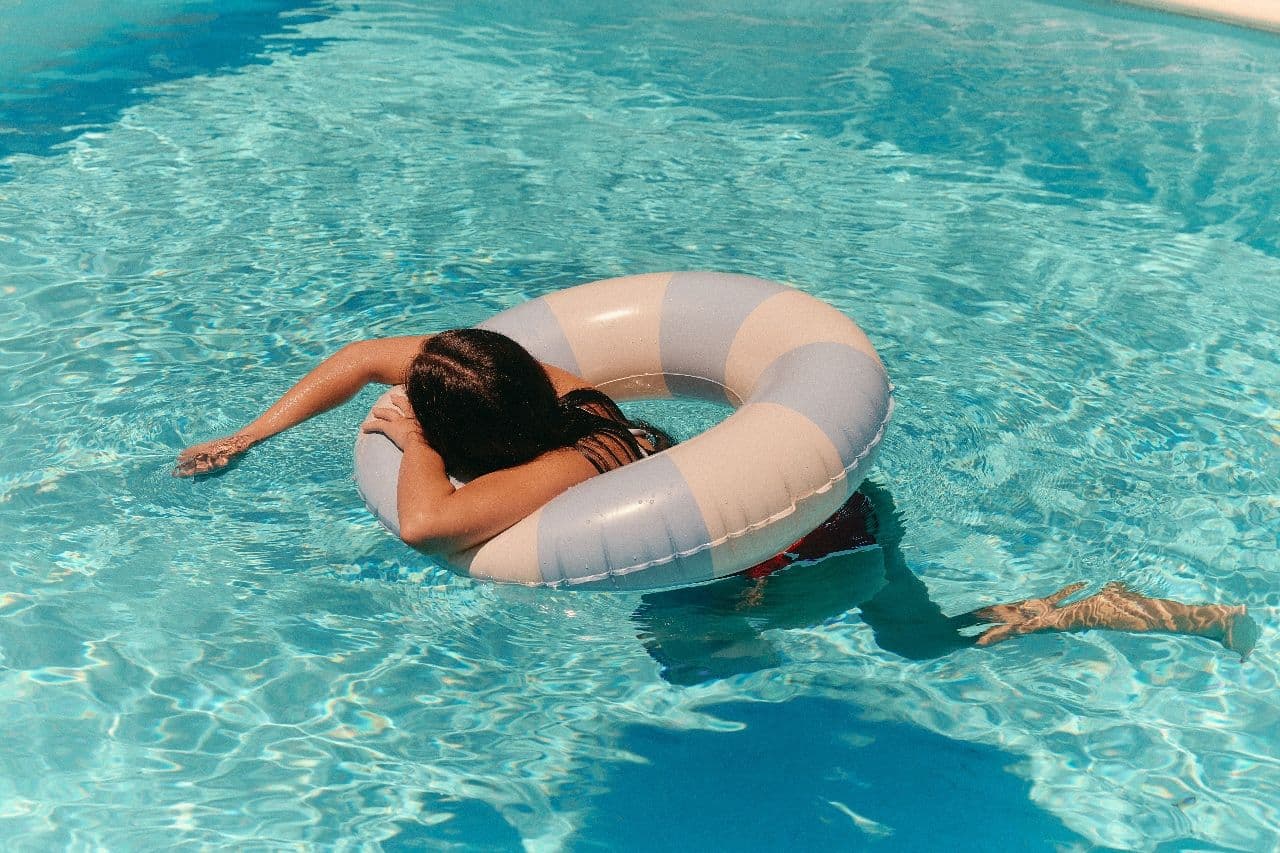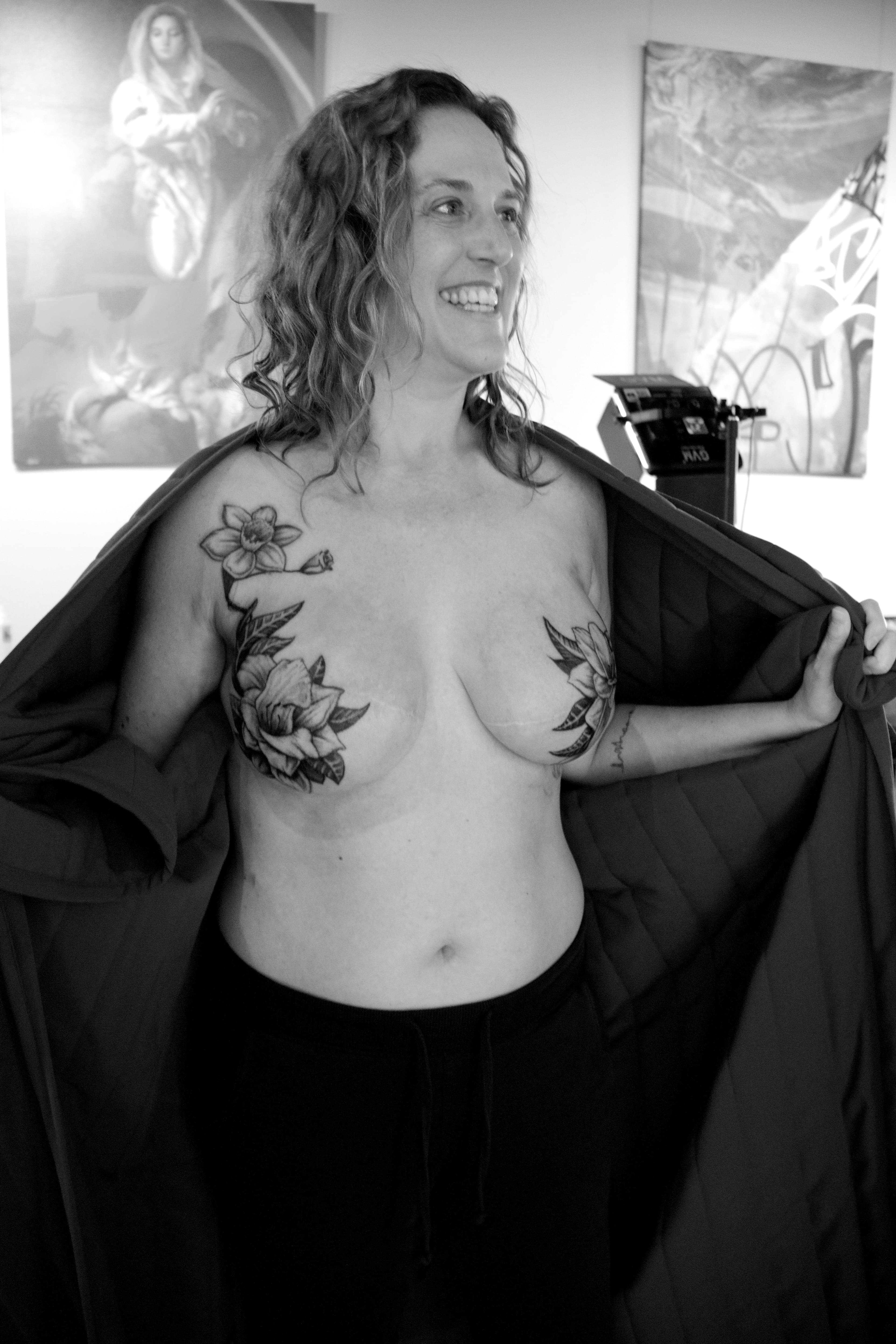
There’s nothing like looking for a swimsuit to inspire a bit of a body-image-crisis in all of us, even on our best days–and if you’re going through cancer treatment or you’ve been through it, that sensation is likely more heightened. Mastectomies and other cancer-related surgeries and treatments (like having a port) can make it difficult to shop for clothes you feel confident and comfortable in, and swimsuit shopping is a particularly tricky beast.
After her breast cancer treatment, Julia Kosinski remembers becoming preoccupied with the way she looked instead of enjoying being in the water, something that had always been a special moment for her. “I always feel like if you're in a bathing suit, something right is happening in your life, whether it's for that 20 minutes or that day. I just became very focused on the swimwear and not focused on the moment,” says Julia.
I always feel like if you're in a bathing suit, something right is happening in your life, whether it's for that 20 minutes or that day.
Lauren Yerkes felt similarly after her treatment. “Swimwear was something that I was typically comfortable in. Afterwards I felt really uncomfortable,” says Lauren. “Cancer is emotional, and after, you’re trying to figure yourself out again, reclaim your confidence. I just know the feeling because I hear it from a lot of women who have gone through this. You just want comfort and normalcy without having to think about cancer all the time.”
Your muscles and skin might be sensitive, you likely might need extra sun protection, your body shape might have changed, or the coverage seems to end right where your scars begin. And, of course, you’re hoping for one that’s not quite hideous (is that really too much to ask?).
To answer what you should look for in a swimsuit, we spoke to Lauren, founder of Post Swim and Julia, founder of Resme, to discuss how they both found swimsuit shopping post-treatment so frustrating, they decided to design their own.
Q:
Can you tell us about how you each got started with your swimwear brands?
A:
Julia, Resme: I'm a lawyer, so I really have no business going into design except for the fact that when I was younger, I made a lot of my own clothing. I've always loved making, sewing, and designing. I actually started designing my own swimwear 15 years ago. It was always much more of a hobby, but I have always been obsessed with swimwear. I love, love, love the water.
I was diagnosed with breast cancer when I was 35 and I had tissue expanders for a year. When I was finally able to have my reconstruction done, I was especially looking forward to having reconstruction and being able to get my swimsuits back on. But, I put on my swimwear and nothing fit me right–so, I decided to start making my own.
Lauren, Post Swim: The idea came around almost 3 years ago. My husband and I live in Southern California and we travel to Hawaii quite a bit. After my diagnosis, I was trying on bathing suits and just felt really uncomfortable. I had a double mastectomy, reconstructive surgery, and a feeding tube. I just had all these new things that I wasn't used to or comfortable with. I was complaining to him about it and he encouraged me to start the brand. We launched almost a year ago. We focus on fuller fabric coverage and I always say that I mean that in the most empowering way.
Q:
Can you tell us more about why swimsuits you wore before surgery, or regular swimsuits generally, didn’t work after your treatment?
A:
Julia: I felt incredibly self-conscious in bathing suits after surgery. I started noticing that when I was in my swimwear I was so focused on how it fit my new body [that I was] not enjoying the moment. It completely defeated the whole purpose and reason why I love being in the water, which was normally an incredibly mindful moment for me.
After treatment, I started looking online for other bathing suits that would fit my body better and I just was very disappointed in what I could find. Nothing was fitting me the right way. Nothing was doing what I was hoping it would do.
Lauren: I struggled with finding the right fabric that felt comfortable and also was going to keep everything secure [after I had implants] because I had no feeling. I was worried that something was going to fall out and I wouldn't feel it.
Also, I had friends who didn't have reconstructive surgery and were flat. A lot of swimsuits had bra shelves or just extra seams that were really uncomfortable against the skin. They were always cutting out parts of their bathing suits so that something could lay nicely against their chest and didn't rub. Even radiation burns rub against certain areas like that.
I've been in the fashion industry for a long time–before Post Swim I was the chief merchandising officer for Revolve–and when I was looking at mastectomy friendly swimsuits, they weren't stylish. We wanted to solve uncomfortable fabrics and designs in a stylish way.
Q:
What did the design process look like?
A:
Julia: The first and foremost thing I was looking for was a swimsuit that didn’t show or expose my scars when it was wet. And, the other thing I was trying to solve: I wanted something higher cut, specifically on the side boob area, and something that wasn’t digging into my armpits because they were sore.
To get there, the design process was very, very lengthy. It was tons of trial and error. I found a really wonderful female-owned factory in Colombia and the owner really believed in the mission of Resme.
I had conducted focus groups with different cancer survivors and people in active cancer treatment, all women. They were so wonderful in giving me some of their time and thoughts and insights. I started from the basics—what are you guys looking for from swimwear—because I could design swimwear that would work for me, but it may not work for other women. I wanted to account for different bodies and different concerns.
It was an incredibly iterative process. We would do literally 20 generations of one swimsuit, going back and forth between different samples. It was really special too. I remember the first time I tried on one of my samples, and then the first time the sample was ready enough to be tried on by someone else, and it was just thrilling.
Lauren: For Post Swim, it was really about thinking through what women had gone through and how we could solve those problems in a stylish way. It was based on my own experience and I talked to other women and asked them: What did you struggle with? What are you looking for? From there, I started creating and designing with them in mind.
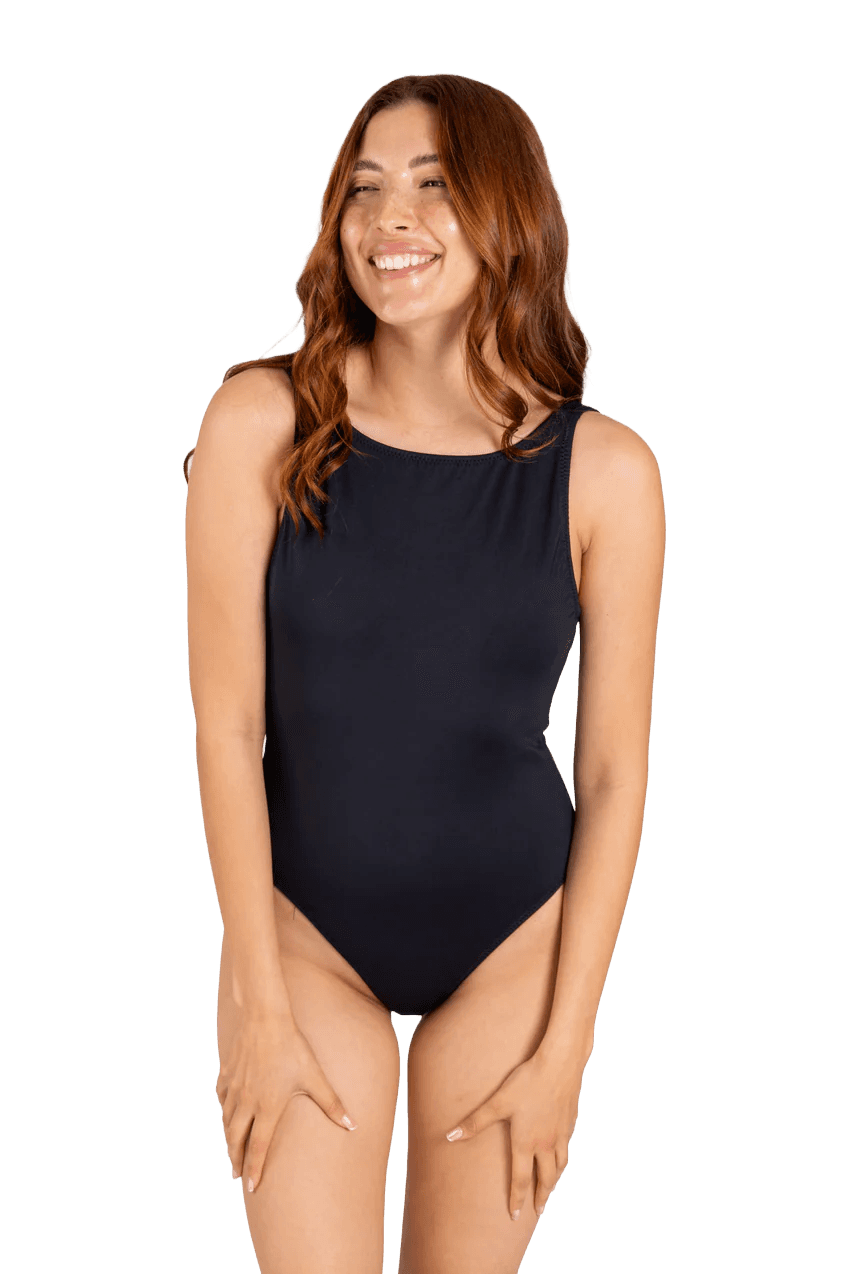
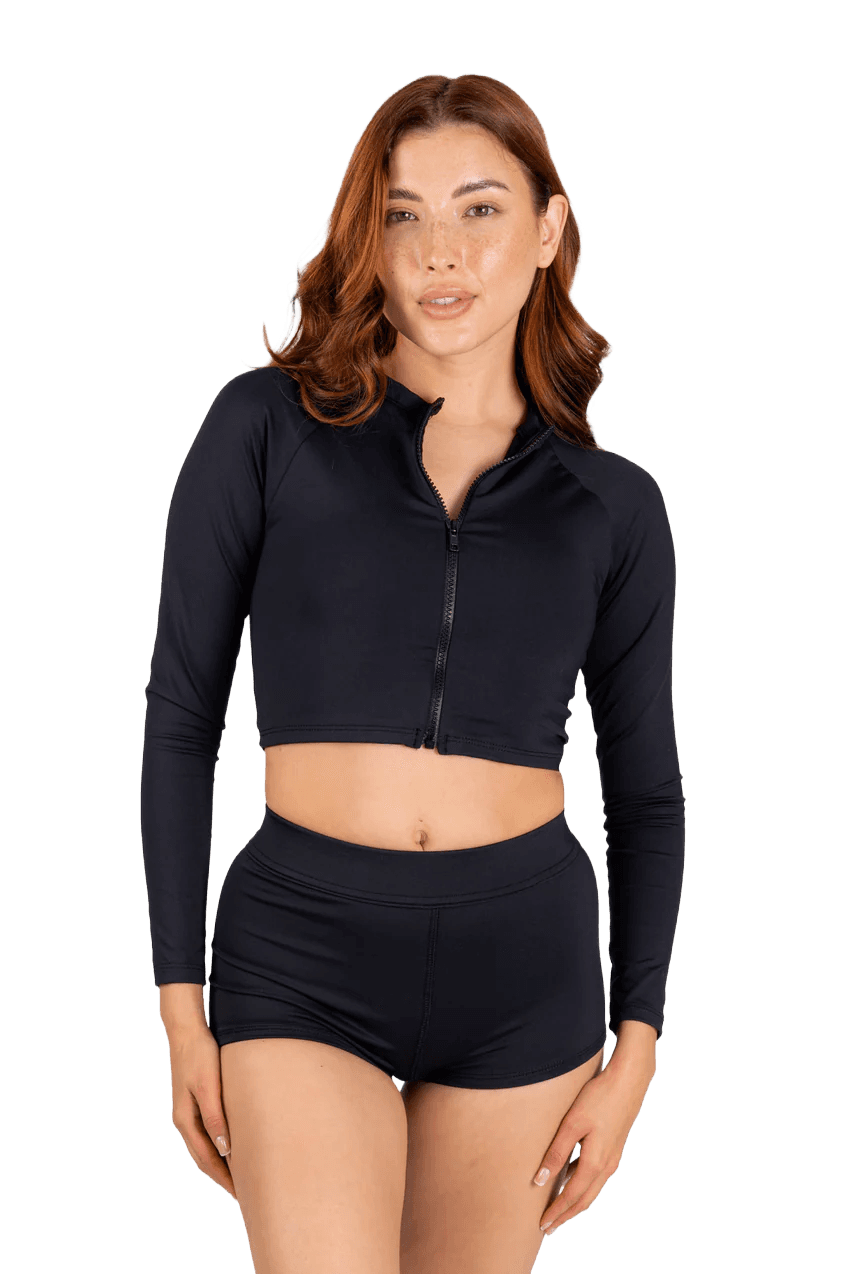
I wanted to make sure that first and foremost, I was designing to protect my scars and hide them from the sun. I didn't want people looking at things that I wasn't comfortable with. I also thought about flat[-chest] friendly items, and thinking about women who are flat on one side or not, and women who use a prosthetic. I wanted pockets that were large enough to hold a prosthetic. For ports, it’s tricky because a lot of women have theirs in different places, but our Lauren one-piece has a higher neckline so it covers most port scars. And, our Melanie Rashguard top has long-sleeves, so it’s great for covering PICC lines and giving you extra sun protection.
Sometimes, people will say to me, “I'm proud of my scars, I want to show them off.” We try to think about product range. Minimal to maximum coverage, so you can choose how much you want to show off or not.
Q:
How did you think about the materials you use?
A:
Julia: I was looking for a fabric that was buttery soft, made of recycled materials, had UPF 50 in it, that I could order a certain minimum amount of. Resme suits are made with both Colombian fabric that’s recycled and has sun protective features [as well as] imported Spanish swimwear fabric. I liked the feel of those suits, particularly the elasticity.
With material and design, another thing I was looking for was a swimsuit that didn’t show or expose my scars when it was wet. I have pictures from before I founded Resme of me in a wet bathing suit, and you can just see horizontal scar lines going right across my chest. When bathing suits are wet they stick to your skin and normally it might show a nipple or whatever, but I became very self-conscious about the scars showing through. That’s one of the things that makes us quite unique. We have this neoprene liner inside the bathing suits that adds this nice hidden layer.
Lauren: The first collection was focused on a thicker fabric with more compression. The compression component was important for me because I wanted a suit that felt secure. The collection we just introduced has a new sun protective fabric. It’s been tested for additional UPF [Editor’s note: this stands for ultraviolet protection factor, a measure of how much a certain fabric protects you from the sun].
Q:
What’s your favorite suit you’ve designed?
A:
Julia: This is like asking me to choose which of my children is my favorite. They’re all my favorites. I have to say, the Ebby was my first love in the sense that, that’s the suit that I worked so hard on just to launch Resme. I think that’ll always be my tried and true, but I’m also pretty obsessed with our Marconi Top and then the Isa Bottoms. They’re a little sexy, they have a cute cut to them, but the top gives me that added coverage and holds me in.
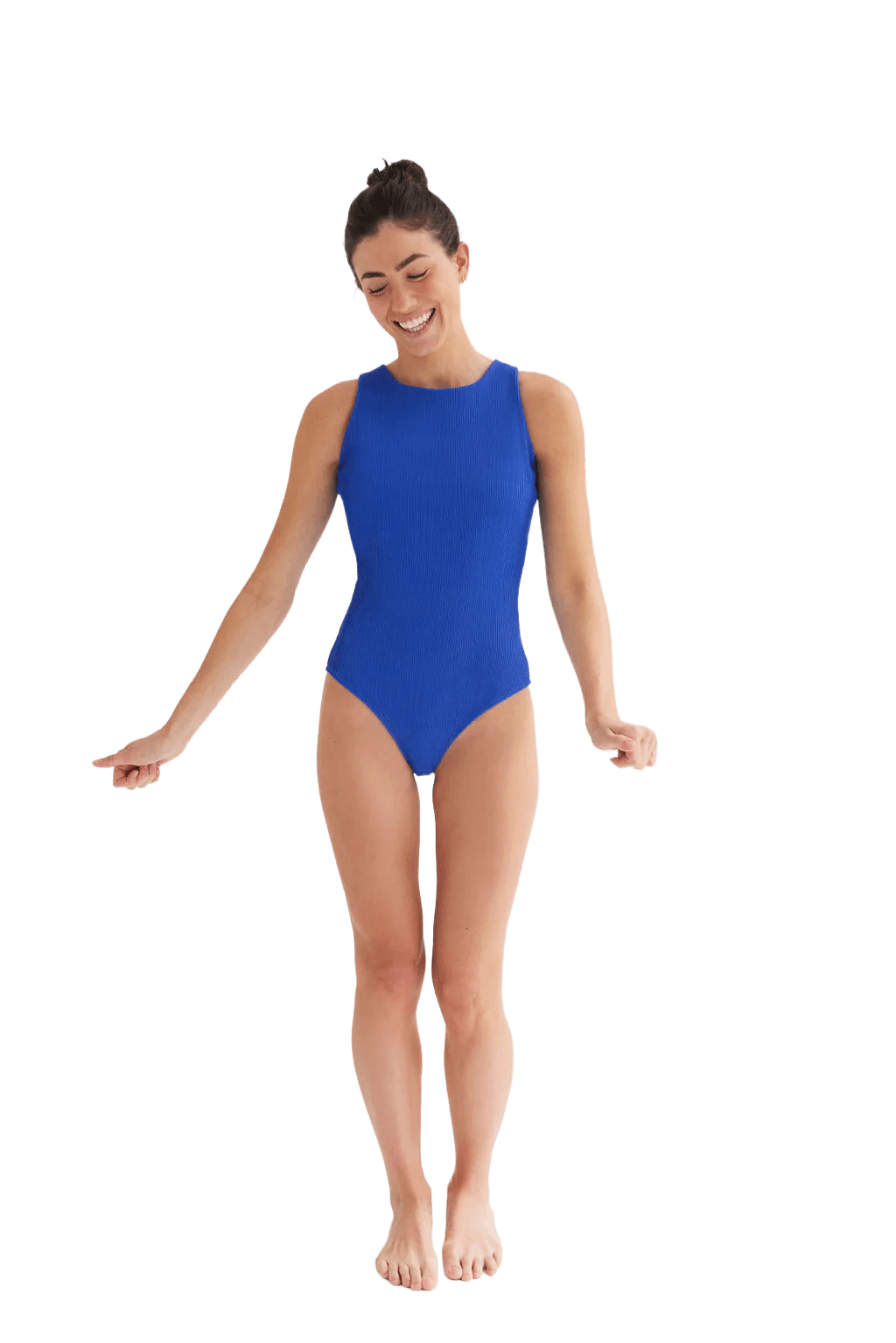
Lauren: Certain suits are best depending on what type of surgery you’ve had. I think the one suit that is great for all women is the Lauren suit. It’s one of our one-pieces. It has no bra shelf, so it’s great for women who are flat, but it has a higher neckline so, when I have implant rippling, it covers that. But, it still has a really sexy low back so it still feels not overly covered.

Q:
What has the reaction to your swimsuits been like?
A:
Julia: It's been really wonderful. I think the best feedback is that we have a lot of repeat customers. It’s really neat. Someone will buy something and then a month later, they’ll put in another order, and a couple months later, they’ll put in another order for the different color. I think also what’s really neat and [something] I didn’t expect: half of the Resme customers have never really been personally impacted by cancer. A lot of women will just put on a Resme suit and love the fact that it holds them in and it keeps them covered, feels elevated and youthful. That’s been really cool to see.
Lauren: There's always constructive feedback, of course, but it's been very positive. I think people are just excited that there's options and someone's actually thinking about them in the swim space. I get a lot of messages saying, “Hey, I have this scar. What style will cover this or can you make me something?” I [got a message] a couple months ago from a girl [who wrote because], they used some of her inner thigh to re-build her new breast tissue. She told us she was looking for a boy short but she couldn’t find anything, so we made a boy short with her in mind. People are always very excited when they find us. They’ll send us messages or emails, just letting us know, like, “I found your brand. I can't wait till summer so I can buy something.”
*For all POST SWIM images, photo credit: Jessica Freund & Rafael Reyes, Moonstone Media & Design. Photos courtesy of POST SWIM.