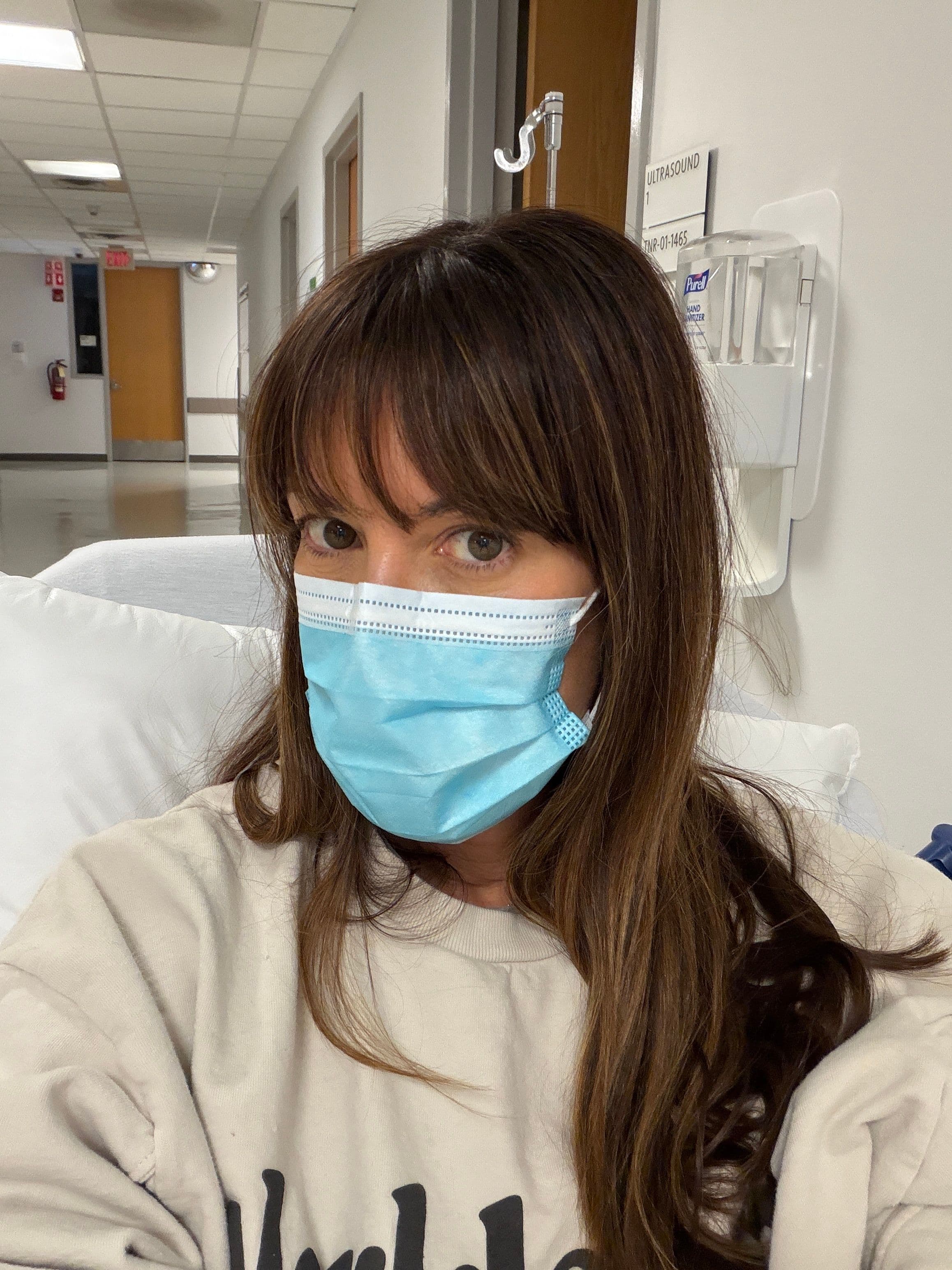
In this as-told-to, a 30-year-old woman* in Florida talks about getting diagnosed with breast cancer two months after starting a new job in marketing–and being asked to resign one month after disclosing her diagnosis.
It’s an awful situation that combines a stressful job, a terrible boss, and the need to make a tough decision.
If you’re also navigating a difficult situation around a diagnosis and your workplace, or if your employer threatens to force a resignation, we have some resources at the end of the article to help you determine a course of action that feels right for you.
I was diagnosed with triple negative breast cancer on August first, and I started a new job in mid-July. So, it was all very new, very fresh.
Looking back, I wish I had never switched jobs in the first place, but obviously I didn't know that I was going to get diagnosed with cancer. I feel like my previous job would have been way more understanding, way more flexible. But at the time I was just ready for a change and I wanted a job closer to me because I had a long commute.
I had told [my new job] I was dealing with some health stuff, because I had to take half-a-day off to get the biopsy and other testing and scans. I knew that, legally, I didn’t have to tell them exactly what was going on. But, I wanted to share my journey online, and I wanted them to really understand how serious it was, so I told them it was cancer. I feel like they were going to find out eventually anyway. I wanted them to know it wasn’t just something simple. It was something serious and I was going to need flexibility.
To be completely honest, my new boss ended up being an asshole. He really was just a nasty person. At first, my boss acted very understanding. The job was hybrid, but on Fridays we were supposed to be in the office. I told him on Fridays, I have chemo treatment, and I wasn’t going to be in the office. He verbally confirmed that, and then a few weeks later, he started saying “why aren’t you in the office?”
I said, “As we discussed, I have treatment on Fridays.” And this response was different, he said, “We just really need you in the office, da-da-da,” and continued talking about other work stuff.
I was sitting in the chemo chair, working through chemo. I worked through every chemo session until the end when I resigned. I just thought it was crazy. He was so not understanding and just extremely rude about everything, too.
Dealing with his attitude added to my stress so much, but I was so worried about losing health insurance. Obviously, I couldn’t lose my health insurance.
He started saying I was falling behind, which, granted, I probably was a little bit just because I was under so much stress. I know I wasn’t doing a horrible job, but I know I wasn’t doing how I normally would be doing had I not just been diagnosed with cancer and going through something traumatic.
Eventually, he said, “I feel like things aren’t working out. I want you to really think about if you still want this job.” He didn’t want to fire me because then I could have sued him. Legally you can’t fire someone for being sick. He wouldn’t fire me, he just said, “take a couple days to think about if you really still want this job.”
And I did. I still wanted the job. At first I really wanted to keep working to help distract myself, keep myself busy throughout everything. I really didn’t like the job, but I needed health insurance. So, I came back and said, “I still want to be here.”
Then, he offered me three months' pay to resign.
I said I needed to think about it. I talked to my mom, I talked to my uncle who has years of experience in HR. We all thought it was a pretty good deal. I looked into marketplace health insurance that I was able to get on. That was the most important thing for me, and I took the deal. The three months’ pay helped me through the end of my treatment. It was nice to not have to worry about immediately finding another job. But I don't think I really thought something like this would happen when I decided to tell them I had cancer. I knew pretty quickly that I didn't want to work at that job long-term, but I didn't know how short term it would be.
I was already hormonal because of the treatment, so having that on top of dealing with having cancer, dealing with that job, dealing with a mean boss—I don’t think I’ve ever been that stressed in my life. My mom was my number one rock, I always vented to her, and I tried to keep up with exercise, going on walks to cope with the stress, but I also remember thinking, This shouldn’t be this hard. There should be a support system in place for people that are going through this. There should be support from the government. There should be some type of disability in place for people who are going through this.
I looked into it. I think there is some type of disability, but it has to be long-term or something, I just remember I wasn’t qualified for it. But I remember thinking, I’m not choosing to go through this. It shouldn’t have been that hard.
I definitely thought about suing. If they fired me, I told myself I was going to sue, but they were smart legally and they didn’t fire me. They just asked me to resign. They definitely talked to a lawyer because they sent me something to sign that basically said I can’t take legal action based on what happened, because I agreed to it. They did it in a smart way.
For a while after this all I didn’t look for new jobs. I was just focused on the rest of my journey. I still had two surgeries to go through. But now that my treatment and my surgeries are done, I’ve been looking for months. I knew I wanted to move to New York from Florida, so I’m looking at jobs in New York. The job market’s really hard right now. I still don’t have a full-time job. I’m working part-time.
Sometimes, I don’t want the hiring managers to know I have cancer. A lot of times, when you’re applying for jobs, people will do a deep dive on you on the internet. Because I’m so open about my journey, sometimes I wonder if that turns people away. But, I’m not going to stop sharing because I know I’m helping other young women.
But still, after all of that, I’m more cautious about who I work for. I’m pickier. I’ve had a lot of job interviews. Most of them didn’t go anywhere, but there were a few that got close. The thing is, you can never really tell how a job is until you actually start working it. You just never know for sure, but there are more things that I know to look out for.
I look at life differently after this whole experience and having cancer. I want to be able to really enjoy my life. I want a work-life balance. I won’t take a job that’s fully in office. I want to have flexibility and really enjoy my life. I don’t want a soul-sucking job, that just doesn’t align with me anymore. I’d rather struggle and work part-time until I find something that really aligns with me.
*This interview has been edited, condensed, and slightly reordered for flow; names and some identifying details have been changed at the subject’s request.
If you find yourself in a similar situation, or in any employment dynamic that feels unfair or impossible, here are some resources especially for people with cancer navigating their workplaces:
– National Coalition of Cancer Survivorship
Jadey also has an overview about cancer and the workplace here and an interview with Rebecca Bloom, author of When Women Get Sick, who has nearly thirty years of experience helping women navigate situations exactly like this and shares some practical, overview advice.