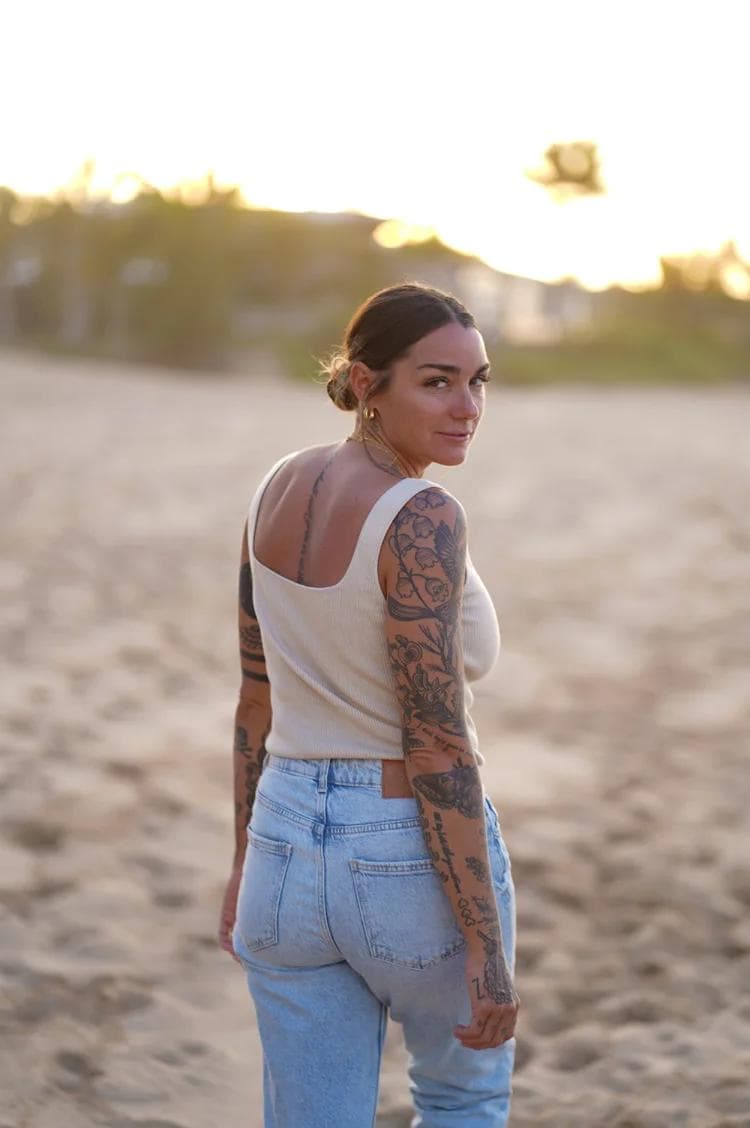
In 2020, the writer and outdoorswoman Steph Catudal revisited a version of the worst part of her past. When she was 14, Steph lost her father to cancer. And then in 2020, when she was 34, Steph’s husband, the well-known ultramarathoner Tommy Rivers “Rivs” Puzey fell so suddenly sick that he entered a medically-induced coma for 84 days and received a diagnosis of a rare form of lung cancer. It was in the heights of COVID and Steph spent her days in the hospital, and her nights comforting her three daughters. Rivs emerged from his coma, and in late 2021, he ran his first marathon since his diagnosis. And Steph wrote down everything she went through.
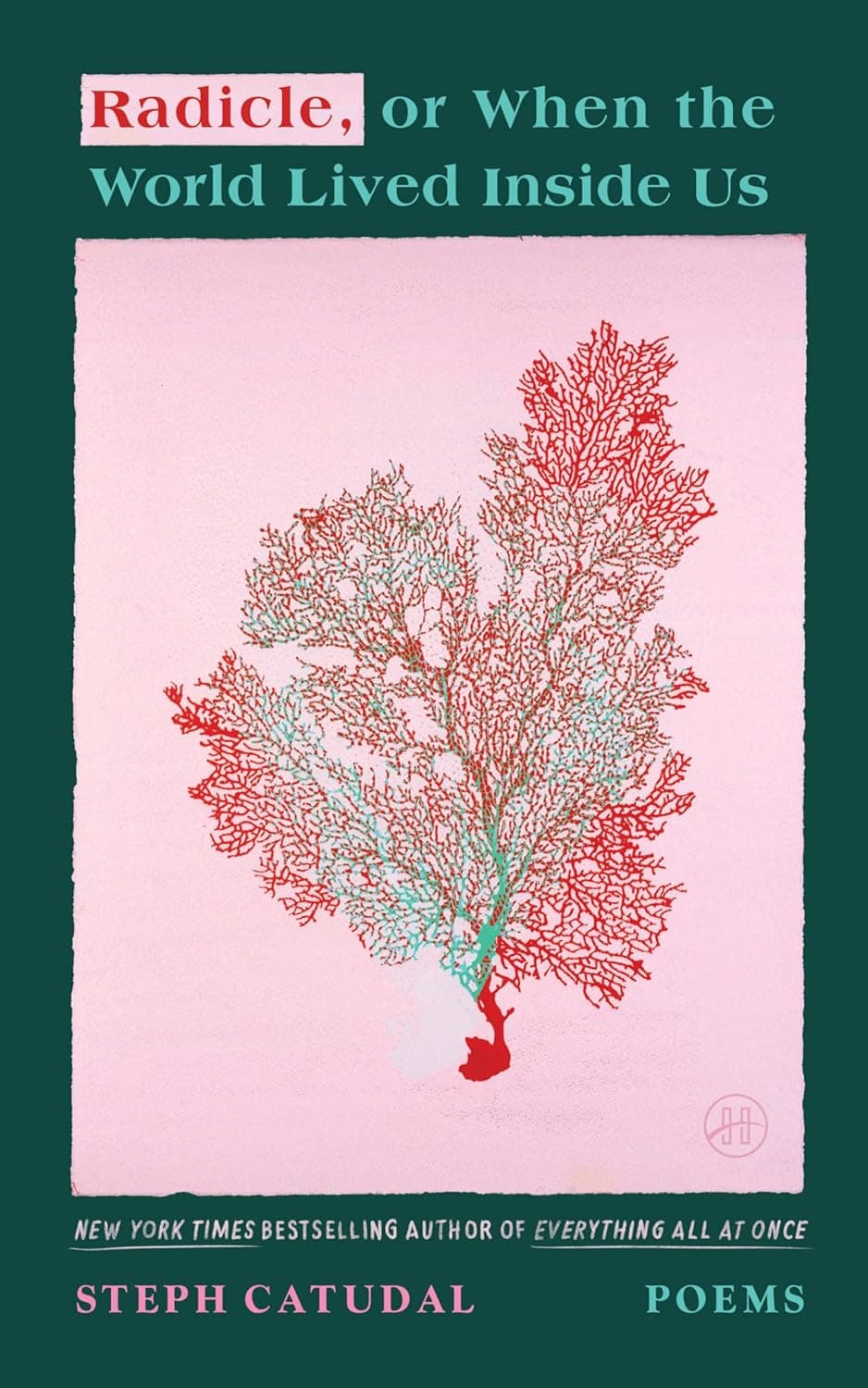
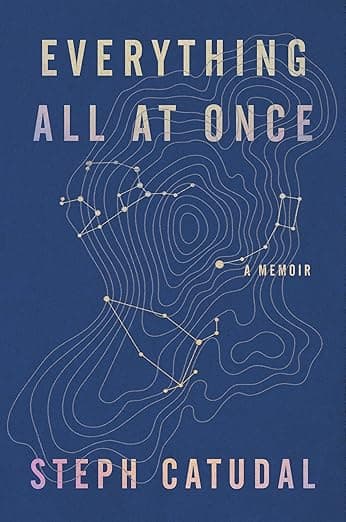
This fall, Steph is publishing her second book. Her first, Everything All at Once published in 2023, is an intense memoir, vibrating with pain and grief, that braids the loss of her father with the intense caregiving for her husband. Her new book, a collection of poems called Radicle, or When the World Lived Inside Us, takes its title from the word for a plant embryo (a radicle); it’s the first sign of life for a plant, and grows downward into the ground, rooting a seed. It’s a symbol, for Steph, of grounding and growth.
In her interview with Jadey, we talk about caregiving, the best things friends can do, and changing your perspective always.
Q:
The way I read these poems in Radicle, many concern the fear, uncertainty, and rebuilding in the aftermath of caring for someone in a terrifying and severe illness. What was your experience turning to books or poetry in the heights of caregiving?
A:
When my husband was sick, it was really high stakes. I don't think it was the normal cancer journey that a lot of people go on just because he was in a coma before they even knew he had cancer. It all happened very quickly and very intensely. His life was on the line before we even knew anything was wrong.
I honestly don't think I read anything during those first few intense months. But then, in some sadistic way, the first book I read when it looked like he was going to get better was When Breath Becomes Air. [Editor’s Note: When Breath Becomes Air is a Pulitzer-prize finalist book by a neuroscientist, who died while writing this autobiographical non-fiction work about cancer.] My sister was like, ‘Why would you read that?’ I think that I just wanted to feel connected and seen. I wanted to understand what it would feel like to be on the other side of that, as someone who was caring for someone who is ill. I think it gave me good insight into the things that my husband might be thinking and feeling.
I read a lot of poetry books. I read Ocean Vuong’s Time is a Mother. During that time, I was so cracked open. I was so emotional, so sensitive to everyone's feelings. And so anything that had deep sadness or sorrow, I gravitated towards because it helped me feel less alone.
Q:
If you could return to the early days of your husband’s cancer experience, what would you tell yourself? Or, another way of asking: what do you want to share with other caregivers in these intense situations?
A:
My father died from cancer when I was a kid, and I watched my mother care for him for a year. I watched her put everything into it. She didn't give herself breaks. And that's kind of how she parents too. As a mother, she was all-in, never giving herself breaks. In the aftermath of that, she unraveled a bit, because she never allowed herself to step back from it, for even a moment. When I went into it with my husband, I was subconsciously aware of that.
I don't know if it was a practical or a pragmatic decision to be like, ‘Oh, Steph, you need a break now. It's time.’ But I think I just listened to myself. If it felt like I was getting at the end of the rope, I would just take myself out to dinner and just usually be alone. I didn't want to be around too many people, because there were so many questions—and I was on the verge of a breakdown and always crying. So I just wanted to be alone a lot of times. Allowing myself that is what saved me.
Any advice I would give to a caregiver is to take time for yourself. It’s the same thing with motherhood. If you're not giving time for yourself, you’ll burn out completely. And that happens quickly.
This is why I feel like I didn't have the normal experience, because both my mom and my husband's mom came out and lived with me the entire time my husband was sick. For eight months, I had both my mom and his mom caring for my kids during the day, so that I could be in the hospital with my husband. And then I would come home and be with them in the afternoon and evening. My kids were being loved and cared for at home, and so I could put energy into my husband's care. I know that's not the case for so many people, and so many caregivers do it all on their own. If I were to suggest anything, it's to find your people. Find people that you can rely on, that you can drop your kids off at their house if you need. Don't be afraid to ask for help.
Any advice I would give to a caregiver is to take time for yourself. It’s the same thing with motherhood. If you're not giving time for yourself, you’ll burn out completely. And that happens quickly.
Q:
Tell me about how you navigated this with your children. You have three daughters, yes?
A:
Yes, I have three daughters. That was the hardest part, by far, being with their grief, their sadness. I felt like, I'm fine, I can do this, I'm strong, I'm resilient. But the idea of my kids carrying this was almost too much to even know about. One of my daughters specifically struggles with illness-related anxiety. A lot of the poetry was about her and about supporting her through that.
But then, my sister always says: ‘Think about how we went through as kids and we’re awesome!’ And obviously there is a wound in there, losing our father and seeing him so sick. But also it has made us into who we are now. As much as I want to mourn for my kids and the sadness they carry—and I really will, and I would never wish it upon them— but they're going to be good people. They're going to be fine.
Q:
Were there ways that the people in your life supported you that you really appreciated or valued?
A:
I'm more of an introvert, so I really value my alone time. I need a lot of alone time and decompression just in normal life. I know it was well-meaning, but if people wanted to ask me ‘How’s your husband doing?’ How do I respond to that? Like, He's in the hospital. He’s hooked up to life support. He's not doing well. People being like, ‘Hey, I'm here if you want to talk’ was good.
My friends would drive down and see me. What I wanted was a sense of normalcy. They would show up and make jokes and laugh with me—and if I wanted to cry, they would be there for me. My sister and two specific friends would bring me all the gossip. It took me outside of the seriousness of the situation—and allowed me to just not think about it for a little bit. I think it's so important to have friends that allow you to do that.
People expect you to be sad and down—and always want you to be talking about it, and that's all the conversation revolves around. And if that's where you're at, that's fine—but I think it's important to be around people that can allow you also to be your full self. Allow yourself to be happy. Let's go get some drinks together, and try to maintain a sense of your old self in the midst of a really, really difficult time. Having people around you that allow you to still be that person is important.
Q:
Between this book and then Everything All At Once, how have you changed your ways of thinking about grief?
A:
If I were to read my book that I wrote four years ago, I would not like it. I'm more cynical of spirituality. I wrote Everything All at Once while I was still completely raw. I had literally just come out of the year of my husband being in the hospital, and it was still very likely that he would relapse. I say ‘cracked open,’ because that's how it felt. It felt like I was walking around with every nerve exposed in my body. I would cry at everything. Everything just made me feel so much. I think that's reflected in the way I wrote the memoir. It's very, very, very emotional and vulnerable.
Now, the skin has closed over the nerve. I'm a little more practical, rational, and cynical. On the other side you can really grapple with what everything meant and how it really felt. After is when you can go through all those hard emotions that you staved off for a while. There's no rush to heal. I don't even like that word, but there's no rush.
Q:
Yes, tell me more about why you don’t like the word ‘heal’.
A:
If you would have asked me two years ago ‘Have you healed from your trauma?’ I would have said, ‘Yes’. If you ask me now ‘Have you healed from your trauma?’ I’d say, ‘It’s this ever-evolving cyclical thing.’ The journey is the point. There is no end destination. It’s just continually trying to do our best. I’m wary of anyone saying that they've healed emotionally, because: What does that mean?
I was very, very cautious to not let my book fall into ‘self help’. I'm not projecting on anybody else how they should do it, or how to garner meaning from what happened. I think there's space for the whole spectrum of how people go through illness and disease. It’s all okay. I drank a lot of wine during my husband's illness [laughs] and I wouldn't suggest that, but it worked for me!
Q:
People can be so flagrant telling people to be positive and saying that that’s healing. Did you have a strategy for putting that off— did you just ignore it?
A:
I got so many unsolicited DMs about many things. They’re about the water, the food we should be avoiding, but one of the main subjects was: You can heal with positivity. I thought that was such a huge burden to put on the caregiver. And the person with cancer! To say, If you could just be positive, you could cure it—then if you don’t, maybe that's the reason that you failed. That position is that we could heal ourselves. It makes you, as the caregiver, feel as though if they don't survive or if they don't get better, then that's on you, because you weren't able to be positive enough.
My mother was religious and I was religious as a child. We were taught miracles would happen. And then my father died. And so I think from that moment, from 14 on, I was like: I'm not believing that manifesting or positive thinking or prayers could save someone's life, because I have been burned by it before. I went into my husband's illness already not wanting to take any of that kind of advice.
And my husband, I've seen him be more cynical since his cancer. People assume that you're going to be changed in some positive way because you went through something hard, and I don't think that's the case. That was a really shitty time, and I don’t want to put a positive spin on it. And I’m more of a naturally positive person. I expected to be a certain person on the side of this, and found that I wasn't necessarily that changed, evolved.
Q:
I wanted to give you the floor for any final notes you wanted to add, maybe a message to a caregiver?
A:
First of all, I love that you didn't ask me anything really about my husband, so thank you. People ask me things like, ‘How did your husband feel?’ I'm like, ‘You know, and so I really appreciate that, but I don't know. You’d have to ask him.’
And what I would say for caregivers is: just allow yourself space just to be and find joy. Allow yourself the ability to feel all. Because even when something's really difficult, we can still feel joy. And even when something's good, we can still feel sadness. For me, allowing myself to feel everything was what allowed me to go back every day and do it again.