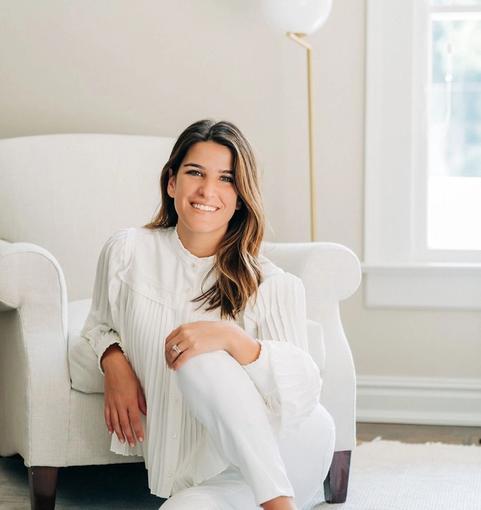
Cristina Pozo-Kaderman
Cristina Pozo-Kaderman, is a senior psychologist and the director of the Young Adult Program (YAP) in the Department of Supportive Oncology at Dana-Farber Cancer Institute, with a PhD in clinical psychology from the University of Miami.
The incidence of cancer has been in general decline over the past ten years; except for young adults, according to the American Cancer Society. And while more young adults have cancer than ever before, the medical system still has not oriented toward their specific needs (both medical and psychological).
Directly tailoring guidance to young adults with cancer is Cristina Pozo-Kaderman’s life’s work. Pozo-Kaderman is a senior psychologist and the director of the Young Adult Program (YAP) in the Department of Supportive Oncology at Dana-Farber Cancer Institute. She has a doctorate in clinical psychology from the University of Miami and also teaches at Harvard Medical School.
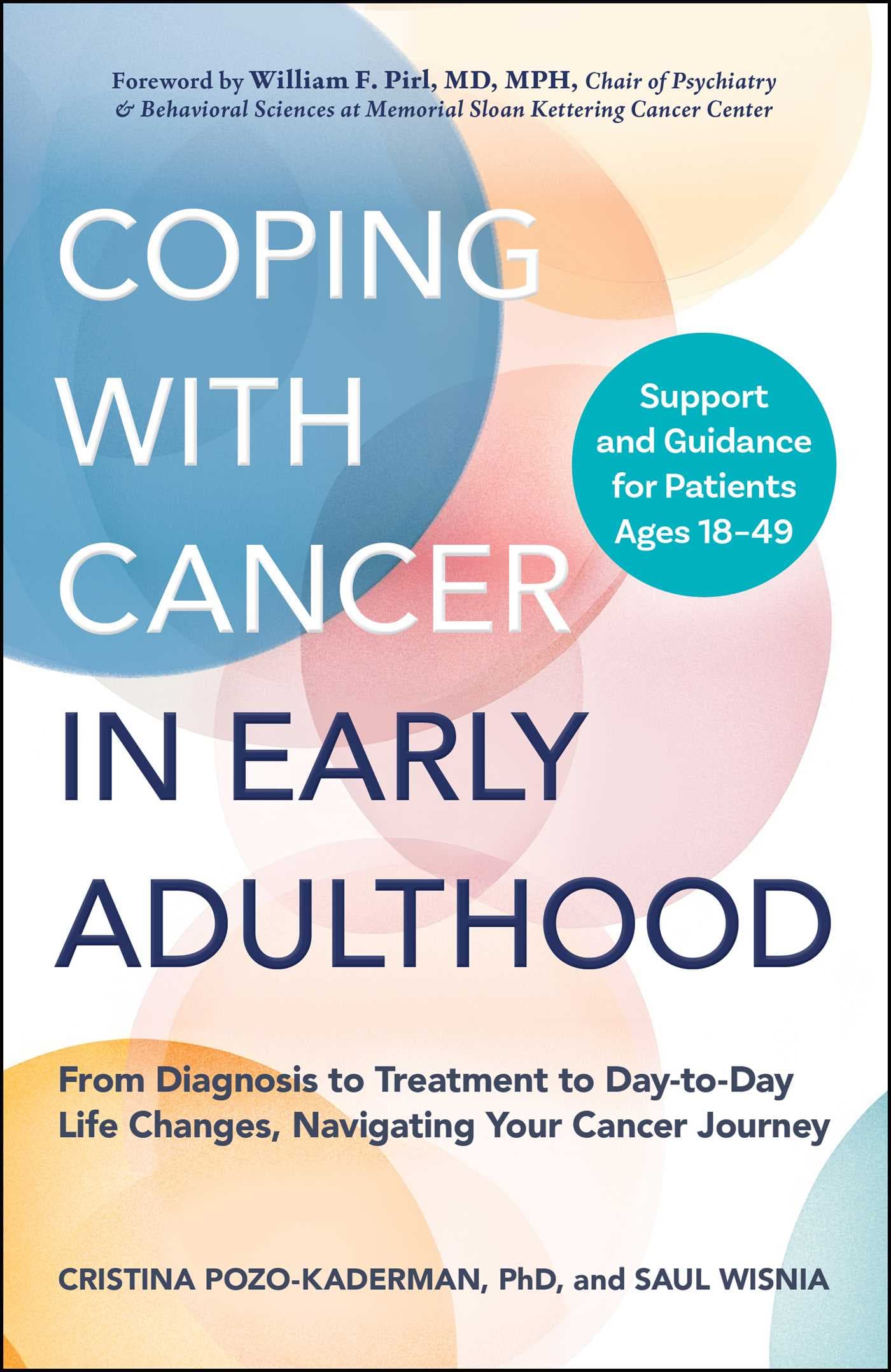
She’s coalesced three decades of experience into a philosophy about the young adult cancer experience–and published a book in October, Coping with Cancer in Early Adulthood: From Diagnosis to Treatment to Day-to-Day Life Changes, Navigating Your Cancer Journey. (Pozo-Kaderman considers anyone under 49 as a young adult in this context). This book is both an exceptionally helpful aid and a manifesto of what the younger adult with cancer needs.
Pozo-Kaderman talked with Jadey about toxic positivity, shifting social dynamics (and how to address them), delegating help, and why she thinks her patients should avoid Google.
Q:
What guidance would you give to someone with a cancer diagnosis, who is feeling lonely–and maybe she has lots of friends, but she feels isolated from them after her diagnosis?
A:
If you’re in your twenties, this whole ‘fear of death, uncertainty of life’ is something you may talk about in a philosophy class, a book you read, a movie you watch. It's a very intellectual exercise, but it is not real on an emotional level. If you're older maybe you're in your 30s or your 40s and it may become more real, because you might have aging parents and grandparents. You have children, so you’re thinking, How could something happen to you? But that reality of the possibility of you dying, is truly at an emotional level, not real. Developmentally, you're just not going to find people who really get what you're going through.
When you get that diagnosis, it really changes you. At a very deep level, the uncertainty of life, the frailty of life becomes real. But your peers, as much as they may want to be there, just can't get that.
I’m not minimizing in any way what a 70-year-old or 80-year-old goes through. Then, you've lived your life. You’ve lived it. And your peers around you, you can reach out to them—and it’s very likely somebody else has been through cancer or something similar.
So here you are at this young age, and you're living with this reality that others are just not going to get it. Often, your peers might say things that are not particularly helpful because they don't know. They’ll say: Don't worry, everything is going to be fine. Everything happens for a reason. Platitudes are the attempts by people who don't get it to try to be supportive and that can just add to the isolation.
The other part that's so isolating is you're sitting in the cancer center and you look around the waiting area: everybody’s either your parents’ age or grandparents’ age. So you go on your phone, on social media where everyone your age is talking about classes, an internship, or a new relationship, or a job promotion, a baby, whatever it is. You're isolated in the room. You're isolated in social media, because you're out of sync with peers. It is so difficult.
The other part is that when you're diagnosed in your 20s, 30s, and 40s: people are really busy. They're at a time in life when they are sort of on this treadmill of just doing. They’re getting to certain goals and milestones in life. They're so focused on that that sometimes they may not be able to support you. The common word we hear from patients is ‘cancer ghosts’. People are very present initially, but then they don’t know how to be supportive. It’s so painful. These people that they really thought cared about them now have ghosted them.
Q:
I really loved how you framed asking for help in your book. You talk about how desperate caregivers and friends are to do something in their face of fear, and you’re doing them a favor by giving them a task. Can you tell us more suggestions you give to people about navigating needing help socially?
A:
If your child is going through this, if your sibling, your best friend, your partner: you’d want to help. [When you ask them to do something to help you,] you’re giving them something to do.
I usually suggest: delegate. First, ask one or two people to be the communicators about what’s happening for you, about your treatments. We all have strengths in terms of how we provide support. Match the type of support that they can give you based on who they are.
So, some people are really great at concrete support. They can drive you to your visits. They can drop off food for you. Or someone might be helpful financially. They can send you gift cards for gas, for food, to help pay some of your bills. There may be people who can provide more informational support; they can connect you [to doctors or hospitals].
And then there are the people who can provide emotional support. Probably in some ways, that’s the toughest type of support. Those are the people that allow you to talk about your feelings, and oftentimes they sit quietly by you and allow you to express. They don't feel the need to fix it for you, they can hold your hand and just be there. Not everybody can do that, and that's okay, because these other things are very valuable.
Q:
You write about the dynamic where adults, in their 20s and early 30s, are moving in with parents for them to take care of them– and they feel like they’re regressing: emotionally and physically. What tools do you give them to manage that dynamic?
A:
I will often meet with the parents as well as the patient, if the patient feels that it would be helpful.
The parents: they also are isolated. When they go to their friends, their friends are talking about [how] their children are moving on career-wise, having grandchildren. And here they are sitting with their child going through treatment. It’s so frightening and scary. What I often hear from parents is: this should be happening to me. And not everybody has families that can be a support.
At the same time, they can be extremely challenging for the young adult. If you're now living with your parents, or your parents are living with you, how can you set boundaries? Is there a space that you can go to that you can close the door and say, ‘Please don't come in here. This is my space. I love you, but I need it.’ Or if you can't have this physical space, it might be that you need emotional space. You could say, ‘I need quiet. I'm going to put my headset on. Just let me listen to my music, let me watch this on television while I eat.’
Q:
I was so happy, reading this book, when I saw the phrase ‘toxic positivity’ on page 12. How do you recommend your patients navigate it when someone is loading lots of ‘just think positively’ messages at them?
A:
Often this is where I remind clients that they’re getting into their own issues. For example, with parents: you are their child. They're so scared. They feel they need to say these comments, not so much just for you, but for themselves. They may not be able to do it differently. It's too scary for them. If you have a good relationship with your parents, you may just say ‘Can I remind you you’re doing this, because it’s difficult for me to hear?’ But if you’re tried it and it doesn’t work, at least it opens it up to dialogue.
With your chosen family, your friends and partner: if it doesn't work, it’s maybe because the person loves you, but is just too anxious, too scared. Then maybe you pivot and try to avoid emotional support from them.
It's a very different situation when it's people that you're not that close to. If it’s people you see once in a while and they say these annoying platitudes: you could think, do you want to use your energy to try to educate someone that you don’t see that often?
Q:
One of your arguments that totally changed how I think was that you talk about advocacy around cancer as a form of healing in itself.
A:
I became aware of how much young adults need to learn to advocate for themselves, because they are in a stage in life where they don't know quite how to advocate for their health. And then they want to help other people who need to do that. I noticed that people finish their treatment and immediately want to volunteer. I think that sometimes you need some time before you can volunteer to process what you've been through.
Q:
A final question: to Google or not to Google your diagnosis, your symptoms, etc.? How do you talk to your clients about this?
A:
I say avoid Dr. Google. Rabbit holes can really be unhelpful, and the stress can actually be quite detrimental to their health and well-being. Even the studies that are very rigorous and well-done don't always apply to young adults, because young adults aren't part of so many of the studies. It's more like Google is going to create more anxiety rather than less anxiety, because the information is not specific.
Sometimes I have clients who are physicians themselves. They’ll do a lot of this, looking at the studies. Even there they get in trouble because they're not oncologists. At some point they'll come back and say to me, You know, I realized I don't know enough to really understand it as well as I thought I would, because I don't practice this, I don't specialize in leukemia; I am not a breast oncologist, and so on.