
Dana Torregiano
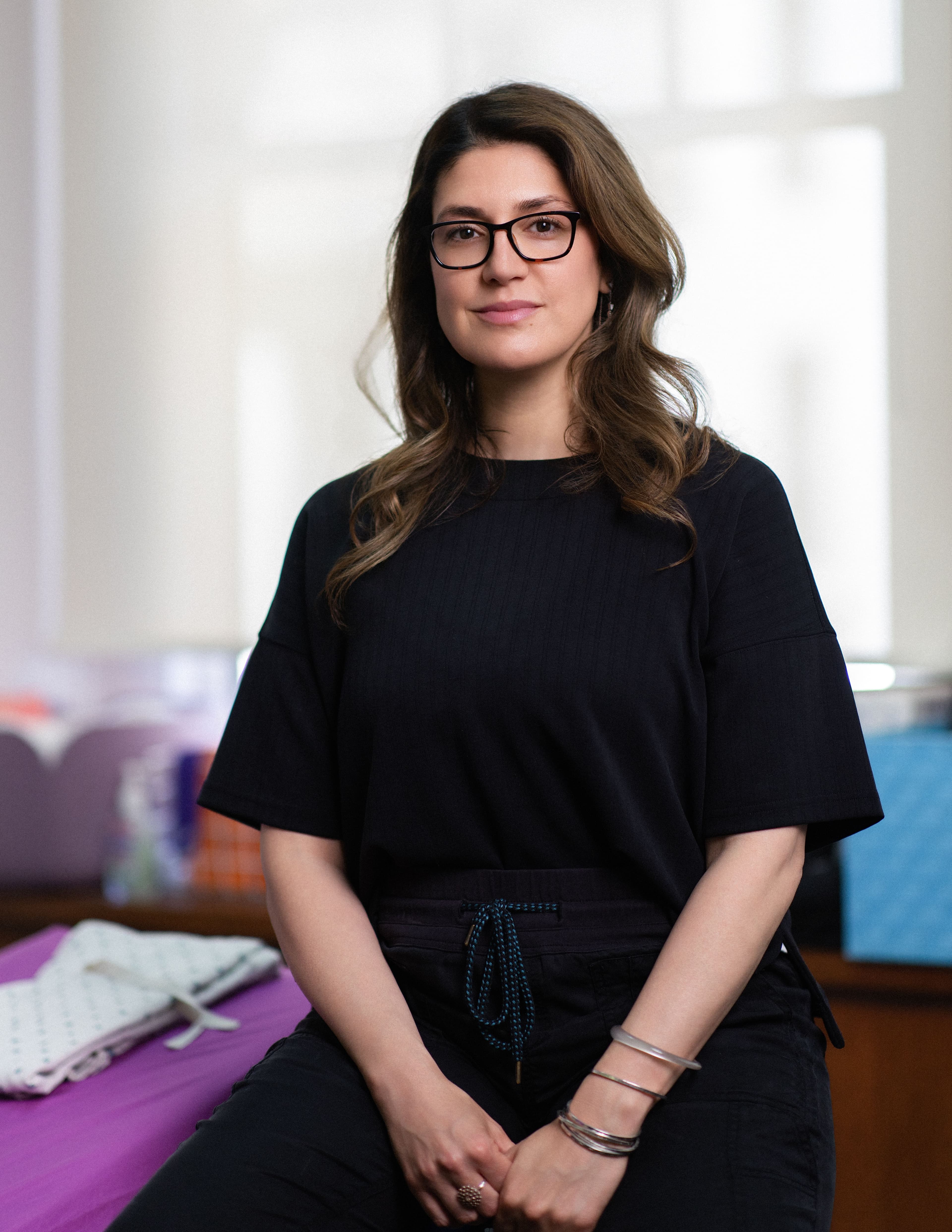
Dana Torregiano is the owner and founder of Moving Forward Wellness, a practice that specializes in breast cancer rehabilitation and lymphedema therapy. Torregiano is a board-certified advanced lymphedema therapist specializing in breast cancer rehabilitation who has been practicing for over a decade. She has a Master of Science in Occupational Therapy from Seton Hall University’s School of Graduate Medical Education.
The only thing Dana Torregiano knew she wanted from her career was to work in oncology, but she didn't know exactly how. In graduate school for occupational therapy, she was about to apply to medical school when an accidental placement at a hospital changed her life. The first morning she shadowed a lymphedema therapist, she knew that helping people with the long, tender work of healing would be her life’s work. What struck her was not only the science of the lymphatic system, though that fascination would only grow, but the women themselves: their healing, their questions, and their often-ignored desire to feel like themselves after treatment ended.
Torregiano graduated and spent the next five years building her expertise. In 2019, she started Moving Forward Wellness, the Manhattan-based practice she opened after realizing how little post-treatment care truly existed, even in a city saturated with excellent medical care. Moving Forward Wellness focuses on lymphedema and conducts their client relations with deliberate, careful slowness, in a world where many health care providers must rush. Torregiano prides herself on patient sessions and returning clients, to carefully and diligently attend to their pains and stiffness.
In this interview with Jadey, Torregiano distills a decade of close, patient-centered care into practical tips and some kind encouragement. (And read Jadey’s complete guide to lymphedema here.)
Q:
How do you define lymphedema?
A:
Lymphedema is the abnormal accumulation of fluid in a body part, and it can happen from congenital anomalies or by a trauma like surgery and cancer treatment.
In the cancer world, we most commonly see lymphedema caused from surgery. The surgeries that are done to take cancer out of the body or check body parts for cancer, like biopsies, can often either damage or remove lymphatic tissue, and in doing so, it can cause a disruption in the flow of lymphatics. Over time, you can slowly or quickly develop an accumulation of fluid. If that's not taken care of, it can become more and more progressive and more swollen–and then it can become chronic in nature. Chronic problems include lymphedema, but also things like frozen shoulder, radiation fibrosis, painful adherent scar tissue, and loss of range of motion.
Sometimes chemotherapy can damage the lymphatics because the chemotherapy going through your blood vessels can leak out into the tissue. The lymphatics need to pick that up. It can damage the blood vessels and the lymphatic vessels in the area. Radiation, similarly to chemotherapy and surgery, can damage and cause fibrosis and scarring in the lymphatic tissue in the area and also cause swelling.
Q:
Does lymphedema always progress, or is it sometimes just a flare after surgery that heals itself?
A:
If you get an episode of lymphatic swelling, it's very important to work with someone who can help you assess what your risk level is for it turning chronic. If you have the opportunity to even have one assessment with someone like me, whether it be in person, which is preferable, or even telehealth, just to have a conversation with somebody who's educated and knowledgeable in the lymphatic system, they can help you determine a general idea of your risk level.
Some individuals are still coming to me at the point where they're like, my arm or my leg or my breast is very swollen, and so now we're trying to work backwards, and they might always have some low-lying level of swelling, but it's much more manageable. My goal is preventing it from becoming [a more advanced form of] lymphedema.
Q:
What do you wish more people knew before they start surgery or treatment?
A:
Sadly, I don’t see nearly as many people before surgery as I would like. Most people are referred once they’re already experiencing an issue, and sometimes those issues are already at a later stage. I find that really upsetting.
When I do get to meet someone before surgery, my goal is to give them a realistic picture of what the first two to three weeks afterward will look like, based on their procedure, without inducing more anxiety. Especially when lymph nodes are involved [in the surgery], I like to do baseline measurements. Immediately, I’m checking with every patient the range of motion of the joints that have been [or will be] affected by the surgery and treatment. We also do circumferential girth measurements with a tape measure, taking landmark points and measuring both sides of the body. We calculate volume for each limb and an LDX score, which reflects the person’s risk and level of swelling. That becomes the baseline. It’s such a gift to have that opportunity. Most people come after surgery, and then we don’t know where they started. Sometimes we can’t say with certainty whether there’s already an issue, and we have to monitor them more closely.
Q:
How long does someone have after they notice swelling before they should seek some rehabilitation? Is this urgent?
A:
When someone calls me and says, ‘I’m worried I'm developing some sort of swelling or lymphedema,’ I treat that like an urgent case, because I’m always in the mindset where I’m trying to prevent people from developing chronic lymphedema. I’ll say: ‘Come see me today or tomorrow, this week, as soon as possible.’
Because the longer you let it linger, the more damage occurs. Lymphedema is not just fluid sitting in the area. It actually starts to cause scar tissue and degradation to the soft tissue. The more damage the tissue gets, the more likely it is that the swelling is going to keep coming back and getting worse.
That’s how lymphedema is a progressive condition: it causes more scar tissue, and the area is no longer able to function as well. You get an insufficiency in your lymphatics, and you’re always going to have a harder time moving fluid out. If your lymphatics are working at 90% capacity, all the days that fluid sits there without moving and you develop scar tissue, it goes from 90% to 85% to 80% to 75% to 70%. Your lymphatics become less likely to get back to fully functioning, so I don’t like to waste any time when somebody thinks that’s starting to happen.
Q:
How do people find you?
A:
Years ago, most referrals came from physicians—mostly surgeons, occasionally oncologists, sometimes primary care doctors. Now it is about 50/50 [50% referrals and 50% people finding Dana on their own through searching or word-of-mouth].
Patients can come for an initial evaluation and several visits before needing a prescription, depending on state law and licensing. However, insurance often requires a prescription within the first few visits for coverage, and some require it from day one.
Q:
Can you walk us through what a typical first session looks like with one of your clients? What concerns are they bringing to you and how do you address them?
A:
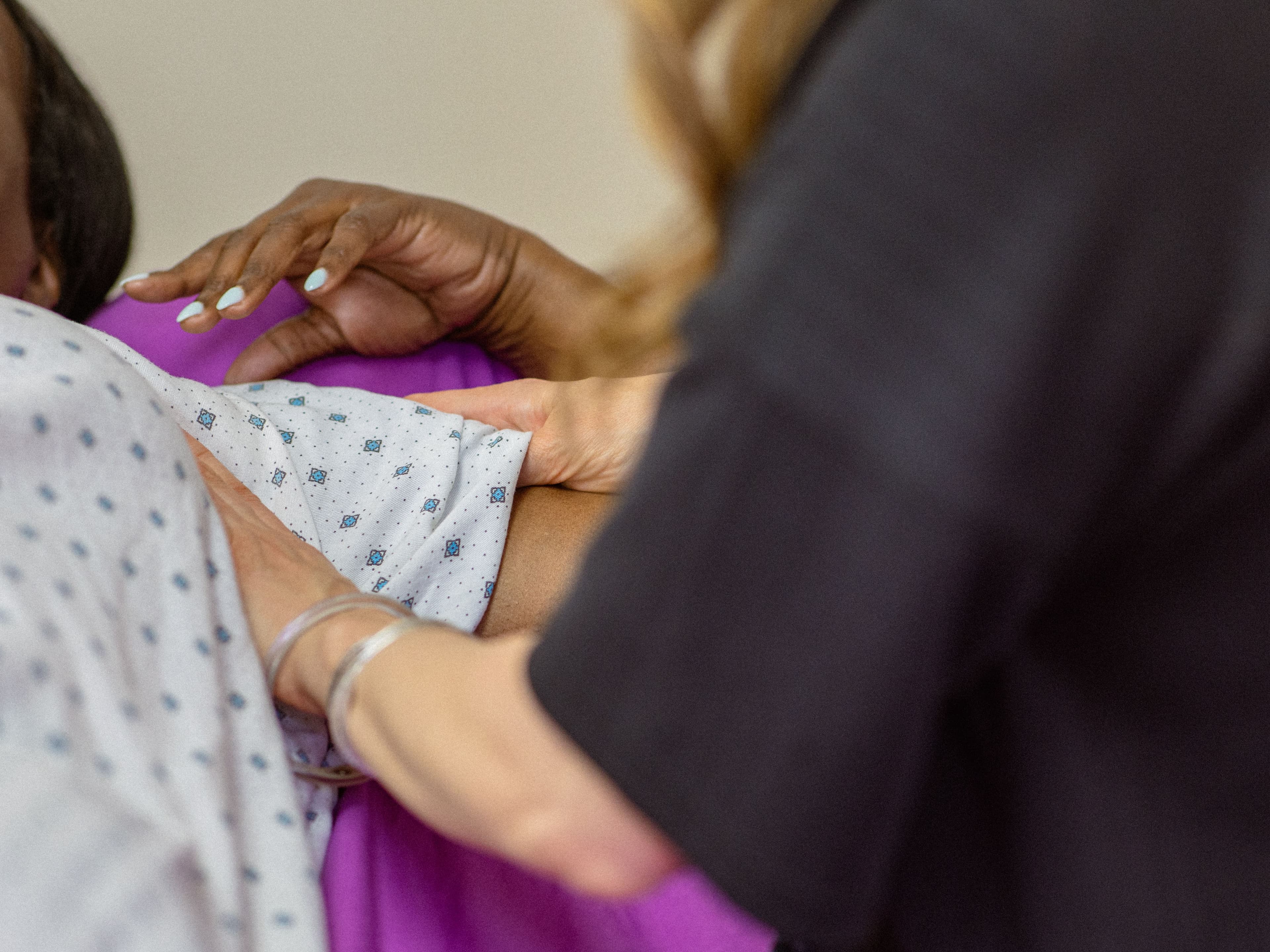
During the first session, I like to start by sitting face-to-face and talking. I take their medical history, the history of their diagnosis, what brought them in [on] that day. I give them plenty of time to ask questions before having them change into a gown. That’s really important to me, because once someone changes into a gown and is half undressed, cold, and uncomfortable, their focus shifts. They’re worried about the gown staying closed instead of the conversation. I don’t think that’s a great place to start.
Once we’re ready to transition, I step out, let them change, and then come back in. We begin with measurements: range of motion for affected body parts, girth measurements for limbs affected or at risk for lymphedema. We assess skin texture, tenderness, pain, and sensation. Many people experience numbness, tingling, or hypersensitivity after surgery: sometimes even putting on a shirt can hurt.
Then we begin treatment. Everyone receives some form of treatment on the first day so they leave already feeling some improvement. We then create a plan together: what I recommend and approximately how long it may take. For most people, this isn’t a one-and-done situation. There are often multiple surgeries or treatments, like radiation starting weeks later.
Q:
What does the physical treatment entail? Is it painful?
A:
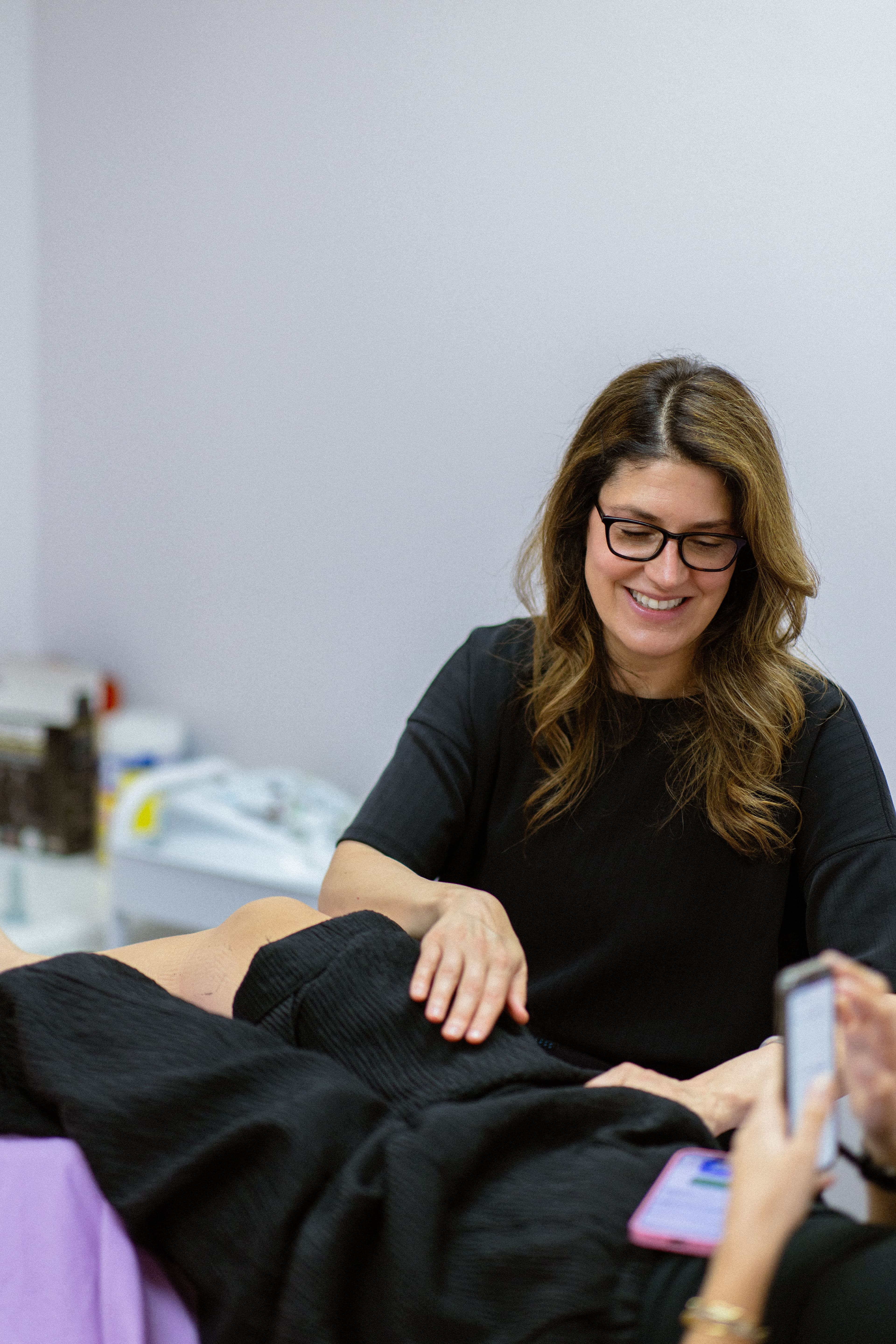
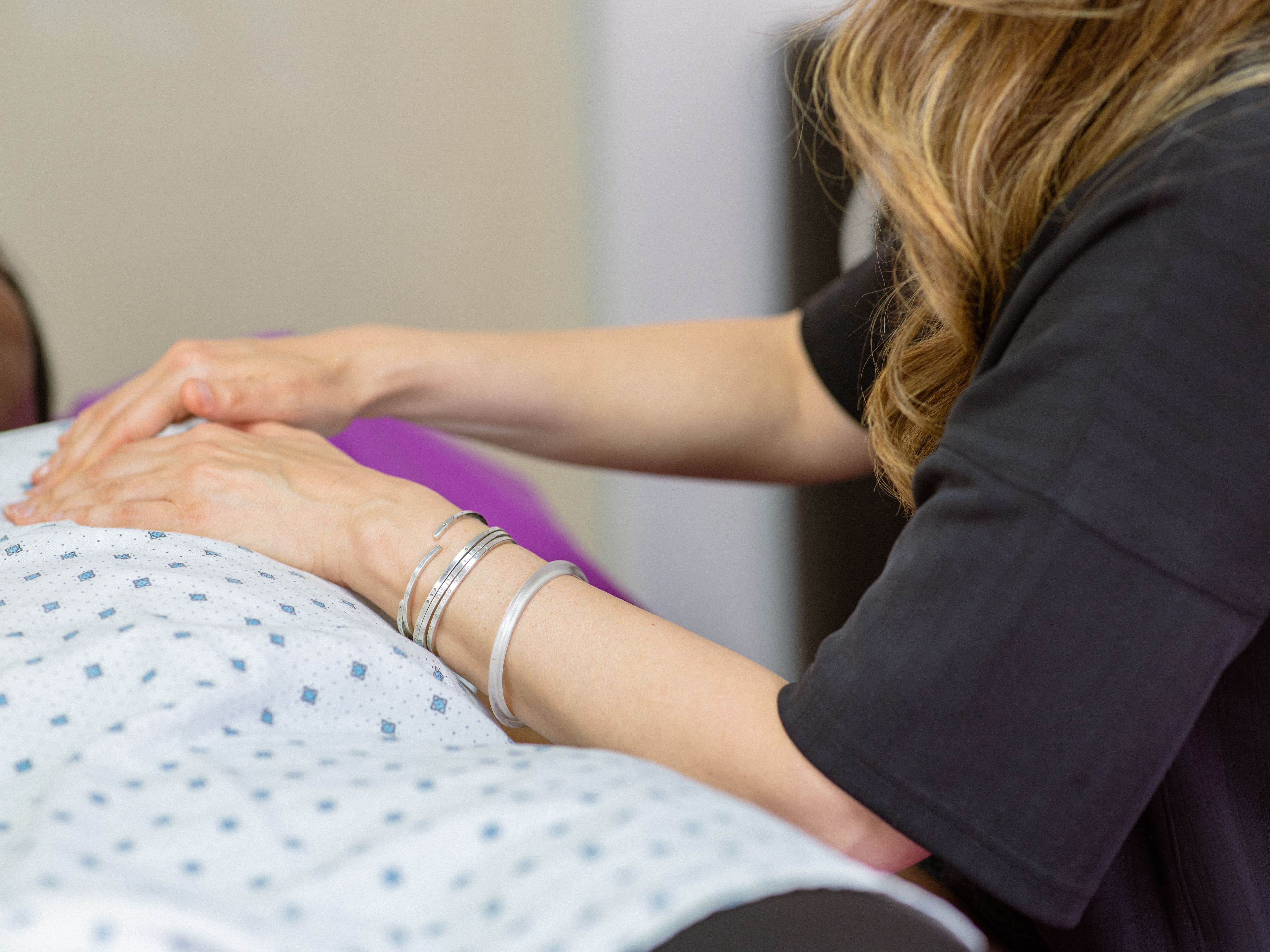
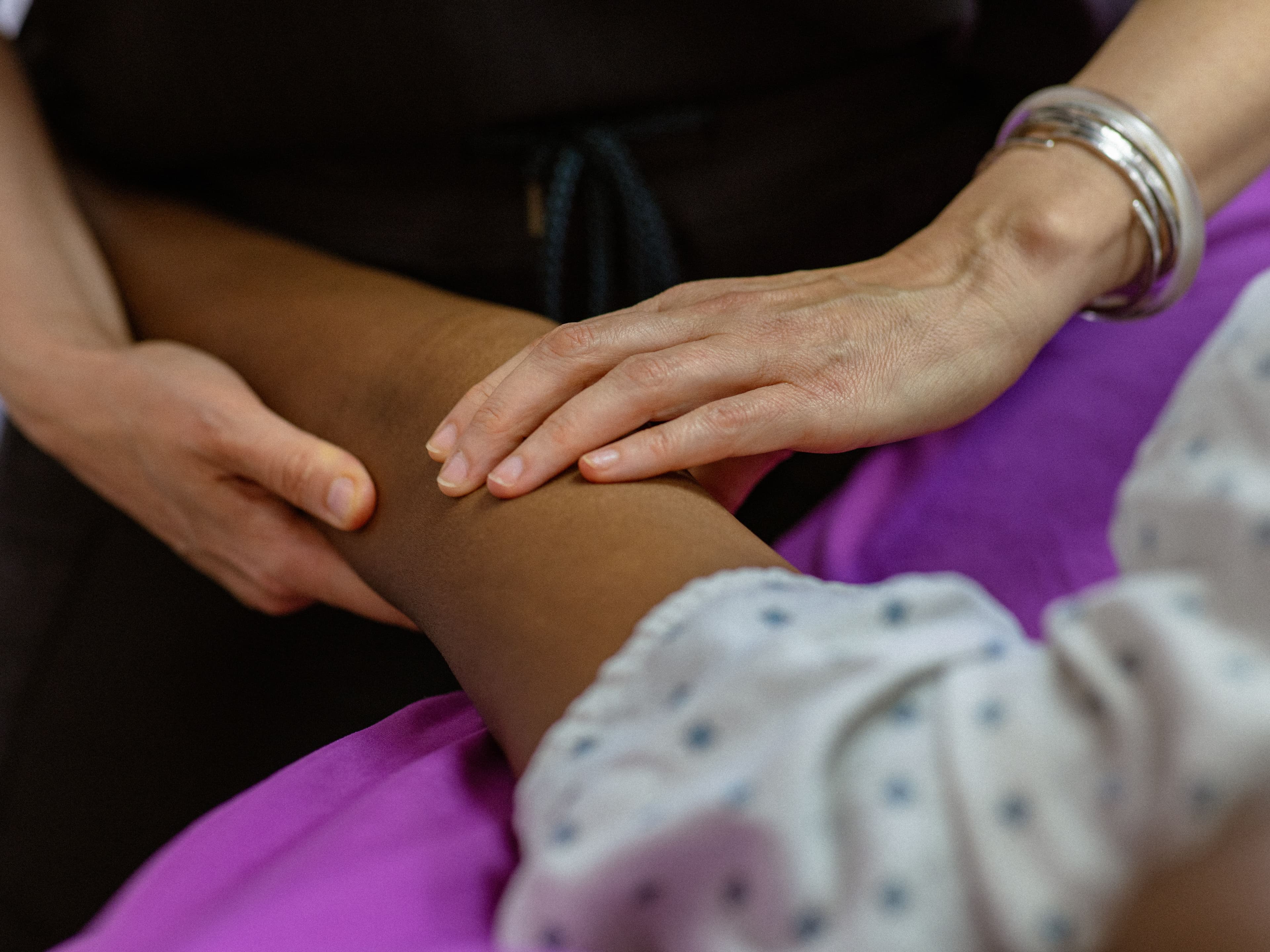
What we are doing is always a combination of manual lymphatic drainage to some extent, paired with other types of manual therapy. Manual lymphatic drainage, in and of itself, is not painful. It should be gentle, often pain-soothing, not pain-inducing. It stimulates the parasympathetic nervous system, so if you are in pain, it can reduce that, and it is usually very relaxing. Sometimes there are areas on the body, especially post-surgically, that can feel painful, uncomfortable, or tender, but the technique itself is gentle. It is a skin-stretching technique. You are stretching the skin in one direction and then the other, which is where you want to route the fluid.
But when you have scar tissue and range of motion problems, scar tissue massage can be painful. And myofascial release can be intense. We work on tight muscles to lengthen them. Exercise includes stretching and movement against gravity, sometimes using one arm to help the other or a towel under a leg. It is done progressively, slowly adding more challenging stretches.
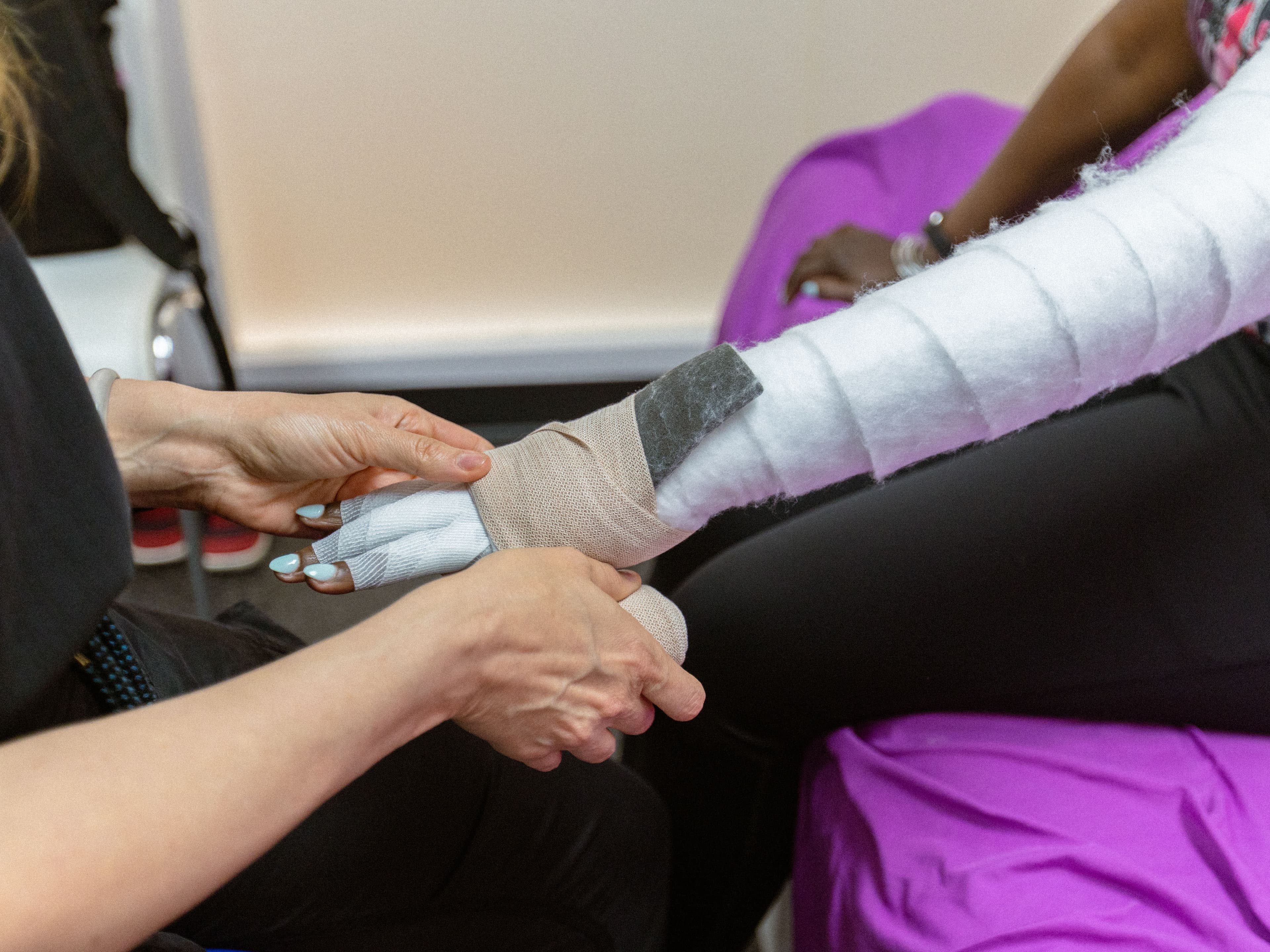
This includes stretching, compression sleeves or wrapping, and skin care. And people with lymphedema need to take better care of their skin because they are at risk for infection, and poor skin care can worsen lymphedema.
Q:
Do you assign stretching ‘homework’? How much should people be doing at home?
A:
Initially, post-surgery, they should expect to do something at home every day, even on days they are not in therapy. That could be five minutes or up to 30 minutes or an hour, if they can. An hour is ideal, but doing five or ten minutes is always better than doing nothing. Many people feel like if they don’t have an hour, they skip it. I encourage them that five minutes is often better than sixty because it is easier to do consistently every day.
Q:
What does ‘success’ look like to you and your clients?
A:
Success can look like seeing someone early enough that we reverse the swelling, and now they manage risk and do prevention on their own. It’s when someone feels educated and empowered about what’s going on and what they need to do to manage it.
And when they no longer feel fear about exercise, flying, carrying groceries, walking, or biking or these things that made them happy, but they were fearful they would hurt themselves. There are also tangible improvements, like less pain, less fatigue, less heaviness, and the ability to do daily activities like putting their hair back, putting on a bra, or reaching the floor without pain.
Sometimes people feel frustrated after a year if they haven’t fully recovered back to the way they were. That’s not necessarily realistic. That’s why documentation of goals and progress are so important, because if I'm working with someone for a year, and originally they came to me because they couldn’t lift their arm over their head–and now their biggest complaint is that they have full range of motion but it has a big stretching feeling, that’s progress.
Q:
How long do you see people?
A:
Typically, I am seeing them anywhere from six to twelve weeks, depending on how many surgeries they are having. Maybe I work with them for the first four to six weeks after surgery, then have them continue a home exercise program. If they have a second surgery, they come back two weeks after that. Then we can do regular check-ins. After the first year, it might be every quarter, about four times a year, for measurements. Then every six months for the next two years, and then once a year after that.
Q:
There’s a phrase that Moving Forward Wellness uses: ‘We treat you, not your diagnosis.’ How do you cultivate that feeling in your client interactions?
A:
Early in my career, when I met someone with lymphedema, my goal was always to reduce swelling as much as possible. Over time, I realized that wasn’t always the client’s goal. Some people wanted a home exercise program, help with range of motion, hypersensitivity, or neuropathy. I learned that their goals didn’t always match mine. That’s why the first visit has evolved so much over the years. I used to rush through the history so I could get them on the table and start treatment. What I realized is that the most important thing is making a connection and understanding why they’re there.
Q:
There’s a lot of emotional weight that comes with lymphedema and bodies in general post-surgery. Is that stuff you draw out with your clients? How do you navigate the mental and emotional side of this work?
A:
I hear all the time, ‘I feel like I just had a mental therapy session too.’ I love getting to know the women I work with and helping them process what comes up in that first year after diagnosis. There’s a grieving process after diagnosis and surgery: grieving hair loss, scars, reconstruction, changes in sensation, and the sexual connection to breast tissue. There can be body dysmorphia and even phantom limb experiences.
I always encourage professional mental health support as well. I gently educate clients about the connection between pain, trauma, and loss of physical ability. Sometimes I refer people to acupuncture, Reiki, massage, or mental health professionals. Or going to the spa. I emphasize that self-care isn’t frivolous; it’s essential for getting through this time.
Q:
I’m glad you brought up sex, which is something many medical professionals avoid. Is that something clients come to you for, or something they’re hesitant to bring up?
A:
Almost no one comes to see me specifically for that reason. I make it a point to bring it up in relation to self-image and comfort with intimacy. Early in my career, I had a patient who talked about menopausal side effects from estrogen-blocking drugs. When I asked her to explain more—I mean this in the best way because she's the loveliest person, and we're still friends—she flipped out on me. She was like, “How could you not know this? This is a real thing women go through, and no one in healthcare talks about it.” That moment changed me.
Since then, I make sure to talk about these things openly and in a way that feels really casual, not to lower the weight of the importance of it, but in a way that's matter-of-fact, the same way I'm going to ask you what your medication list is. I let them know that even if they don’t want to talk about it today, I’m someone they can talk to. Sex is a really important part of your health and well-being and it's not something that you should have to think you have to give up after a diagnosis. This is not something you should go through in silence. I also talk about body image and ask gently whether they’ve looked at their surgical site. When you can’t look at your body, there can be disassociation. You may also miss signs or symptoms of abnormalities. Touching and examining the area helps reconnect with the body.
I may give them a mirror and have them look with me. It’s about looking purposefully, not critically. I try to help people speak about themselves with compassion and appreciation for what their body has done. Scars represent what they have gone through and what they are capable of. And breasts and bellies, while they might be sex symbols in general culture, they're really important body parts, not chest ornaments. They're extensions of us.
Q:
I’m glad you brought up body image too. What are ways that you navigate body image with your clients?
A:
I never want to put someone on the spot. I start by speaking generally, from an educational standpoint. I talk about how many people feel discomfort looking at or touching their surgical sites, and how avoidance can contribute to dysmorphia, hypersensitivity, or lack of sensation.
I explain that reconnecting with their body is important not just emotionally, but physically for recovery. We work on feeling good physically and emotionally, and becoming comfortable with where they are in that moment.
Q:
So, if someone isn’t in New York, how do you recommend they find these therapies? Can they get them covered by insurance?
A:
The first step is advocating for yourself with someone on your care team to make a referral and write you a script. Your physicians might gatekeep and say, “Oh, you don’t really need that”-- and that’s not going to be very helpful. This can be anyone on your care team: a surgeon, reconstructive surgeon, radiation oncologist, medical oncologist, nurse practitioner. Any of them can make a referral. And maybe it's good to ask all of them, because they may all have different names for you.
That’s the first place to start, but not the last. Breastcancer.org and Unite for HER are great resources. For lymphedema, the Lymphatic Education and Research Network (LE&RN) is an excellent resource for finding certified lymphedema therapists.
In New York state, clients can come see me for the initial evaluation and several visits before I need a prescription from a doctor. Many major medical insurances require the patient to get a prescription from their doctor within the first five visits in order to get it covered, and then there are some insurances that require a prescription from day one.
Something that’s important to note for insurance coverage, if you’re calling to see if it is covered, is that this is not lymphatic massage, this is manual lymphatic drainage for a medical reason. Manual lymphatic drainage is about rerouting fluid in a specific pattern, not just total body stimulation.This distinction matters because patients often call insurance and ask about lymphatic massage and are told it is not covered. What I do is lymphatic therapy, lymphedema therapy, post-surgical therapy, or cancer rehabilitation. If someone has coverage for occupational or physical therapy, which most major medical insurances do, then they typically have coverage for this care.
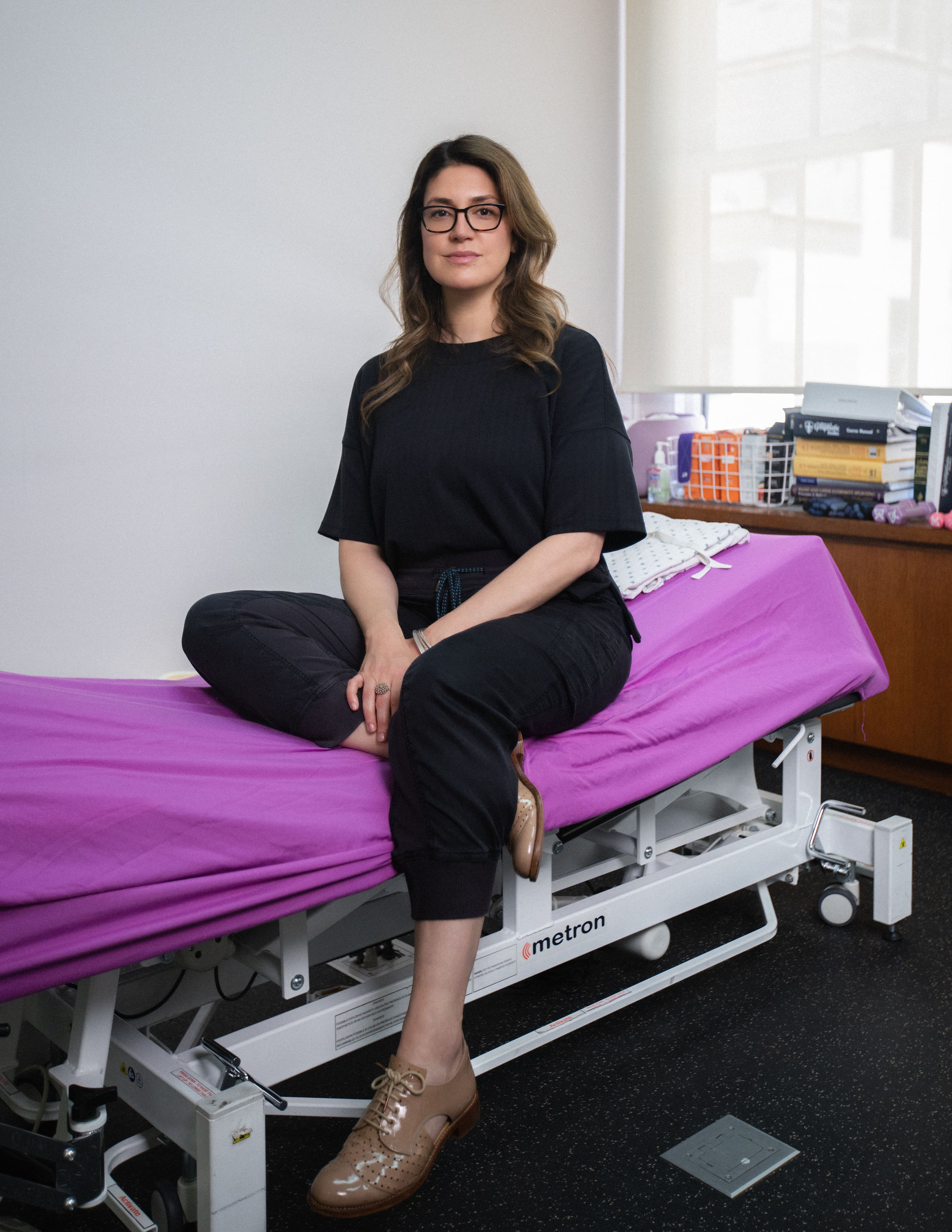
Photo credit for all pictures to: Mavka Media.