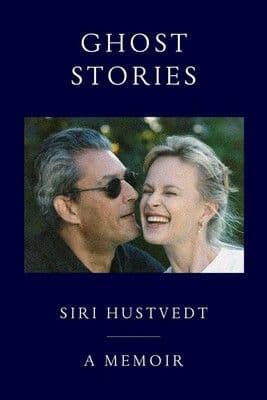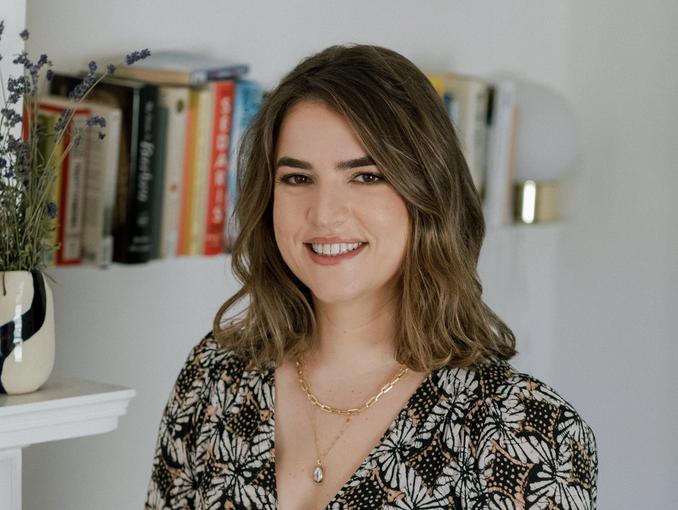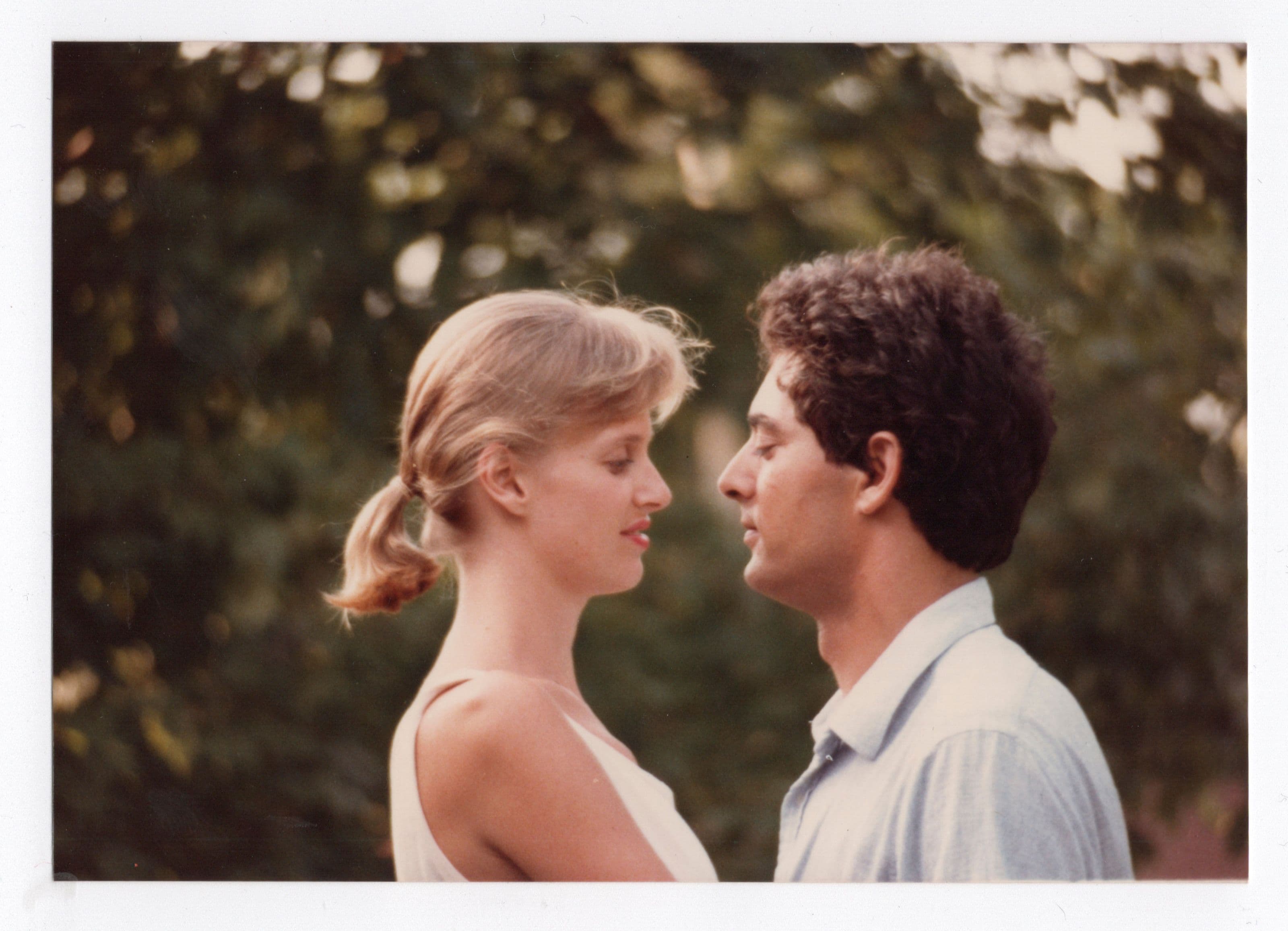

Writer Siri Hustvedt does not like the phrase “passed away” for its indirect view of mortality. She says “died.” She has an unsentimental, but intensely loving and deeply feeling approach to her life and work. Never was this mode more tested than her most recent book Ghost Stories, a memoir about the last years of her husband, fellow novelist, Paul Auster’s life.
Paul died of non-small cell lung cancer in January 2023. Siri’s memoir about this experience incorporates her emails to their close family and friends during treatment, Paul’s unsent letters to his toddler grandson, and her reeling grief afterwards. It is a multifaceted, time-bending approach that evokes the experience of mourning itself.
Siri writes that she had no idea that grief would be so intensely perspective-altering. But caring for her husband during cancer and then mourning him when he died at age 77, she found herself unable to track time.
In her conversation with Jadey, Siri talks about the differences between hope (sustaining) and optimism (disingenuous), the un-narcissistic act of caregiving, and her husband’s enduring wish to ‘be a ghost’ after he died.
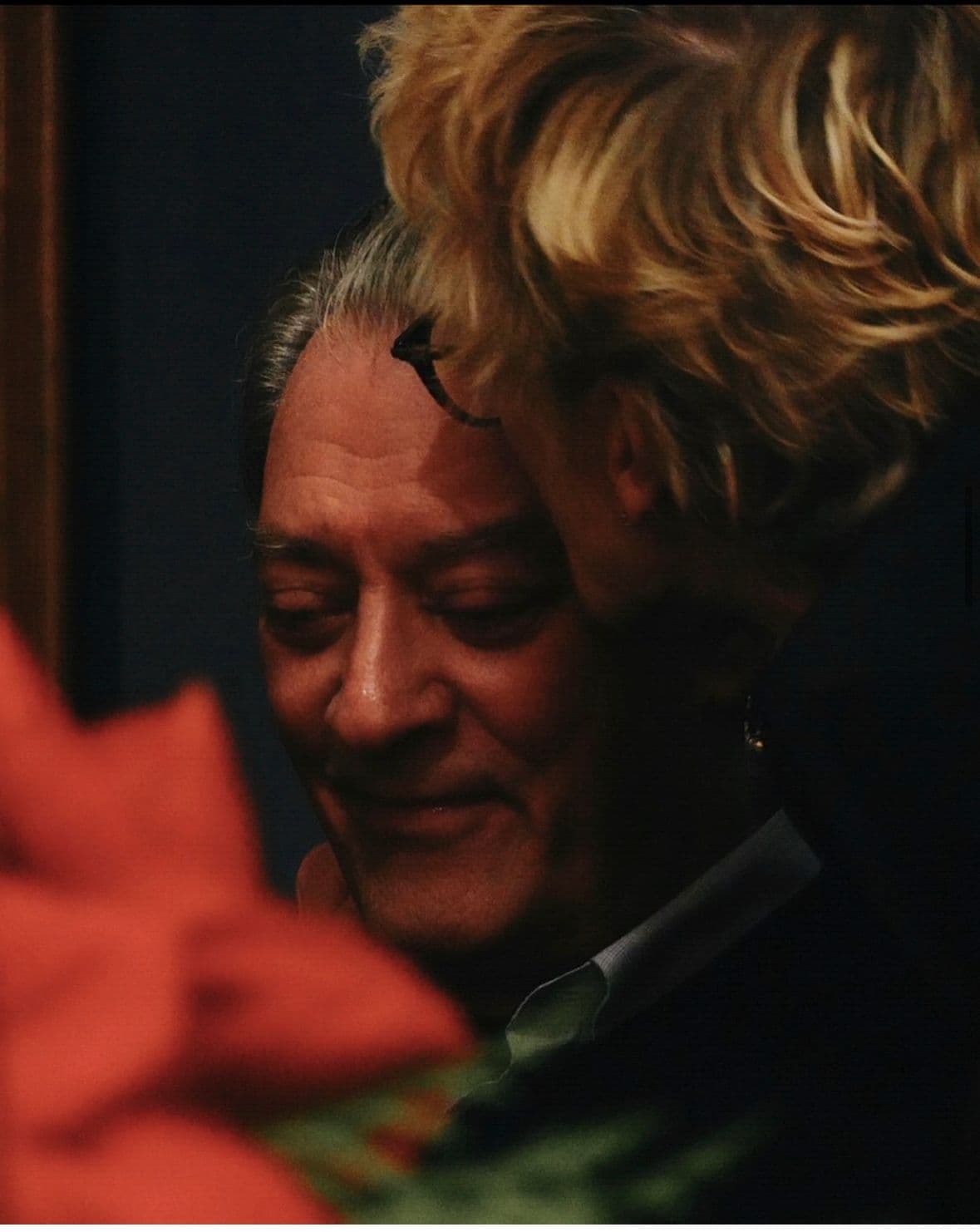
Siri and Paul by Spencer Ostrander.
Q:
For people who haven’t read the book yet, can you describe how you experienced your grief?
A:
What I hadn’t expected, to the degree that it happened to me, was the real physiological symptoms of grief. One of them was this completely new relationship to time. I felt I had to grip hold of markers of time or I would just kind of fragment. I had never experienced anything like that before.
There have actually been studies on grief showing hippocampal shrinkage in grieving people. That’s certainly how it felt to me: my memory was affected. I had to grip hold of lists and all kinds of external markers in order to stay coherent. I don’t think this is surprising, because your perceptual reality changes. If you think about living with someone, and I had lived with Paul for 43 years, you wake up in the morning and there’s that body beside you. You have breakfast together. Then we would go to work. During the middle of the day we didn’t see each other very much, but I could often hear him from my study at the top of the house while his was at the bottom. All of those perceptual clues of another person’s presence vanish. I think this affects the nervous system, and that can result in this kind of cognitive fluctuation. I can tell you that over time it has gotten better. In neuroscience studies, they say those neuronal networks are restored and regenerate.
Q:
After your loss, you say you couldn’t tell white lies anymore. And you write that you were morally fine with white lies.
A:
It was so weird. I just couldn’t. I mean, it’s really strange, and this has kind of lasted. I don’t want to be brutally honest with anybody. Brutality has never felt like part of my personality. But somehow experiencing this death made it very hard for me to tell untruths, even soft ones. Perhaps the brute fact of death, which is universal—we all die—and my encounter with that through someone I deeply loved just repositioned me. It’s actually difficult to plumb as an experience. Maybe social niceties and social realities become less important.
Cancer treatment can be grotesquely hard. Some people go through treatment fairly smoothly; I have friends who survived cancer and, while it was difficult, it wasn’t grotesque. But what Paul and I went through, especially the effects of the immunotherapy, was so dramatic. Often it felt like we were hovering on the threshold between life and death. I’m sure that changed me.
Q:
This book has a specific structure: it incorporates your memoirist writing, your husband’s unpublished writing at the end of his life, and then your emails to loved ones during his treatment. I think being the “reporter” is a role many spouses and caregivers find themselves in. You are a writer: how was writing those emails different for you?
A:
As it went on, I felt a greater responsibility. I think the double responsibility was, first, to be as accurate as possible, as a non-physician, about what was happening, and second, to try to mitigate the kind of optimism that a good result can produce.
I kept saying, “Yes, this is good news, but there’s still a long way to go. Don’t assume everything is going to work out now.” That balance was important.
The letters also weren’t especially emotional. That was partly for myself as the writer: to present a picture of what was happening without leaving out the emotional valence, but also without being overwhelmed by it. And humor was very important.
Q:
There’s a line where you distinguish between hope and optimism, and then write: “Nevertheless, some of you have seized only on the sunny part of what I have written, as if my caution about prediction hasn’t been articulated.” Do you remember why it felt so important to communicate that distinction? And why is it so hard to steer people away from optimism?
A:
It’s interesting. I wondered whether this might be especially American culturally. My mother was Norwegian and my father American, though the grandson of immigrants. Europeans in general are perhaps not quite as optimistic. I hadn’t consciously thought about the distinction before writing it. But when people showered me with emails full of un-nuanced joy, my response was always: Yes, this is good news, but that doesn’t mean the story is over. We are not going to dance out of this cancer story. I also think it’s a form of self-protection for the caretaker. If you bounce around thinking everything is going to be okay, then the disappointment if things go badly becomes immense.
I think hope is necessary because it gets you to tomorrow. Hope is necessary for continuing. Optimism can become a kind of blinder. I was responding to these deliriously happy messages, and I didn’t want to go there because I knew it would not help me as the person closest to the patient.
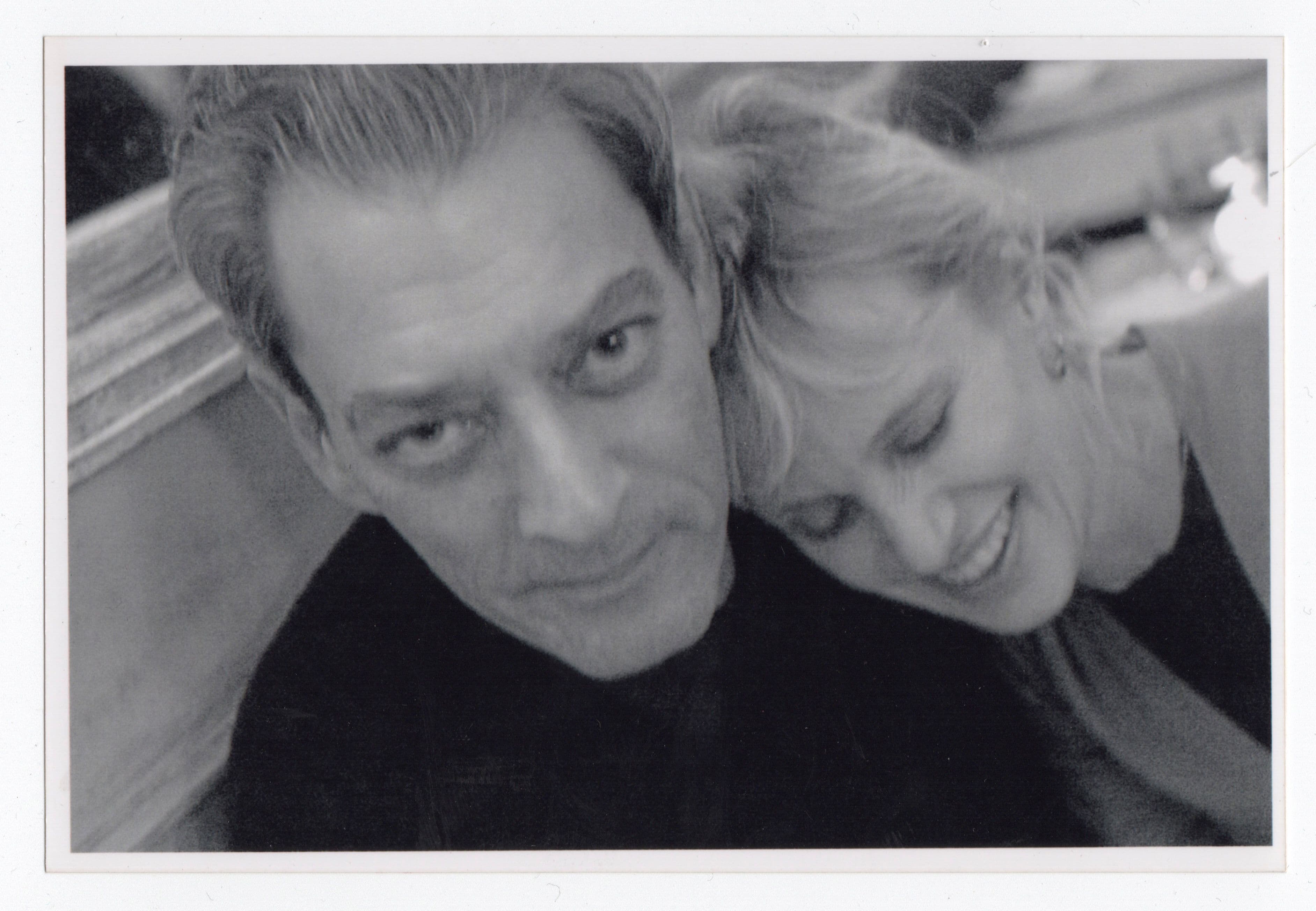
Siri Hustvedt and Paul Auster.
Q:
Early in your book, you make a note about condolence cards. You say that short, kind messages are best. What forms of condolence really comforted you? What words or actions stayed with you?
A:
I had never received that number of condolence cards in my life. I realized there were different kinds. Some were simply very kind: people saying they were sorry Paul had died and that they were thinking of me. The other very good ones included little stories about Paul. Some people wrote about acts of kindness he had shown them, and how those moments stayed in their memory. I loved those. They touched me deeply.
The ones that nearly made me angry were the very long letters about the sender’s own grief, or about how their spouse had died years earlier and then pages and pages of emotional outpouring. In a way, they were using the bereaved person as a dumping ground for their own grief. I responded badly to that.
What condolence should be is almost like a touch: I’m reaching out and patting your arm. Or, Your husband was wonderful for this reason, and I’m sad he’s dead. That’s enough.
I can also tell you that I still haven’t answered all those letters. It’s been almost two years. I think culturally we should say clearly: grieving people do not have to answer condolence letters.
I was shocked by how guilty I felt about those letters. I moved them from the table into my closet, where they still sit. The idea of answering them felt overwhelming. Even when they first arrived, I thought: I shouldn’t have to answer these. Speaking for grieving people everywhere, it’s simply not something we should ask of them.
Q:
You write that, repeatedly, before he died, your husband said he wanted to come back as a ghost. I’m curious both about those conversations and how that desire shaped the way you thought about his presence after death.
A:
I think his longing to be a ghost was really a longing to remain alive, especially for the people he loved most. He said he wanted to see what I was writing, listen to Sophie’s new songs, look at Spencer’s photographs. It was very much about the beloved artists in his life. He wanted somehow to spy on the future he would no longer have.
After his funeral and burial, I had a very powerful experience of his presence. I wondered whether his talking about becoming a ghost played a role in what I believe was the nervous system producing a sense of presence after the shock of absence.
We know language and symbols are part of the placebo effect. If you tell someone a sugar pill will help them, endogenous opioids are released in the brain. Every system of the body can be affected by placebo. So I wondered whether his stated desire to become a ghost was part of my nervous system producing [a placebo effect].
The absence of someone you’ve lived with for decades can itself manufacture presence. What role does emotional reality, which is also physiological, play in manufacturing ghosts? I don’t think that question is answered, but I’m fascinated by it.
Q:
This is a broad caregiving question, but did your understanding of love shift as you moved into a caregiving role?
A:
I do say in the book that Paul’s delirium was very difficult for me, and I feel lucky it went away. We can all imagine situations, especially with dementia, where the person becomes somebody else entirely. Paul and I had always been equals: sparring partners in all the things we cared about. We shared enormous pleasure, humor, private comedy. When he lost hold of himself during delirium, that was difficult. But he came back. And when he died, before the morphine overtook him, he was completely lucid. I consider myself lucky for that. Had Paul remained delirious, I would have had to accommodate myself to that new version of him.
But I think caring for a beloved person is the work of love. For me it was always built into the relationship itself. Paul and I understood, without ever needing to say it, that he would care for me and I would care for him. That mutuality makes caregiving easier because you know the other person would do exactly the same for you. That “between”—the world between two people—is where the relationship exists. Difficulties arise when one person always does the caring and the other does not. That happens to many women. I have three sisters, so in my family we didn’t have the dynamic where the brother disappears while the sister handles everything. But I know many women who have borne the caretaking burden while brothers danced away from responsibility.
There’s a point in the journal notes where I write, “I must recover something of my own life.” Paul was in the hospital, and I was there every day. It was exhausting. Around that time I also realized the only certainty in life is change. Whatever is happening now will not remain this way forever. Oddly enough, that thought comforted me.
And there were practical realities too. Once Paul fell and I couldn’t lift him. I had to call [my son-in-law] Spencer for help. You panic in moments like that. Then there’s the mountain of medicine: pill bottles, injections, endless medications. Giving all of those leftover drugs to my sister after he died was a huge relief.
Q:
That is the opening to this book!
A:
That image really stayed with me. Contemporary medicine produces enormous heaps of drugs. And that wasn’t even counting the chemo and immunotherapy, which ultimately killed him before the cancer did. Another part of caretaking is how much knowledge you accumulate. I learned so much about non-small cell lung cancer, blood tests, reading lab results, interpreting markers, reading paper after paper after paper. But I think some of it I blocked out afterward because there’s trauma involved. Normally I remember what I read quite well. But some of this knowledge vanished.
Q:
Maybe because you were learning not out of curiosity, but necessity?
A:
That’s exactly right. You’re learning to frame the immediate experience you’re having. It’s not knowledge for its own sake. I remember grief literature much better than some of the medical specifics. But those blood markers, all the “normal” and “abnormal” labels: you eventually realize how arbitrary some of them are. But you’re absolutely right: emergency reading is different from open-ended intellectual curiosity.
Q:
Did caregiving change anything about how you see the world around you?
A:
We live in a narcissistic “me” culture, and I think many of our political problems arise from that isolation. Caring for someone you love—even when it’s hard or terrible—is an antidote to selfishness.
We are all dependent on one another. Sometimes more dependent than at other times. That dependence should not be hidden or treated as shameful. It’s deeply important.
We tend to think of obligation as negative, but caregiving is part of the work of love. Even when I felt exhausted and frightened and sad, I never felt anything except that this was right. There was no thought of leaving. It was freely given—my own volition. And I do have to say: Paul was an extraordinary patient. He was so uncomplaining. You wonder what it would be like if someone were ungrateful or constantly angry. That happens too.
Q:
So many people become mean when they’re in pain and afraid. Being a good patient is really a gift.
A:
Exactly. And the way Paul was ill, and the way he died, was itself a gift of love to us. He wanted the people he loved not to be hurt. I’m grateful for all of it. I don’t feel anger or resentment about what I did. That’s a good thing to live with. As the one who survives, being able to look back without regret matters deeply. We carry all of this with us to our own graves. And maybe when you’re older, you can think ahead in that way.