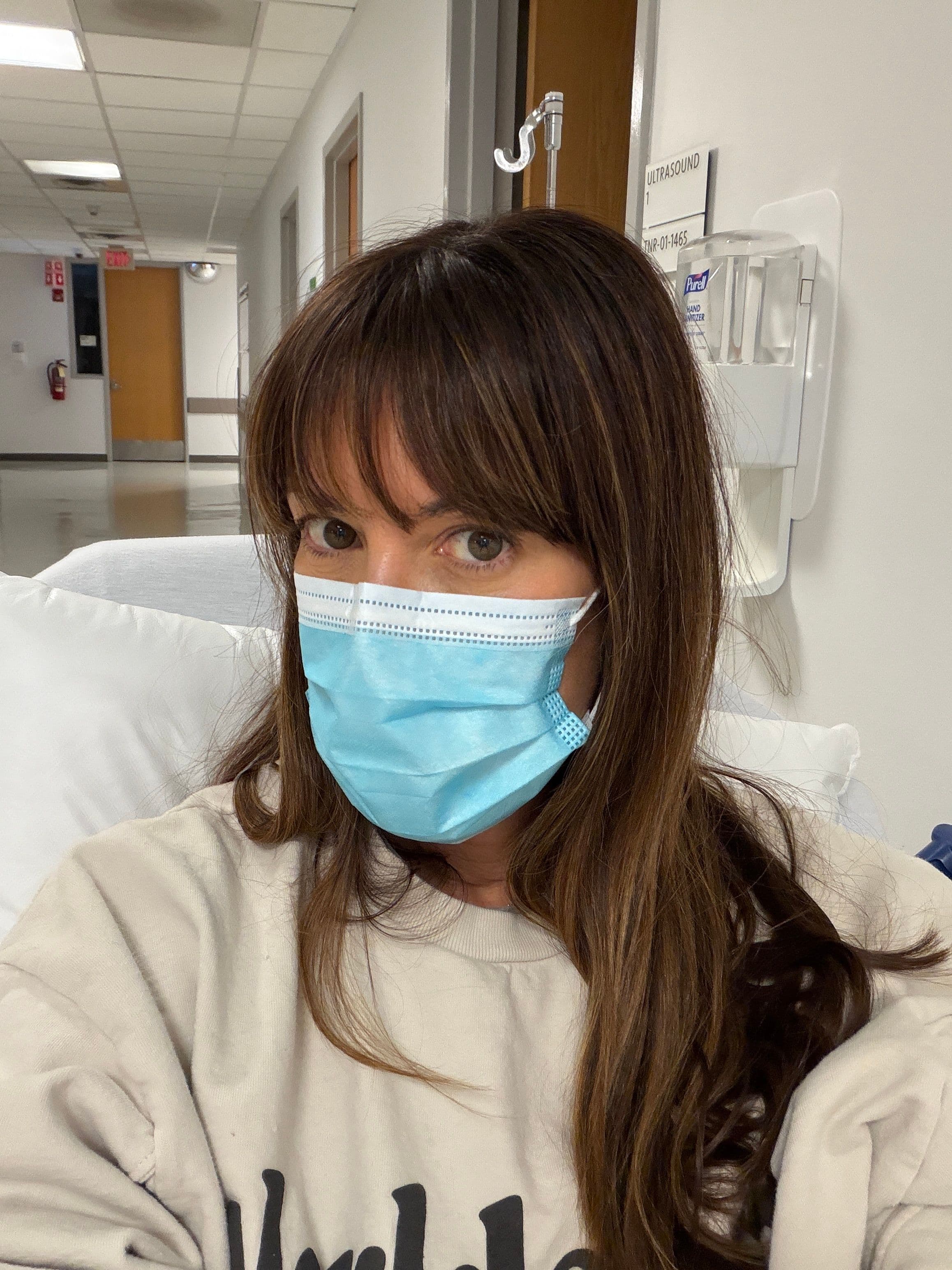

Amri Kibbler, the co-founder of HeyMama, a digital membership community of 75,000 entrepreneurial and working moms, was very accustomed to having honest conversations; it was part of the ethos of her work. But when she got her colorectal cancer diagnosis in 2020, she found the lack of upfront, honest conversation to be shocking.
Throughout treatment, which included a resection surgery, and navigating an ostomy bag, Amri was surprised by how little her doctors shared about what to expect and how to care for herself. She wants that to change for other people with this experience, which is partly why she’s started the podcast The Space Between: Navigating Cancer and Family Life.
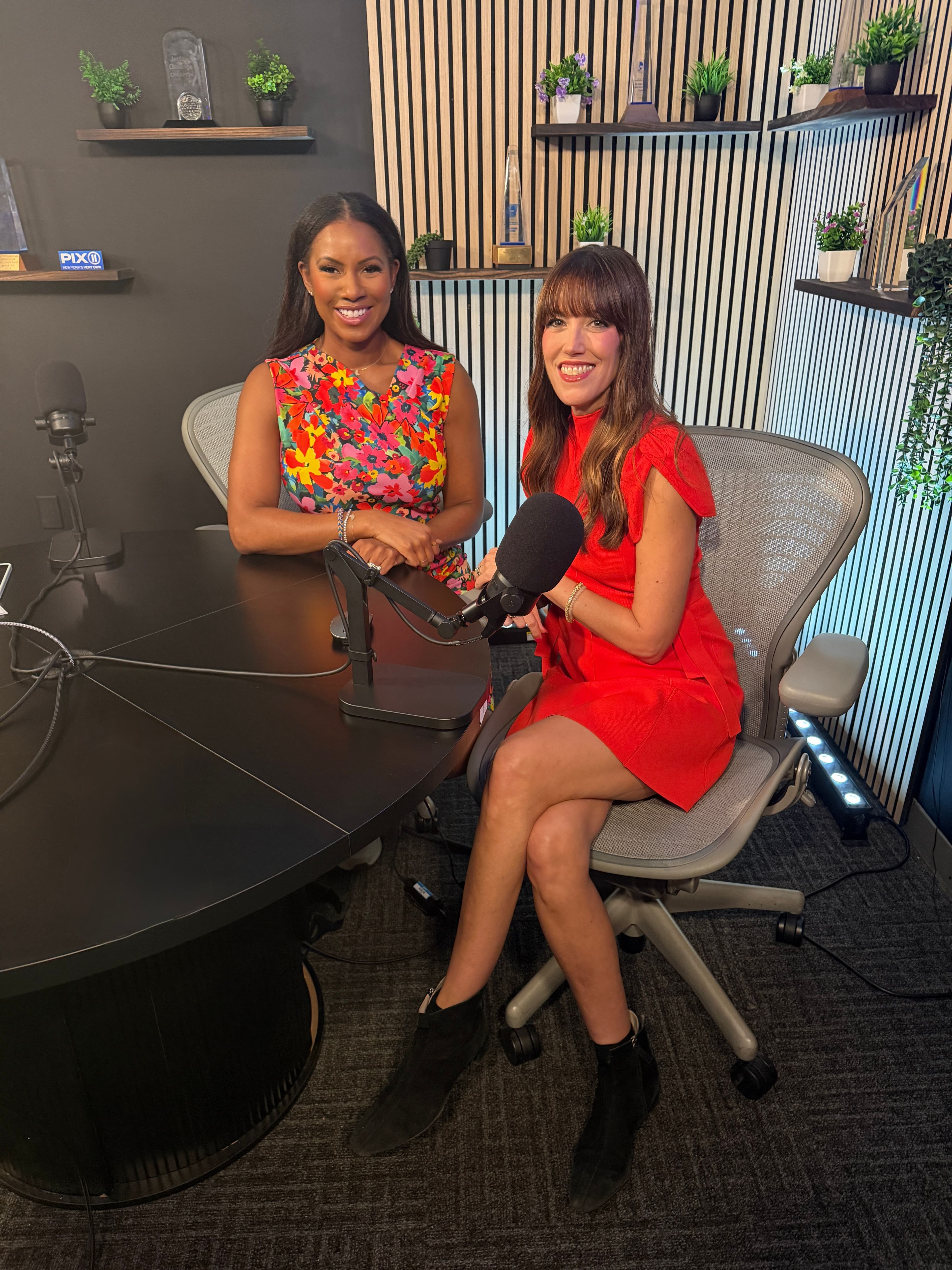
In her conversation with Jadey, Amri shares everything she wishes she knew, and how her cancer experience changed her relationship to work, family, and health.
Q:
You’ve said keeping a food diary was one of the most important things you did. Why?
A:
The food diary was probably the most important tool for me. I worked with a doctor and she had me track everything I ate along with my symptoms. That’s how you start to understand patterns.
You don’t always remember what you’ve eaten, or how combinations affect you. Something might be fine on its own but not in combination with something else. The diary helps you identify those patterns.
It’s also incredibly useful when talking to your care team. They’ll want detailed information; they’ll ask about timing, portions, symptoms. The more data you have, the faster you can get answers.
I don’t recommend it for everyone, especially not casually, but if you’re experiencing ongoing issues, even for a few weeks, it can be really helpful. It doesn’t have to be complicated. You can just jot things down before bed or keep a simple log in your phone.
Q:
How long did it take before you felt like you understood your body again after this surgery?
A:
It’s a process. It can feel tedious, but the stress comes from wanting to feel better, not from keeping the diary itself. And even within a few weeks, it started helping me. It’s an ongoing process, too, because your body changes. Something you couldn’t tolerate before might be fine later. I slowly reintroduced foods like avocado and hummus over time, and now I can eat them normally.
Q:
After your resection surgery, you’ve said the guidance you received was vague. What do you wish you had known?
A:
I think part of the reason doctors are vague is that people have very different reactions depending on where the cancer is, so they don’t want to say anything definitively. But they do have general patterns they could share more clearly.
For me, for example, I had really severe diarrhea. Not that I was going anywhere anyway: I also had a wound that was about four inches deep, and that wasn’t explained very well either. I’m very squeamish—I can’t even watch surgery scenes on Grey’s Anatomy—so this was a big challenge.
They give you a small ruler, and you have to insert it into the wound to measure healing. I couldn’t do it, so my husband had to do it the entire time. The wound is packed with gauze, and after surgery they remove it, and [so much of] it just keeps coming out and feels very strange. It’s not painful, but it’s this unsettling sensation, like a fluttering or tickling as they pull it out. It ends up being a large amount of gauze, soaked in blood, and you have to repack it twice a day.
That was really shocking. No one tells you this. I didn’t understand what that level of care would involve. They also told me I might have bowel disruption, including something called “clustering,” where you go to the bathroom repeatedly in a short period. But they made it sound manageable. In reality, I couldn’t be more than 30 seconds from a bathroom.
They also didn’t explain what I should eat. After surgery, I hadn’t eaten for three days. They started me on a liquid diet for about 24 hours, then moved me to bland, soft foods. I had bone broth, then oatmeal, but after that, no one gave me guidance.
I asked the nurses, and they said I could order anything from the approved menu. I even called the hospital dietitian and asked what would be best, and they just repeated that I could eat anything on the menu. So I ordered what seemed healthy—salmon, spinach, sausage, mashed potatoes—which was a terrible idea.
Q:
What did you learn about how to eat after the surgery?
A:
You really need to take baby steps. After something like oatmeal, you should move slowly, like small bites of simple foods like mashed potatoes or rice, spaced out over time. Your system is essentially “asleep” from anesthesia, and even if you feel fine at first, it can suddenly react once digestion kicks back in. My body hadn’t been functioning normally for months, so introducing a full meal was a shock.
I wish someone had explained that your body might seem fine but actually isn’t operating yet. It takes a few days to wake up.
Q:
Was there any guidance that was helpful at this time?
A:
One piece of advice I did get that helped: the people who do best [with recovery] are the ones who try to get back into their lives. For me, that meant rebuilding pelvic floor strength. Because of the surgery, I was essentially retraining muscles that had never worked in this way before.
The only way to do that is to actually use them. I started doing Pilates, which was incredibly helpful. I began very gently, even shortly after surgery, focusing on small movements and gradually rebuilding strength. At first, I just went to Pilates and came home, but even that helped. Whatever version of routine you can return to, it makes a difference.
Q:
Logistically, how did you balance needing constant bathroom access with getting back out into the world?
A:
I basically memorized every bathroom in my town. I knew which gas stations had bathrooms on the route to pick up my kids, where they were in the mall: everything. I always had a mental map: How long will it take me to get there from here?
For someone with similar symptoms, I’d say start small. Stay in places where you feel comfortable and know the layout. Take walks in your neighborhood. Then gradually expand as you feel more confident.
Q:
Do you know, from talking to other people with this experience, about people dealing with constipation instead?
A:
For people dealing with constipation instead, general advice is movement—walking, staying active. Warm liquids, herbal teas, hydration all help. And chewing your food thoroughly is actually very important. Digestion starts in the mouth, and when your system is compromised, that matters even more.
Over time, you learn what foods help in different situations. If I’m constipated, I’ll eat more salads or kiwi. If I’m dealing with diarrhea, I’ll stick to bananas, applesauce, and starches. You start to use food almost like medicine.
Q:
What do you wish you’d known before getting an ostomy bag?
A:
I was totally horrified when they told me that I was getting this ostomy. I just started hysterically crying, and I was like, I can't even deal with this. I feel like I needed a training. And I wish that there was a class where I could talk to someone face-to-face.
It’s so low-tech. You just can't even believe that this is still what we do. Literally, a little bit of your intestine is going to be showing and you're going to get this adhesive thing and stick it on yourself, and then stick something to that, then a plastic bag is going to stick onto that, and then the waste is just going to come out of your body into this bag. I don't know if there's anything that you can say to really prepare someone for that, because it's just really shocking. But I also found that it was shocking how quickly I adapted to it.
For the first few days, I couldn't even put the thing on, also because I still had a drain coming out of my abdomen where it was, so I couldn't sit up or anything either. My husband did it for me. He's very not squeamish; nothing fazes him. He was like, ‘I’ll do it for you. This seems cool.’
Having a nurse come help is really important. It probably took me five times. You also have to adjust your diet and hydration. Some foods don’t work, and dehydration can happen quickly. It’s a learning curve, but you figure it out faster than you think.
Q:
You didn’t initially tell your kids about your ostomy bag, but later wished you had. How has your thinking evolved?
A:
With my kids, I initially chose not to tell them about my ostomy because I knew it was temporary and didn’t want to scare them. But in hindsight, that was more about my own discomfort and fear. It would have been much less stressful. Now, I believe in being as transparent as possible. Kids often don’t process things the way we expect, they’re more resilient and more absorbed in their own worlds.
Q:
What’s your advice for someone trying to figure out what’s going on with some suspect symptoms, especially if they feel like they’re running into walls?
A:
This definitely happens a lot with younger women, especially new moms. A lot of postpartum symptoms can mirror other issues, and there’s obviously a lot of stress, so it’s easy to attribute things to that. If you feel like you’re being dismissed, there are some questions you can ask: Are there more tests we can do? What else could this be? Are there tests that could rule certain things out? Just to keep things moving and proactive.
You can also ask, Can we make a plan if this doesn’t improve? so you have a clear timeline. What often happens is that you’re juggling so much—your life isn’t just about figuring out this one issue—and the responsibility ends up back on you to follow up. So try to get something concrete: two weeks, four weeks, six weeks—what are the next steps?
And if you really don’t feel like you’re being heard, or you’re not getting anywhere but you still feel something is wrong, don’t be afraid to get a second opinion. Go to another doctor. You know your body better than anyone else. Even if nothing is wrong, you deserve to have that answer and to keep digging until you understand what’s going on. I hope it’s nothing serious—but you deserve to know.
I also think that as women, we tend not to push. We think: The doctor knows best—they’re the expert. But you’re the expert on your own body. If something feels outside your normal, you have to keep advocating for yourself.
Q:
Another thing you speak candidly about is brain fog and fatigue after treatment. Tell me how you’re continuing to navigate that, some years into it.
A:
The brain fog and fatigue were some of the hardest parts because they’re so vague and unpredictable. It’s frustrating: you’ll feel good one day and completely drained the next. For me, adjusting my hormones helped with brain fog. But overall, it’s about continuing to look for answers and making adjustments.
I learned to stop pushing through exhaustion. Instead, I’d switch tasks. I’ll shut my laptop and do something physical, like chores, then come back. That actually made me more productive overall.
Q:
What advice would you give someone overwhelmed by trying to “fix” everything after a diagnosis?
A:
It’s overwhelming because there’s no single answer, and it feels like you have to change everything at once. But you can’t. For me, I was like there are so many things in my whole house, like every product: my moisturizer, shampoo, like, everything's giving me cancer. It's my toilet paper. You could go on and on and on and on, and you really have to take it slow, because you can only do so much. Make changes gradually. You don’t need to overhaul your entire life overnight: just make better choices when you can, one step at a time. Otherwise, it’s too much.
So maybe it's just whenever you run out of something, then you look on the Healthy Living app. Like I'm out of detergent, now I'm going to change my detergent. So it’s whenever you go to make a new purchase, making the best purchase.
Q:
Has your understanding of 'success' changed after your cancer experience?
A:
It definitely did. I mean cancer changes everything, because you have to look at every area of your life and decide: What's the most important thing for you? Because being healthy takes a lot of time and energy. Wellness takes a lot of time and energy. You're combating not only the cancer, but you're combating the fallout from the treatment and emotional roller coaster and the impact that it's had on your relationships and your family.
So unraveling from all of that is not a simple process, and it requires a lot of introspection to get to a place where you feel healthy and happy. Along with that, you end up looking at all of the areas of your life: your career, relationships. There was a lot of cleaning house, where I was like this relationship is not serving me.
As an entrepreneur, especially as a woman in business, you're doing absolutely everything yourself in the beginning, and you're wearing all the hats. I was working from the time I woke up until the time I went to sleep. I was texting with my co-founder in bed at 12:30 and it was seeping into every area of my life, and that there was a lot of stress involved in that as well. I think also I was qualifying as a success by quantitative benchmarks: how many members we have, how much money we brought in our revenue for that year, a lot of those external things.
And at this point in my life, success is really about being able to work in a way that is conducive with the lifestyle that I want to have: being able to spend time with my family, being able to put my health first, going to appointments at any time I need, to being able to show up for my kids and still doing something that has meaning for me.
Q:
In your work you’ve successfully created spaces for women where they can be forthright about their lives. We're very appreciative of how upfront you are talking about your cancer experience; was that always the case? Did it take you a while before you got there?
A:
It took time. At first, I didn’t talk about it much. When I was sick the first time, it was during the pandemic, and I was at home, and we were all in our bubbles. But as I started doing interviews, I began sharing more, and eventually it felt natural.
I still don’t frequently talk about how I had an ostomy, because it still felt a little bit taboo. But once I shared it once, then I started sharing it a little bit more.
I'm already a public facing person, so I'm used to talking about my life, and talking about challenges and things that aren't necessarily flattering or pretty, so I think that it maybe is a little bit easier for me. Or it’s just something that I'm used to: putting myself out there, being a little bit more vulnerable.
Now I don’t feel hesitant. I’ve told my story so many times that it doesn’t feel taboo anymore. But that didn’t happen overnight.